 Skagit County
 Clear Lake homes take a specific kind of beating over the years. It's not one dramatic storm that wears out a set of walls — it's decades of wind-driven rain working into seams, salt-tinged winter air reaching further inland than most homeowners expect, and a moss season that runs long under the tree cover common around the lake. When siding finally gives out here, it's usually the slow result of that cumulative exposure rather than a single failure. Replacing it correctly means understanding what actually happened to the old siding, not just stripping it off and putting up something new that will face the exact same conditions with the exact same weak points. We do siding replacement work throughout Clear Lake and the surrounding Skagit County area, and this page walks through what that work actually involves — what to look for, what a proper job requires, and why local experience matters more here than the sales brochures let on.
Signs a Clear Lake Home Needs Full Replacement, Not Another Repair
Not every siding problem calls for a full tear-off. A cracked board, a loose panel near a corner, or minor impact damage can often be repaired without touching the rest of the wall. Full replacement becomes the right call when the damage is systemic — when it shows up in multiple places, points to a moisture problem behind the surface, or when the siding is old enough that patching one section just delays dealing with the rest. In a climate like this one, waiting too long on that decision tends to cost more than making it early.
- Soft or spongy spots when you press on the siding, especially near the bottom courses or under windows
- Paint that keeps failing within a year or two of repainting, even after prep work was done correctly
- Persistent moss or mildew staining that returns within months of cleaning, particularly on shaded, north-facing walls
- Visible warping, buckling, or gaps opening up between boards or panels
- Cracking concentrated around seams, corners, and fastener locations rather than isolated impact spots
- Interior signs — musty smells, peeling interior paint, or staining on walls that back up to exterior siding
- Siding that's original to a home built more than 20-25 years ago, especially if it's a wood-based product
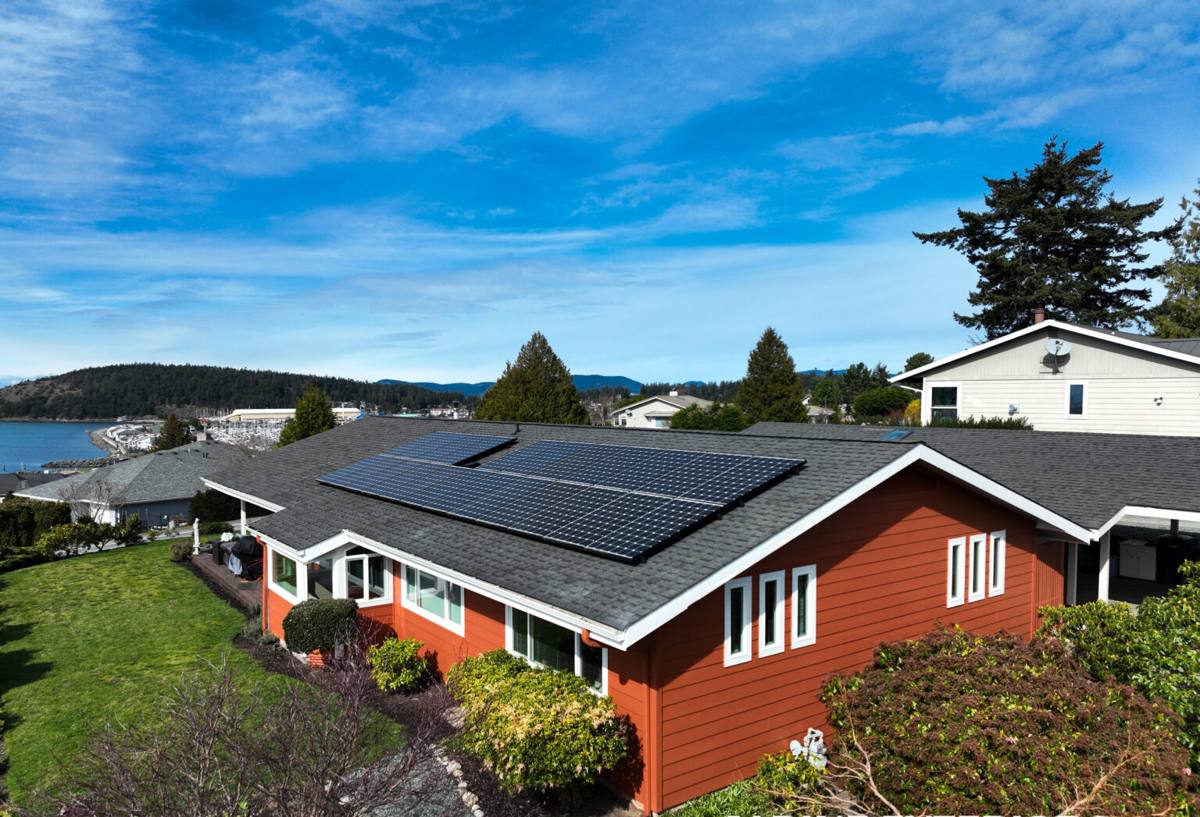
Why Skagit County's Climate Raises the Stakes on This Decision
Clear Lake sits inland, tucked among wooded lots near Sedro-Woolley, but "inland" doesn't mean sheltered. Winter storms off the Pacific push salt-carrying air well past the immediate coastline, and that salt content contributes to corrosion on fasteners, flashing, and other exposed metal even on properties nowhere near saltwater. Layer on top of that the wind-driven rain typical of this region — rain that gets pushed sideways into wall assemblies rather than simply running off a roof — and siding here has to manage moisture from angles that a drier, calmer climate never tests.
Tree cover is the other half of the equation. A lot of Clear Lake properties sit on wooded or partially wooded lots, which means slower drying after storms and roof and wall sections that stay shaded for a large part of the day. That combination — sustained wetness plus shade — is exactly what moss and mildew need to establish and keep coming back. Siding that's already compromised, even slightly, deteriorates faster under those conditions than it would on an open, sun-exposed lot in a drier part of the state. That's the real reason full replacement timing matters more here: a wall assembly that's starting to fail doesn't get a break to dry out and stabilize the way it might elsewhere.
What a Correct Siding Replacement Actually Involves
Full Tear-Off, Not a Cover-Up
Installing new siding directly over old, failing siding is faster and cheaper, and it's also how existing moisture and rot problems get sealed inside a wall instead of fixed. We tear the old siding down to the sheathing on a replacement job. That's the only way to actually see what's happening underneath — and on a home that's showing the kind of symptoms listed above, what's underneath is exactly what determines the real scope of the project.
What's Underneath Matters More Than What Goes Back On
Once the old siding is off, the sheathing, framing, and weather-resistive barrier get inspected before anything new goes up. Soft or delaminated sheathing gets replaced, not painted over or built around. Any rot found in framing members gets addressed at the structural level, not hidden behind new cladding. The weather-resistive barrier — the layer that manages any moisture that gets past the siding itself — gets replaced or repaired as needed, with particular attention to how it integrates with window and door flashing. This is the stage of a replacement where corners get cut on rushed jobs, and it's also the stage that determines whether the new siding actually lasts, regardless of how good the material itself is.
Flashing and Fastening Details
Window and door flashing, kick-out flashing at roof-wall intersections, and proper fastener placement and spacing all get done to manufacturer spec, not to whatever's fastest. In a climate that drives rain sideways into walls, these details are what actually keep water out — the siding material itself is only part of the system. A well-chosen product installed with rushed flashing details will still leak; a modest product installed correctly, with attention to these connections, generally won't.
James Hardie: What Goes Back On the Wall
We install James Hardie fiber cement siding exclusively — it's the only product we put on homes, full stop. On a replacement project specifically, that matters because fiber cement doesn't have an organic core for moisture to work into over time, which is a real consideration on a shaded, tree-covered lot where the old siding likely failed for exactly that reason. Hardie's ColorPlus finish is baked on at the factory under controlled conditions rather than field-applied, so it holds color and resists the fading and chalking that a repainted surface goes through after repeated wet-dry cycling. For this region, we typically spec Hardie's HZ5 formulation, engineered specifically for climates with heavier sustained moisture exposure rather than a single generic product sold everywhere in the country.
| Product Line | Typical Use | Notes |
|---|---|---|
| HardiePlank Lap Siding | Most single-family homes | Smooth or cedar-textured finish; the most common replacement choice on Clear Lake properties |
| HardiePanel Vertical Siding | Modern facades, accent walls | Often mixed with lap siding for a two-material look on a single elevation |
| HardieShingle | Craftsman and cottage-style homes | Staggered or straight-edge shingle profile, replicates a cedar-shake look without the wood core |
| HardieTrim | Corners, window and door trim, fascia | Fiber cement trim matched to the siding, avoiding a wood-trim weak point on an otherwise non-organic wall |
We don't install vinyl, LP SmartSide or other engineered wood siding, primed spruce, cedar, or other fiber cement brands as a replacement product, and we're upfront about that from the first estimate. Each of those has situations where it performs adequately, but weighed against what we've seen sustained moisture and moss exposure do to organic and installation-sensitive materials in this county over a 15-20 year timeline, fiber cement is what we're willing to install and stand behind.
Our Siding Replacement Process, Start to Finish
Assessment and Estimate
We start with an on-site walk of the property — every wall, not just the section that looks obviously bad — because siding failure on one elevation is often an early warning for what's developing on others, especially the shaded, slower-drying sides of the house. That walk is what a real estimate is based on, rather than a square-footage number pulled from a satellite photo.
Prep, Tear-Off, and Sheathing Inspection
Old siding, trim, and any compromised building wrap come off down to the sheathing. This is the point where the actual scope of the project gets confirmed — if sheathing or framing repair is needed, it gets identified and priced here rather than discovered partway through installation.
Weather Barrier, Flashing, and Installation
New or repaired weather-resistive barrier goes on, flashing gets installed or corrected at every window, door, and roof-wall intersection, and Hardie siding goes up to manufacturer spec — correct fastener spacing, clearances from grade and roofline, and properly lapped and caulked joints where required.
Final Walkthrough and Cleanup
We walk the finished job with the homeowner, cover care and maintenance expectations for the specific product and colors installed, and handle site cleanup — old siding debris, packaging, and job-site materials — before calling the project complete.
What Drives Cost on a Clear Lake Siding Replacement
Every property is different, and we're not going to publish a number that doesn't reflect your specific house — but the factors that move the price up or down are consistent enough to lay out honestly.
| Factor | Why It Matters |
|---|---|
| Total wall square footage | The single biggest driver of material and labor cost |
| Condition of sheathing underneath | Rot or delamination found during tear-off adds repair scope beyond the siding itself |
| Trim and architectural detail | Multiple gables, dormers, and trim transitions take more labor time than a simple rectangular elevation |
| Number of stories and site access | Second-story work and difficult access, including steep or wooded lots, affects staging and labor time |
| Siding profile and finish selected | Lap, panel, and shingle profiles carry different material and installation costs; factory colors vs. standard finishes vary too |
| Extent of old siding removal | Multiple layers of old material, or siding previously installed over another layer, adds tear-off time |
An honest estimate accounts for what's actually found once the walls are opened up, not just what's visible from the driveway. That's part of why the on-site assessment matters more than a phone quote ever could.
Why a Crew That Already Works Clear Lake Matters
Clear Lake isn't a uniform subdivision — it's a mix of older farmhouses, lakeside properties, and newer construction spread across wooded and partially wooded lots, each sitting differently relative to sun exposure, tree cover, and prevailing wind. A crew that replaces siding in this specific area regularly builds a feel for which walls take the worst of the wind-driven rain, which shaded sections need extra attention to moss and moisture history, and which sheathing conditions tend to show up on homes of a given age in this part of the county. That judgment gets built by doing the work here repeatedly, not by reading a regional climate summary once and applying it uniformly to every job. It also means we're a known, reachable local business if a warranty question or a maintenance question comes up years down the line, rather than a crew that worked the area for one project and moved on.
What to Check Before Hiring for a Siding Replacement
- Confirm the scope includes full tear-off and sheathing inspection, not an overlay installed on top of the existing siding
- Ask exactly which siding product and product line is being quoted, and why, not just a price per square foot
- Get specifics on how flashing at windows, doors, and roof-wall intersections will be handled, since that's where most real-world leaks originate
- Verify the contractor is licensed, bonded, and insured to perform exterior work in Washington State
- Ask what happens if rot or damaged sheathing is found once tear-off starts, and how that gets priced
- Get both the manufacturer's material warranty and the contractor's own workmanship warranty in writing
What This Means for Your Home
Not every Clear Lake property needs the same scope of work, and the right answer for your home depends on its age, orientation, tree cover, and how far the current siding has actually deteriorated. We're not going to sell a full replacement when a targeted repair is genuinely the better call, and we're not going to install a product we don't believe holds up against what this climate does to a house over the next 20 years. If your siding is showing any of the warning signs above, or you're just not sure whether repair or replacement is the right move, we're glad to take a look and give you a straight answer either way.
If you'd like an honest assessment of your Clear Lake home's siding, reach out for a free, no-pressure estimate. We'll walk the property, tell you what we actually see, and lay out your options without any pressure to choose the bigger job.