 Skagit County
 Decks Built for Concrete's River Valley Conditions
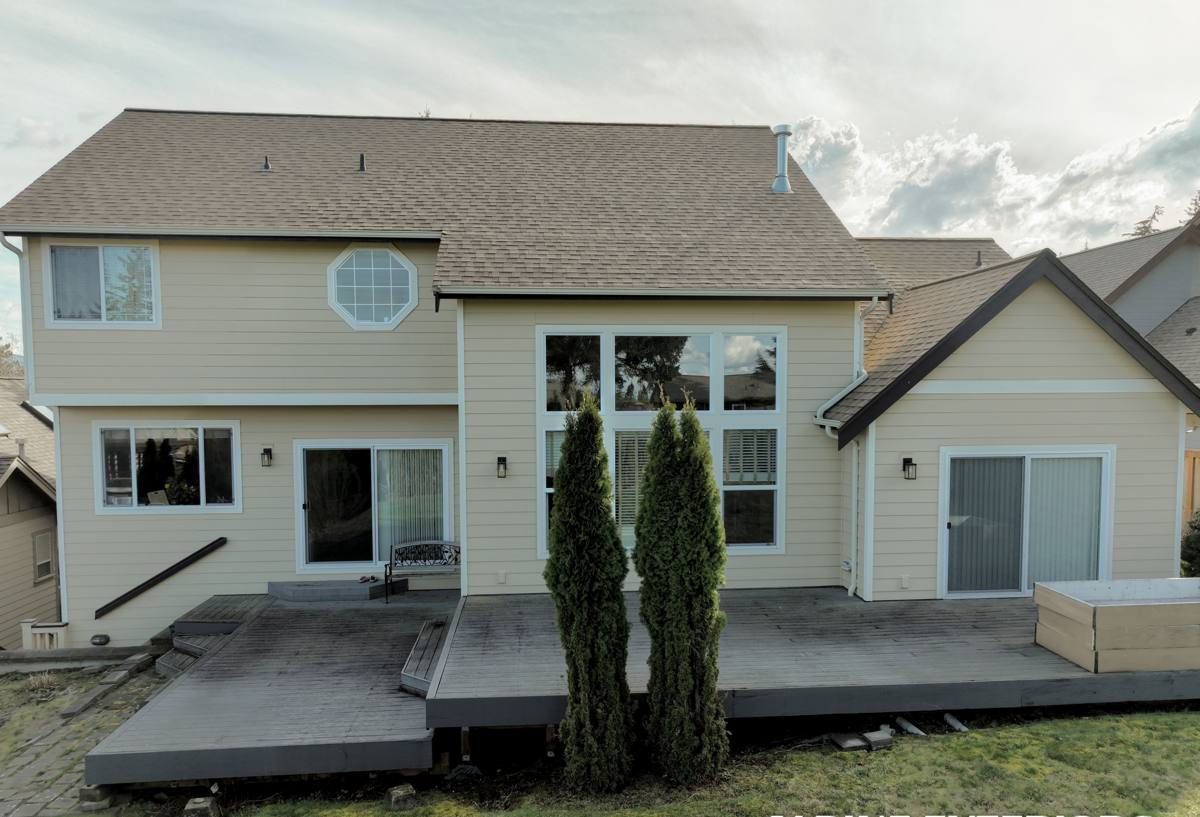
Concrete sits up the Skagit River valley, tucked against the foothills of the North Cascades, and that setting shapes what a deck actually has to survive here. The same marine weather systems that push salt-laden air across the rest of Skagit County also carry driving rain up the valley, and the surrounding forest canopy keeps many lots shaded and damp for much of the year. Add in a longer, heavier moss season than you'd get on an open, sun-exposed lot, and you have a set of conditions that punishes a deck built to a generic spec.
We build decks for this specific environment, not a one-size-fits-all version of one. That means paying close attention to drainage, material selection, and structural details that keep moisture from becoming a slow, hidden problem under boards that look fine on the surface.
What Concrete Homes Actually Need From a Deck
A deck near the river valley faces a few recurring stressors:
- Prolonged dampness from shade, tree cover, and slower drying times after rain
- Moss and algae growth on horizontal surfaces that stay wet longer than open, sun-exposed decks elsewhere in the county
- Heavier precipitation totals pushed up the valley off Puget Sound weather systems
- Higher snow load potential than coastal Skagit towns, given the elevation and proximity to the Cascade foothills
- Ledger and rim joist rot where a deck attaches to the house, if flashing wasn't done correctly the first time
None of these are exotic problems, but they compound over a wet Pacific Northwest winter, year after year. A deck that ignores them doesn't fail dramatically — it fails quietly, with soft spots, black staining, and loose railings that show up five or ten years in.
Site Conditions Vary Block to Block
Even within a small town, lots differ. A property backed up against timber will see far more moss and shade-related moisture than one on a more open, south-facing slope. We look at sun exposure, tree cover, and drainage on your specific lot before recommending a decking material or a framing approach — not a generic recommendation for "Skagit County."
Choosing the Right Decking Material
Every decking material has trade-offs. In a shaded, damp environment like much of Concrete, those trade-offs matter more than they would on a dry, sun-baked lot.
| Material | Moisture Behavior | Moss/Maintenance | Typical Lifespan |
|---|---|---|---|
| Pressure-treated lumber | Absorbs and releases moisture; needs regular sealing | Prone to moss/algae in shade without cleaning | 10-15 years with upkeep |
| Cedar | Naturally rot-resistant but still needs finish maintenance | Moderate; benefits from periodic cleaning and oiling | 15-20 years with upkeep |
| Capped composite | Doesn't absorb water into the core; shrugs off standing moisture | Low; occasional wash-down keeps moss from taking hold | 25-30 years |
| PVC decking | Fully non-porous, unaffected by ground or standing moisture | Lowest; smooth cap sheds moss and algae easily | 25-30+ years |
We're honest with clients about this: on a heavily shaded lot near tree cover, real wood requires a maintenance commitment most homeowners underestimate — annual cleaning and refinishing to keep moisture out of the fibers. Composite and PVC cost more upfront but hold up with far less upkeep in exactly the conditions Concrete lots tend to have. Which one is right depends on your budget, how much maintenance you want to do, and how much shade your particular lot gets.
Structural Details That Matter More Here
The visible decking is only part of the job. The framing underneath is what determines whether a deck is still solid in fifteen years or needs to be torn out in eight.
Ledger Attachment and Flashing
Where a deck ties into the house, proper flashing is what keeps rainwater from working its way behind the siding and into the rim joist. In a valley climate with extended wet periods, a poorly flashed ledger is one of the most common causes of hidden rot we find on older decks. We flash every ledger connection correctly the first time, using materials suited to sustained moisture exposure rather than cutting a corner that won't show a problem for years.
Footings and Frost Depth
Footing depth has to account for local frost conditions, which can run deeper inland near the foothills than they do closer to the coast. We size and pour footings to the depth required for this area, not a shortcut spec.
Joist Spacing and Snow Load
Concrete's elevation and proximity to the Cascades mean snow load is a more realistic design consideration than it is for lower, coastal parts of Skagit County. We frame joist spacing and beam sizing to handle real snow accumulation, not just rain and foot traffic.
Airflow Underneath
Damp, shaded lots need ventilation under the deck as much as they need good decking on top. Skimping on clearance between the ground and framing traps moisture and accelerates rot in joists you can't see. We build in the clearance and drainage slope needed to keep air moving underneath.
Moss, Mold, and Keeping a Deck Looking Good
Moss doesn't just look bad — on a walking surface it's slick and genuinely dangerous, and on wood decking it holds moisture against the boards long after the rain stops. A few things reduce it significantly:
- Proper board gapping so water drains through rather than sitting on the surface
- Consistent slope away from the house so water doesn't pool
- Trimming back overhanging branches where possible to let more light and airflow reach the deck
- Choosing a decking material suited to your lot's actual sun exposure, not just your preference on materials
- A periodic wash-down before moss gets a foothold, rather than after
We build these details in from the start rather than leaving you to fight moss every spring on a design that was never suited to a shaded lot.
Our Deck Building Process
- On-site consultation — we look at your lot's sun exposure, drainage, tree cover, and how the deck will connect to your house
- Design and material discussion — honest trade-offs between wood, composite, and PVC based on your specific site, not a sales pitch
- Written estimate — clear scope and pricing before any work starts
- Permitting — we handle the Skagit County permit application and inspections tied to the project
- Framing — footings, ledger flashing, joists, and beams sized for local frost depth and snow load
- Decking and railing installation — proper gapping, fastening, and finish work
- Final walkthrough — we go over the finished deck with you before calling the job done
Permits and Code in Skagit County
Most new decks and significant deck rebuilds in Skagit County require a building permit, and inspections are tied to specific stages of construction — footings before they're covered, framing before decking goes down, and a final inspection. Guardrail height, baluster spacing, and stair requirements all follow the adopted building code, and skipping or rushing this process is one of the more common ways homeowners end up with a deck they can't legally sell a house with later. We handle the permit application and coordinate inspections as part of the job, so it's one less thing you have to track down yourself.
Why a Local Crew Matters
A contractor who already works in and around Concrete knows what the county permitting office expects, understands how frost depth and snow load actually apply to this area's elevation, and has already seen how moss and moisture behave on shaded valley lots — not just coastal ones. That familiarity shows up in fewer surprises during the project: fewer permit delays, fewer redesigns because a footing spec didn't account for local conditions, and a finished deck built for the climate it actually sits in rather than a generic regional average.
It also matters for logistics. Rural and semi-rural properties in this area sometimes mean longer material hauls, different site access, or septic and setback considerations that an out-of-area crew unfamiliar with the town might not anticipate until it becomes a delay.
Questions Worth Asking Before You Hire
- Have you built decks specifically in or near Concrete, not just "Skagit County" broadly?
- How do you handle ledger flashing and moisture protection at the house connection?
- What decking material would you actually recommend for my lot's sun exposure, and why?
- Are you pulling the permit, or is that left to me?
- What's included in your estimate versus what could come up as an added cost?
Get a Free, No-Pressure Estimate
If you're weighing a new deck, a rebuild, or you're not sure whether your current deck's framing is still sound, we're glad to take a look. Use the form below to request a free estimate — no pressure, no obligation, just a straight assessment of what your property in Concrete actually needs.