 Skagit County
 Decks in Concrete Take a Different Kind of Beating
Concrete sits up the Skagit River valley, where marine-influenced weather off the coast funnels inland and stacks up against the foothills of the North Cascades. That combination means more standing moisture on horizontal surfaces than homeowners closer to Puget Sound often deal with, plus a longer shoulder season where things stay damp instead of drying out between storms. Add in shade from surrounding timber and hillsides, and you get the two things that do the most damage to a deck over time: driving rain that gets up under boards and railings, and a moss and algae season that can run most of the year on north-facing or shaded decks.
None of that means a deck in Concrete is doomed — wood and composite decks both hold up fine here when they're built and maintained correctly. It does mean that repairs which would be cosmetic in a drier climate are often structural once you're dealing with a deck that's been sitting under that kind of moisture load for ten or fifteen years. We've worked enough decks in this stretch of Skagit County to know where the damage actually hides, and it's rarely just the boards you can see from the yard.
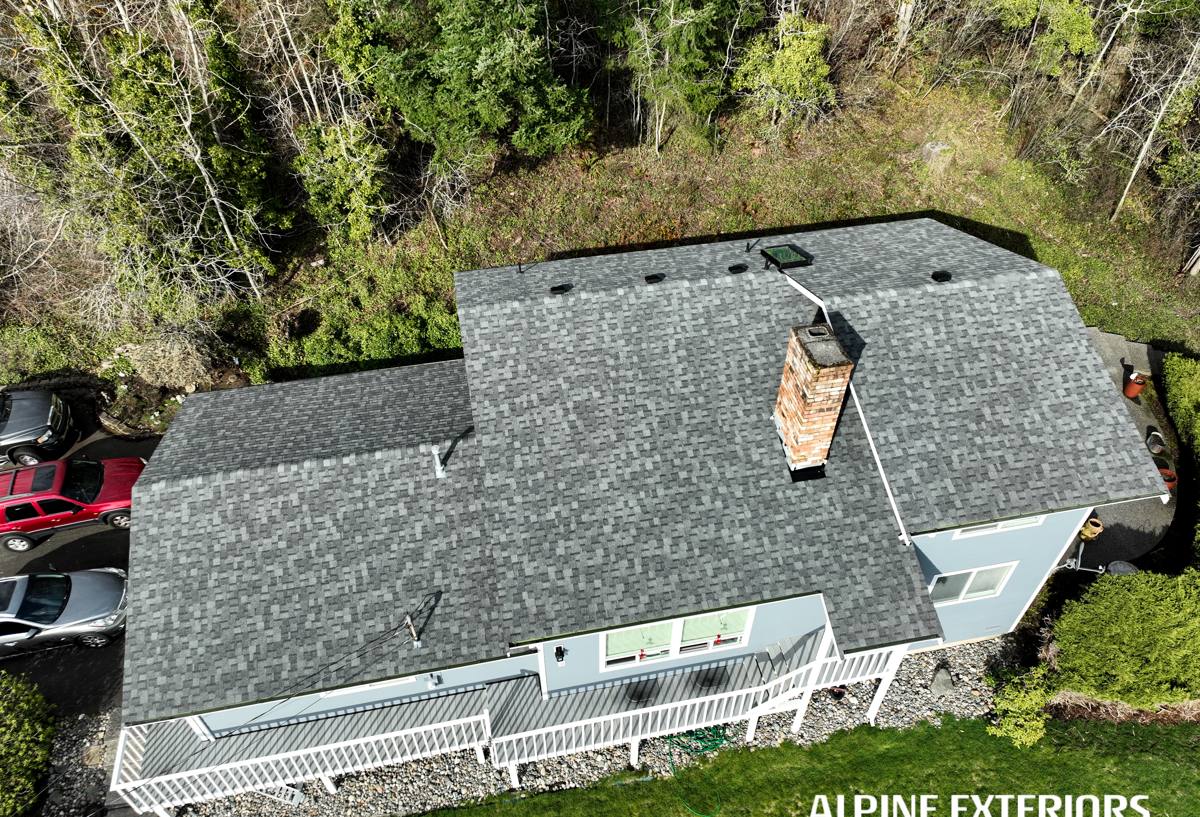
Signs Your Deck Needs Repair, Not Just a Cleaning
A pressure wash and a new coat of sealer fixes appearance. It does not fix structure. Here's how to tell which one you're dealing with:
- Boards that flex, bounce, or feel spongy when you walk across them, especially near the house
- A railing that moves side to side when you push on it — this is a safety issue, not a cosmetic one
- Dark staining or soft wood where the deck meets the house (the ledger board area)
- Visible gaps opening up between the deck and the house siding or foundation
- Rust streaking from screws, joist hangers, or bolts
- Stair stringers that feel uneven or have started to separate from their fasteners
- Moss or green film that comes back within weeks of cleaning, even in summer
If you're only seeing surface graying and mild moss, that's usually maintenance. If you're seeing any of the movement, soft-wood, or fastener issues above, that's a repair call, and putting it off tends to turn a smaller fix into a bigger one.
What a Correct Deck Repair Actually Involves
Ledger Board and Flashing
The ledger board — where the deck attaches to the house — is the single most common failure point we find on older decks in this area, and it's almost always a flashing problem rather than a fastener problem. Water gets behind the ledger, has nowhere to go, and sits against the framing and the house's sheathing. A correct repair means pulling the deck away from the ledger, replacing any rotted framing or sheathing behind it, and installing proper flashing before anything gets reattached. Re-screwing a ledger without addressing the flashing behind it is a cosmetic fix on a structural problem.
Framing, Joists, and Posts
Joists and beams that have soaked up moisture for years can look fine on top and be soft or delaminating underneath. We check joist ends, beam pockets, and anywhere framing sits close to grade or against masonry, since those spots dry out slowest. Depending on the damage, this can mean sistering a joist with new lumber alongside the old, or replacing a post base that's wicked moisture up from a footing.
Decking Boards and Railings
Individual board replacement is straightforward as long as the framing underneath is sound — that's why we check structure before touching the surface. Railings get more attention than people expect: a rail that's loose at the post is a fall risk, and Washington's building code has specific requirements for guardrail height and baluster spacing that older decks sometimes don't meet, especially if a rail section has been repaired informally over the years.
Fasteners and Hardware
A lot of deck problems trace back to the wrong hardware for the wood. Modern treated lumber is more corrosive to standard fasteners than older treatments were, and mismatched metal accelerates corrosion — you'll see this as rust streaking or fasteners that have visibly thinned. Repairs get done with fasteners and connectors rated for the decking and framing material involved, not whatever matches on the shelf.
Repair or Replace? How We Help You Decide
Not every deck with problems needs to come down. The honest answer usually comes down to how much of the structure is still sound versus how much is compromised.
| Factor | Leans Toward Repair | Leans Toward Replacement |
|---|---|---|
| Framing condition | Posts, beams, and most joists are solid; damage is localized | Rot or soft wood found in multiple structural members |
| Ledger and flashing | Flashing can be corrected without full teardown | Ledger connection is failing and hidden framing behind it is compromised |
| Age of the deck | Under 15–20 years, built to a reasonable standard | Original construction predates current code and shows its age throughout |
| Scope of visible damage | Isolated boards, one rail section, a few fasteners | Damage spread across decking, railings, and framing together |
| Typical cost pattern | Often a few hundred to a couple thousand dollars depending on scope | Often makes more sense to rebuild once repair scope approaches replacement cost |
We'll always tell you plainly which side of that line your deck falls on. A deck that only needs targeted structural work doesn't need to be torn out, and we're not going to sell a full rebuild when a repair will hold up.
Our Repair Process
- Inspection. We check the ledger connection, framing, posts, footings, decking, and railings — not just what's visible from the yard.
- Written scope. You get a clear explanation of what's actually wrong, what needs to be fixed for safety versus what's optional, and a straightforward estimate.
- Structural work first. Framing, flashing, and post repairs happen before any cosmetic work, since there's no point replacing boards over compromised framing.
- Surface and railing repair. Decking, stairs, and railings get addressed once the structure underneath is confirmed sound.
- Cleanup and finish. Depending on the material, that may mean sealing, staining, or simply making sure new wood matches the surrounding deck reasonably well.
Wood vs. Composite: What It Means for Repairs
Both materials show up on decks throughout Skagit County, and both can be repaired well if the underlying framing is sound. Wood decking is straightforward to patch board-by-board and blends reasonably well when refinished, but it needs regular sealing to keep moisture out, especially on a deck that stays shaded and damp for long stretches. Composite decking resists rot and doesn't need sealing, but it has its own repair considerations — boards are often installed in a specific direction with hidden fastener systems, and matching an older composite run exactly can be harder since manufacturers change color and profile over time. Neither material is maintenance-free once you're dealing with the moisture patterns common in this part of the state; the difference is mostly in what kind of maintenance it needs and how forgiving it is of the occasional missed year.
Permits, Code, and Safety
Structural deck repairs — anything touching framing, footings, or guardrails — generally need to meet current building code even if the original deck predates it, and larger repair or rebuild projects may require a permit through Skagit County. Guardrail height, baluster spacing, and stair rail requirements are the areas we see older decks fall out of compliance most often, usually because of informal repairs done over the years rather than the original build. We handle repairs to meet code, and we'll flag it clearly if your project needs a permit before work starts rather than leaving that for you to sort out afterward.
Seasonal Deck Checklist for Skagit County Homes
A few minutes of seasonal attention catches most problems before they become structural. Before the wet season sets in each fall, walk your deck and check:
- Push on every section of railing — it should not move
- Look underneath at the ledger board area for staining or soft wood
- Check for moss buildup in shaded corners and along board edges where water sits
- Look at fasteners and hardware for rust streaking
- Check that gaps between boards haven't closed up with debris, which traps moisture
- Confirm stairs feel solid with no side-to-side movement
Why a Crew That Already Works Concrete Matters
A deck built or repaired for a home in Concrete needs to account for the moisture pattern that comes with this stretch of the Skagit River valley — shaded lots, a long damp season, and the marine-influenced weather that moves inland from the coast. A crew that only occasionally works this part of Skagit County can still do competent work, but they're often relearning those conditions on your project. We've seen how decks in this area actually fail — where the rot hides, which fastener choices hold up and which don't, and which framing details matter most given the local climate — and that shows up in repairs that are targeted correctly the first time instead of guesswork that gets revisited in a year or two.
If your deck has soft spots, a railing that moves, or just hasn't been looked at structurally in a while, we're glad to come take an honest look. The estimate is free, there's no pressure attached to it, and you'll get a straight answer about whether you're looking at a repair or something bigger — just fill out the form below.