 Skagit County
 Building Decks for Conway's Waterside Climate
Conway sits low in the Skagit River delta, close enough to Skagit Bay and the tidal flats that homes here deal with a different set of outdoor conditions than a deck built twenty miles inland. Salt-tinged marine air, long stretches of driving rain off Puget Sound, and a moss season that can run from October well into spring all put real stress on an outdoor structure. A deck built without those conditions in mind will show it within a few years, usually with soft spots, rusted fasteners, or a slick, moss-covered surface that's more hazard than gathering space. A deck built for them holds its finish, its structure, and its footing for decades.
This page covers what a correctly built custom deck looks like for a Conway property specifically: the materials that actually perform in this climate, how we frame and fasten a deck to survive salt air and standing moisture, what our build process looks like from first visit to final walkthrough, and why local experience in Skagit County matters more than it might seem.
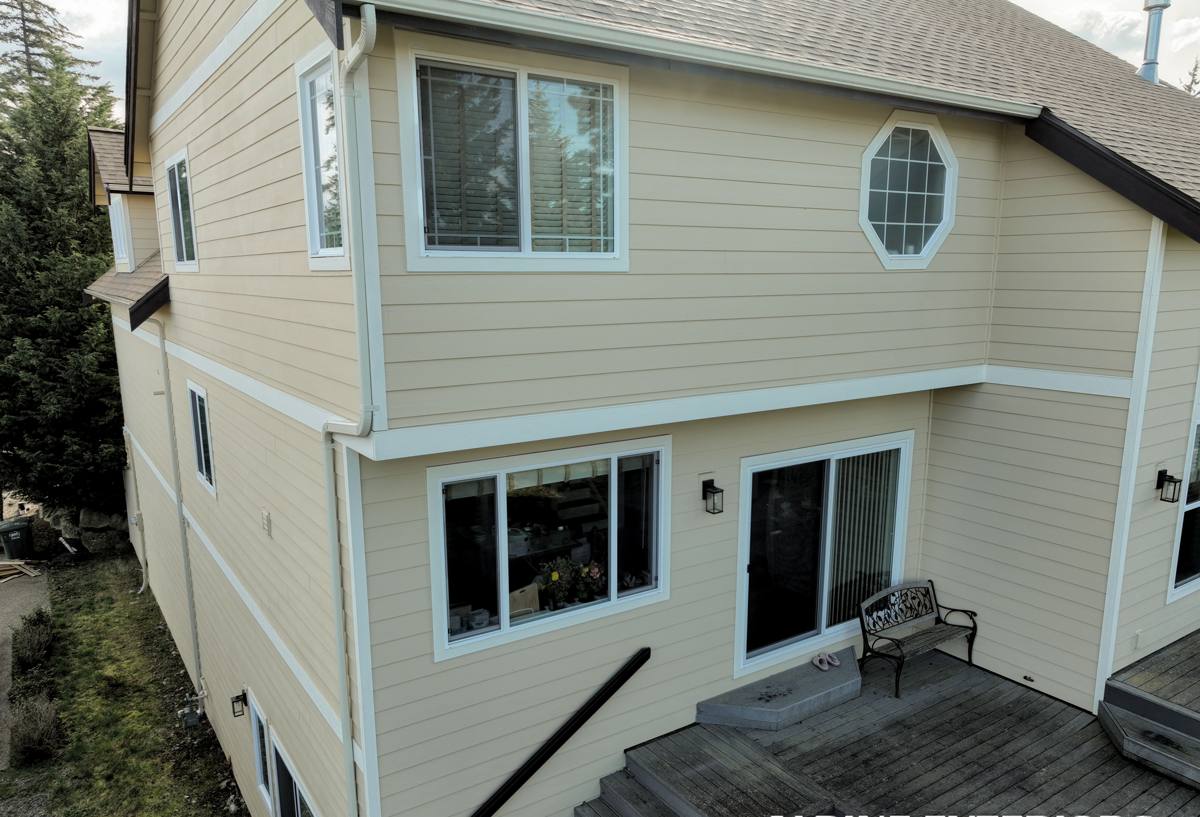
What the Local Climate Does to an Outdoor Deck
Salt Air and Corrosion
Even a few miles from open water, airborne salt accelerates corrosion on anything metal. Standard zinc-coated deck screws and cheap joist hangers that would last fine in a dry inland climate can start rusting within a couple of seasons this close to the bay and delta. Once a fastener corrodes, it loses holding strength long before it looks obviously bad, which is part of why so many older decks develop a wobble or a soft board that seems to come out of nowhere.
Driving Rain and Moisture Cycling
Skagit County gets rain that doesn't just fall straight down — wind off the water pushes it sideways into ledger boards, stair stringers, and any joint that isn't properly flashed. The bigger issue is the cycle: wood and composite decking here get wet, partially dry, and get wet again on a near-weekly basis much of the year. That constant moisture cycling is harder on materials and fasteners than a single heavy rain event, and it's the main reason ledger flashing and proper drainage gaps matter more here than in drier parts of the state.
Moss, Algae, and Surface Traction
Shaded, damp decking grows moss and algae fast in this climate, and a deck surface with poor drainage or tight board spacing holds moisture right where moss wants to establish. Beyond the maintenance headache, a mossy deck surface gets genuinely slick and dangerous, especially on stairs. Board spacing, surface texture, and site orientation all affect how much of a moss problem a given deck will have.
Choosing Decking Material for a Conway Home
There's no single "best" decking material — the right choice depends on how much upkeep you want to do, your budget, and how exposed the deck is to weather. Here's an honest comparison for this specific climate.
| Material | Moisture Performance | Maintenance | Typical Lifespan |
|---|---|---|---|
| Pressure-treated fir/hem-fir | Good if sealed regularly; framing lumber, not always ideal for surface boards here | Re-seal or re-stain every 1-2 years in this climate | 15-20 years with upkeep |
| Cedar | Naturally rot- and insect-resistant; still needs sealing against constant damp | Annual cleaning, periodic re-oiling | 15-25 years with upkeep |
| Composite (capped) | Excellent — doesn't absorb water or rot; capped boards resist moss staining better than uncapped | Occasional washing, no sealing or staining | 25-30+ years |
| PVC decking | Fully moisture-proof, best resistance to mold and algae staining | Lowest of any option — soap and water | 30+ years |
For a property this close to the water, we generally steer homeowners toward capped composite or PVC for the walking surface, with real wood reserved for framing or for owners who specifically want the look of natural wood and are committed to the maintenance schedule. That's a professional judgment about moisture behavior and long-term upkeep in this specific climate, not a knock on wood as a material — it performs beautifully in drier regions.
Framing and Structure: What a Correct Build Requires
The decking surface is what you see, but the framing underneath determines whether the deck is still safe in fifteen years. In Conway's conditions, a few details matter more than they would elsewhere:
Footings and Foundation
Footings need to be sized and set below frost depth per Skagit County code, and on lower-lying, wetter lots we pay close attention to soil drainage around each footing so water doesn't pool against the concrete or the post base. Post bases should hold the post fully off the concrete and off standing water, not bury it into a puddle after every storm.
Ledger Attachment and Flashing
Where the deck attaches to the house is the single most common failure point on any deck, anywhere, and it's worse in a wet marine climate. A correct ledger installation uses proper flashing that directs water out and away from the house band board, not just a bead of caulk behind the board. We treat this as non-negotiable — it's the difference between a deck that stays structurally sound and one that quietly rots the rim joist behind it.
Joist Protection and Drainage
Joist tape over the top of each joist keeps standing water from sitting directly on cut lumber, which is where rot typically starts even on treated wood. Board spacing and substructure design also need to let water actually drain through and off the deck rather than pooling underneath, which both protects the frame and cuts down on the moss and algae buildup mentioned above.
Our Deck Building Process
Every custom deck we build in Conway follows the same general sequence, adjusted for the specific lot and design:
- Site visit and assessment — we look at drainage, sun exposure, existing structure, and how the deck will tie into the house.
- Design and material selection — sizing, layout, and an honest conversation about which decking and railing materials fit your budget and how much upkeep you want.
- Permitting — we handle the Skagit County permit application and any required plan details so the project is built to code from the start.
- Footings and framing — footings set to proper depth, ledger flashed correctly, joists protected and spaced for drainage.
- Decking installation — surface boards installed with correct gapping and fastening for the material chosen.
- Railings and stairs — built to current code height and baluster spacing requirements, with corrosion-resistant hardware throughout.
- Final walkthrough and inspection — we review the finished deck with you and make sure it passes any required county inspection.
Hardware, Fasteners, and Railings Built for This Climate
The hardware you can't see is often what determines how long a deck actually lasts here. We use stainless steel or high-grade coated fasteners rated for coastal and marine exposure rather than standard electroplated screws, which can start showing rust streaks within a season or two this close to the water. Joist hangers and structural connectors get the same treatment — hot-dip galvanized or stainless, not the bargain-bin coated hardware that looks fine on the shelf but wasn't designed for salt air.
Railings see similar treatment. Powder-coated aluminum and properly sealed or capped composite railing systems hold up well against the combination of salt air and constant rain; bare or lightly finished metal railings tend to corrode and stain faster than most homeowners expect in this environment.
Permits and Site Considerations in Skagit County
Most decks above a certain height or attached to the home require a Skagit County building permit, and elevated decks have specific requirements for guardrail height and baluster spacing that we build to as a matter of course. Because Conway sits in low-lying delta terrain near the river and bay, some properties also fall within mapped flood zones, which can affect footing depth, post height, and how the structure is engineered near grade. We check this as part of the site assessment rather than leaving you to discover it mid-project — it's much easier to design around a flood zone requirement up front than to redo work later.
Maintenance Checklist to Protect Your Investment
Whatever material you choose, a little seasonal attention goes a long way in this climate. A simple routine to follow:
- Sweep and rinse the deck surface regularly through fall and winter to keep leaves and moss spores from taking hold
- Check and clear drainage gaps between boards so water isn't pooling on the surface
- Inspect the ledger board area at the house connection once a year for any signs of moisture intrusion
- Re-seal or re-stain wood decking on the schedule appropriate to the product — don't wait until it visibly grays
- Check railing posts and stair connections for looseness, which is often the first sign of fastener corrosion underneath
- Keep gutters and downspouts near the deck clear so roof runoff isn't dumping extra water onto the structure
Why Hire a Crew That Already Works in Conway
A deck built to a generic statewide standard isn't necessarily built for this specific stretch of Skagit County. Crews who regularly work Conway and the surrounding delta communities already know which materials underperform in salt air, how the local flood zone mapping affects footing and framing decisions, and what the county permitting process actually requires before you're mid-build and stuck waiting. That local familiarity shows up in fewer surprises, fewer change orders, and a deck that's designed correctly the first time rather than patched later once the climate exposes a shortcut.
If you're planning a new deck or replacing one that's showing its age in Conway, we're happy to walk the site with you and put together a straightforward, no-pressure estimate. There's a form below to get that conversation started.