 Skagit County
 Conway's Climate Puts Real Demands on Exterior Siding
Conway sits low in the Skagit River delta, close enough to Skagit Bay and Puget Sound that salt-laden air is a regular part of the weather picture, not an occasional visitor. Add in the marine layer, seasonal fog, and the steady, driving rain that defines a Skagit County winter, and you get an environment that is tough on any exterior building material. Siding here doesn't just get rained on â it gets soaked, dried, salted, and shaded through long stretches of overcast weather that let moss and algae get a foothold and stay there for months.
None of this is unusual for western Washington, but Conway's particular mix of flat, low-lying terrain, nearby tidal influence, and tree cover means siding has to manage moisture from more directions than a typical inland home. Water doesn't just come from above â it comes from wind-driven rain hitting walls at an angle, from ground-level humidity that lingers in low areas, and from condensation behind the cladding itself if the wall assembly isn't built to let moisture escape.
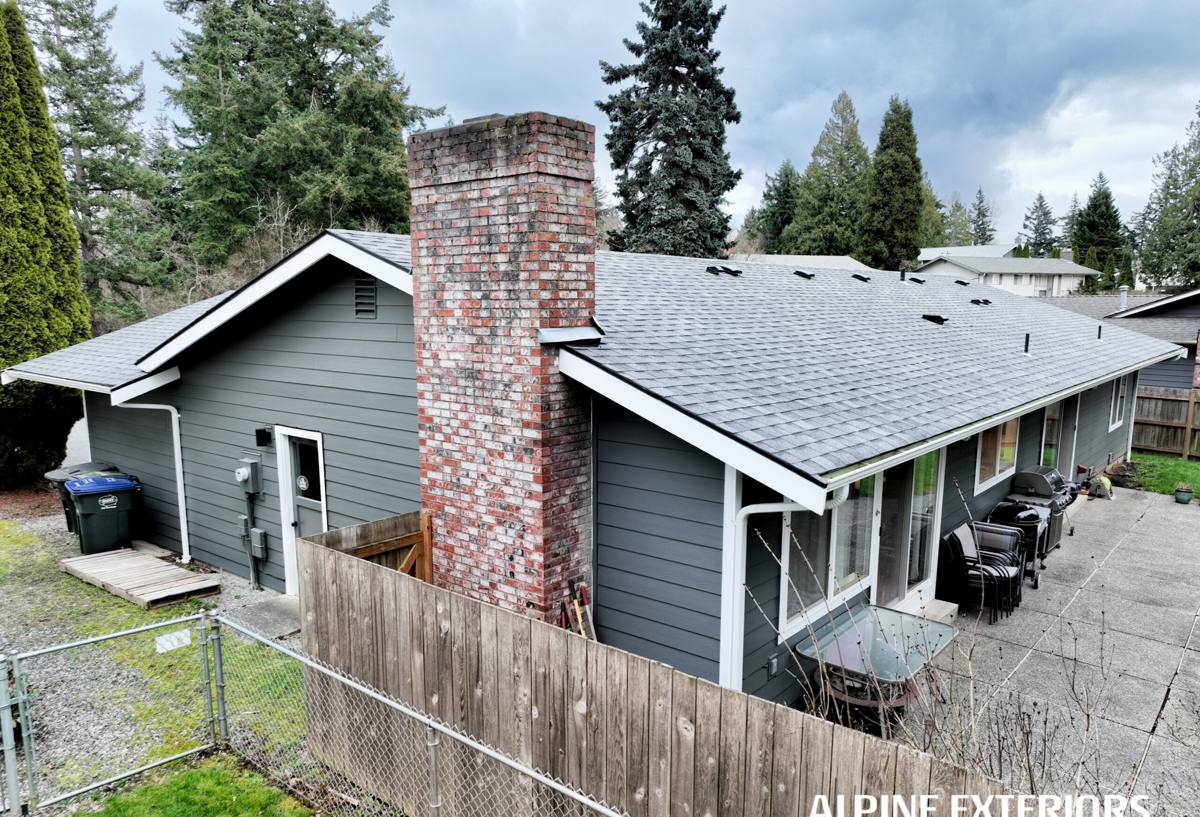
What a Conway Home Actually Needs From Its Siding
Given that climate, siding for a Conway home needs to do a few specific things well:
- Resist moisture absorption so the material itself doesn't swell, soften, or rot over repeated wet-dry cycles
- Hold a factory finish that doesn't rely on the homeowner repainting every few years to keep water out
- Shed and dry out quickly after wind-driven rain instead of trapping water against the wall
- Resist moss and algae growth in shaded, north-facing, or tree-covered sections of the house
- Stand up to salt air without the corrosion and finish breakdown that salt exposure accelerates
- Stay dimensionally stable through the county's freeze-thaw swings so seams and caulk lines don't open up
This is exactly where a lot of common siding choices start to show their limits. Vinyl can warp and fade with prolonged UV and temperature swings, and its seams are a known path for wind-driven rain to get behind the panel. Untreated or primed wood needs a repainting schedule most homeowners underestimate, and once moss and standing moisture get into a seam or nail hole, rot follows. Engineered wood products depend heavily on an intact factory coating â once that's compromised at a cut edge or fastener point, the wood substrate underneath is vulnerable to exactly the kind of sustained moisture Conway sees every winter.
Why We Install Only James Hardie Fiber Cement
We made the decision, years ago, to stop installing anything other than James Hardie fiber cement siding. That's not a marketing position â it's a standard we hold ourselves to because we got tired of watching other products fail in exactly the conditions Skagit County throws at a house. Fiber cement is non-combustible, doesn't swell or rot when it gets wet, and doesn't rely on paint alone to keep water out. James Hardie's ColorPlus finish is baked on at the factory under controlled conditions, which gives it far better adhesion and UV resistance than a field-applied coat of paint, and it comes with its own finish warranty separate from the product warranty.
Just as important, James Hardie engineers specific product formulations for different climate zones. Homes in our region qualify for HZ5 products, engineered for wetter, more temperate climates like ours â as opposed to the HZ10 formulation built for hot, dry, high-UV regions. That distinction matters more in a place like Conway than almost anywhere else in the state, because the failure mode we're guarding against is moisture, not sun bleaching.
The James Hardie Lines We Work With
| Product | Best Use on a Conway Home | Why It Fits This Climate |
|---|---|---|
| HardiePlank lap siding | Primary wall cladding, most common choice | Engineered HZ5 formulation resists moisture absorption; factory ColorPlus finish holds up under salt air and driving rain |
| HardiePanel vertical siding | Accent walls, gable ends, modern or farmhouse styling | Fewer horizontal seams than lap siding, which reduces the number of water entry points on wind-exposed elevations |
| HardieShingle siding | Accent sections, dormers, decorative gables | Won't rot or split like cedar shingles do under sustained damp, shaded conditions |
| HardieTrim boards | Corner boards, fascia, window and door trim | Matches the wall system's moisture performance so trim doesn't become the weak point |
What a Correct Installation Involves
James Hardie siding is only as good as the wall assembly it's installed on top of. A large share of the siding failures we get called out to inspect in this region aren't product failures at all â they're installation shortcuts. In a climate like Conway's, the details matter more than usual because there's less margin for error before trapped moisture becomes a problem.
What we make sure happens on every job
- A drainable, code-compliant water-resistive barrier installed behind the siding, not just a wrap-and-staple approach
- A rainscreen gap or furring strategy where conditions call for it, so any incidental moisture behind the panel can drain and the wall can dry
- Correct flashing at every window, door, and roof-to-wall intersection â the majority of leaks we find trace back to missing or improperly lapped flashing, not the siding itself
- Fastening according to James Hardie's published pattern and blind-nailing or face-nailing specifications, not whatever spacing is fastest
- Proper clearance at the bottom of the wall and above roof lines, decks, and grade, so siding isn't sitting in standing water or splashback
- Factory-finished cut edges sealed per manufacturer instructions, since an unsealed cut edge is the one place the ColorPlus finish isn't protecting the substrate
- Correct caulking at butt joints and trim intersections using a sealant rated for the exposure, not general-purpose caulk that hardens and cracks within a couple of seasons
Skip any one of these and you can end up with a product rated for decades of coastal exposure failing in a fraction of that time â not because the siding was wrong for the job, but because the installation didn't respect what the climate demands.
Our Process for a Conway Siding Project
- On-site assessment. We walk the property, check the existing wall assembly, look for moisture damage or rot already present, and identify problem areas â shaded north walls, low grade clearance, spots where moss has already taken hold.
- Scope and product selection. We spec HardiePlank, panel, and trim combinations based on the home's style and exposure, and confirm HZ5 product specification for our climate zone.
- Tear-off and substrate check. Old siding comes off and we inspect sheathing for rot or damage before anything new goes up â this is where problems from a prior installation usually surface.
- Water-resistive barrier and drainage plane. We install the weather barrier and drainage strategy appropriate to the wall assembly and exposure.
- Flashing at every penetration. Windows, doors, and roof intersections get flashed correctly before siding installation begins.
- Siding installation to manufacturer spec. Fastening pattern, clearances, and joint treatment follow James Hardie's published installation requirements.
- Final detailing and walkthrough. Caulking, touch-up, and a walkthrough so you understand what was done and what maintenance, if any, to expect.
What Affects the Cost of the Job
| Factor | Why It Moves the Price |
|---|---|
| Existing wall condition | Rot or damaged sheathing found at tear-off adds repair scope before new siding goes on |
| Home size and wall complexity | More corners, dormers, and roof intersections mean more flashing and cutting labor |
| Product mix | Plank versus panel versus shingle accents, and trim selection, change material cost |
| Access and site conditions | Low-lying or tight-access lots can affect staging and equipment needs |
| Color and finish selection | Factory ColorPlus finishes are priced by color line and sheen |
We don't quote a job without seeing the house first â anyone offering a firm number over the phone is guessing.
Why It Matters to Hire a Crew That Already Works in Conway
Skagit County's coastal and delta conditions aren't the same as siding a home in a drier inland climate, and a crew that mostly works elsewhere doesn't always adjust their drainage planning, flashing details, or fastening approach for it. A crew that regularly works in and around Conway already knows which elevations take the worst of the wind-driven rain, how much clearance a wall needs above grade in a low-lying lot, and where moss and algae tend to establish first. That familiarity shows up in fewer callbacks and a siding job that actually performs the way James Hardie's climate-engineered products are designed to.
If you're weighing a siding replacement or a new install in Conway, we're happy to take a look at your home, walk you through what we'd recommend, and give you a straightforward, no-pressure estimate using the form below.