 Skagit County
 Conway Sits in a Tough Spot for Exterior Siding
Conway is close enough to the water that salt-laden air is a regular part of the weather, and close enough to the foothills and the Skagit River delta that rain shows up often, sometimes for days at a stretch. That combination is harder on a house exterior than either factor alone. Salt air accelerates corrosion on fasteners and trim, while driving rain off the water finds every gap, seam, and poorly flashed joint in a siding system. Add in a moss season that stretches across most of the fall, winter, and spring, and you have a climate that never really gives siding a break to dry out and reset.
None of this means siding is doomed in Conway — it means the material and the installation both have to be chosen and executed with this specific climate in mind. A siding job that would hold up fine in a dry inland climate can fail early here if it's the wrong product or the wrong install.
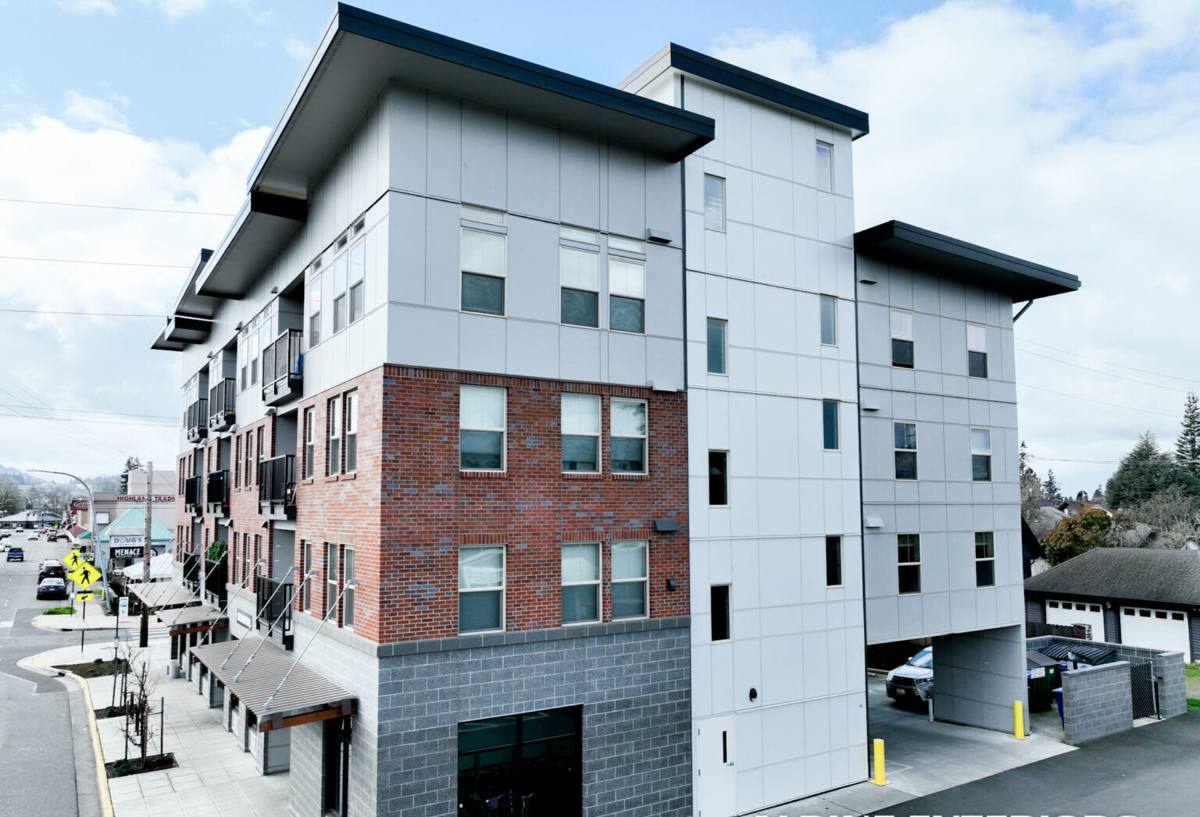
What Conway Homes Actually Need From Their Siding
Homeowners in this part of Skagit County are generally dealing with three recurring stressors: constant moisture exposure, salt air near the water, and shaded, damp conditions that favor moss and algae growth. Siding that performs well here needs to do a few things consistently, year after year:
- Resist moisture absorption and swelling, since siding that takes on water expands, distorts, and eventually lets water past the surface
- Hold a factory finish without chalking, fading, or peeling under repeated wet-dry cycles
- Stay dimensionally stable so seams, caulk lines, and trim joints don't open up over time
- Resist moss, mildew, and algae staining on the surface itself
- Tolerate a coastal-influenced climate without the fasteners or trim corroding prematurely
Wood-based and wood-composite products struggle with more than one of these at once. Vinyl handles moisture fine but expands and contracts significantly with temperature swings, which opens gaps over years of exposure. This is a big part of why we standardized on one material rather than offering several.
Why We Install Only James Hardie Fiber Cement
We install James Hardie fiber cement siding exclusively — we don't offer vinyl, LP SmartSide, cedar, primed spruce, Cemplank, or Allura. That's a deliberate standard, not a limitation on what we're capable of installing. Fiber cement is cement, sand, and cellulose fiber pressed and cured into a dense, stable board. It doesn't absorb water the way wood-based products do, it doesn't soften or delaminate in prolonged wet weather, and it holds its shape through Skagit County's wet winters and warmer, drier summers without the expansion and contraction that stresses seams and fasteners.
Hardie's ColorPlus factory finish is baked on under controlled conditions rather than field-applied, which matters in a climate where site-applied paint often doesn't get enough dry time between rain events to cure properly. The HZ5 product line is engineered specifically for climates with significant moisture exposure, which describes this stretch of Skagit County well. The material is also non-combustible, which is a genuine benefit even in a wet climate, since wildfire risk in Western Washington has become less predictable in recent years.
We won't pretend fiber cement is the cheapest option up front — it isn't. But we've made a professional decision that the products we install need to hold up with minimal intervention for decades in exactly the kind of weather Conway gets, and that ruled out several common alternatives.
What a Correct Installation Actually Involves
Fiber cement siding is only as good as the installation behind it. The board itself resists moisture, but a home's real defense against water intrusion is the assembly underneath — the weather-resistive barrier, the flashing, and the fastening details. Get those wrong and even the best siding on the market will let water in behind it.
Weather Barrier and Flashing
Every installation starts with a continuous weather-resistive barrier over the sheathing, with all seams properly lapped and taped. Flashing goes in at every window, door, and horizontal trim transition, and kick-out flashing gets installed anywhere a roofline meets a sidewall — a detail that's frequently skipped and is one of the most common sources of hidden rot in this region.
Fastening and Clearances
Fiber cement needs the correct fastener type, spacing, and penetration depth — too tight and the board can't move naturally with temperature changes; too loose and it won't hold through wind-driven rain events. Siding also needs proper clearance from grade, roof surfaces, decks, and patios so water and moisture don't wick up into the bottom edge of the panel.
Joints, Trim, and Sealant
Butt joints get flashed or sealed per manufacturer specification, not just caulked and hoped for. Certain expansion gaps are intentionally left unsealed by design — caulking every single seam actually works against the product in some spots, which is a detail that gets missed by crews who aren't used to fiber cement specifically.
How Our Installation Process Works
We approach every Conway project the same structured way, adjusted for the specific home:
- On-site assessment — we look at existing siding condition, sheathing condition where accessible, moisture history, and any problem areas like roof-wall intersections or low-clearance zones
- Removal and prep — old siding comes off, sheathing gets inspected and repaired where needed, and a new weather-resistive barrier goes on correctly lapped
- Flashing and trim — all window, door, and roofline flashing gets installed or replaced before a single piece of siding goes up
- Siding installation — Hardie panels or planks go up to manufacturer fastening specs, with correct clearances maintained throughout
- Detail work — trim, corners, and joints get finished per spec, including the areas that should be left as designed expansion gaps rather than fully sealed
- Final walkthrough — we go over the finished work with the homeowner before calling the job done
Because ColorPlus siding arrives factory-finished, there's minimal on-site painting required, which matters practically in a climate where finding a stretch of dry weather to paint can be its own challenge.
Installation Mistakes We See — and Make a Point of Avoiding
A lot of siding problems in wetter parts of Skagit County trace back to installation shortcuts rather than the material itself. The ones we watch for most closely:
- Skipping kick-out flashing where a roof edge meets a wall, which sends roof runoff directly behind the siding instead of away from it
- Face-nailing too tight, which prevents the board from handling normal moisture-related movement
- Caulking every seam, including expansion joints that are supposed to stay open by design
- Installing siding with too little clearance above grade, decks, or roof surfaces, so the bottom edge stays damp
- Using the wrong fastener material, which corrodes faster in salt-influenced air near the water
- Poor weather-barrier lapping, which can let water track down behind the entire wall assembly before it ever shows on the surface
What Affects the Cost of a Conway Siding Installation
Every home is different, so we don't quote broad numbers without seeing the project, but a few factors consistently move the price up or down:
| Factor | Why It Matters |
|---|---|
| Full tear-off vs. install over existing siding | Removal adds labor but lets us inspect and repair sheathing — usually the right call given how much rain this area sees |
| Home size and number of stories | More square footage and taller walls mean more material, more staging, and more labor time |
| Trim complexity | Homes with many windows, dormers, or architectural details take longer to flash and finish correctly |
| Existing moisture or rot damage | Sheathing repairs found during tear-off add cost but prevent covering up an existing problem |
| Siding profile selected | Lap siding, panel siding, and shingle-style Hardie products differ in material and labor cost |
| Site access | Tight lots, steep grades, or limited staging area can add time to the job |
Keeping Your Siding Working After Installation
Fiber cement is low-maintenance compared to wood or vinyl, but "low-maintenance" isn't "no-maintenance," especially in a climate that supports moss growth for much of the year. A short annual routine goes a long way:
- Rinse the siding surface once or twice a year to clear salt residue and organic buildup, especially on north-facing and shaded walls
- Keep gutters and downspouts clear so overflow doesn't run down the siding face repeatedly
- Trim back plants, shrubs, and tree limbs so they aren't holding moisture against the wall or shading it into permanent dampness
- Check caulking at trim and joints every year or two and touch up where it's cracked or pulled away
- Watch for moss or algae buildup on nearby roof surfaces that sheds spores or debris onto siding below
- Address any small impact damage or chips promptly so moisture can't get behind the panel through an exposed edge
Why a Crew That Already Works Skagit County Matters
Fiber cement installation isn't complicated in concept, but it's unforgiving of shortcuts, and the details that matter most — flashing, clearances, fastening, which joints to seal and which to leave alone — are exactly the details a crew that mostly installs vinyl or hasn't worked this specific climate is more likely to get wrong. A crew that regularly works Conway and the surrounding parts of Skagit County already knows what this weather does to a wall assembly over time, because they've seen the homes where it was installed wrong and the homes where it was installed right. That local pattern recognition is worth more than it sounds like on paper — it's the difference between siding that needs attention in eight years and siding that's still doing its job in thirty.
If you're planning a siding project in Conway and want a straight answer about what your home actually needs, we're glad to take a look and walk you through it. Reach out for a free, no-pressure estimate using the form below.