 Skagit County
 Custom Windows Built for Conway's Weather, Not a Showroom in Phoenix
Conway sits low in the Skagit River delta, close enough to Puget Sound and the tidal flats that salt-laden air, wind-driven rain, and long gray stretches of moss-friendly humidity are just part of owning a home here. A lot of window products sold in this region were engineered for a national market — dry climates, mild coastal exposure, or interior installs where wind-driven water isn't a daily concern. That's not how Conway weather works. Windows here need to handle repeated wetting and drying cycles, resist the slow corrosion that salt air causes on hardware and metal components, and keep their seals tight through decades of temperature swings between damp winters and warm, dry summers. This page is specifically about custom window work for homes in and around Conway — what the local climate demands, what a correct installation looks like, and how our process is built around getting it right the first time.
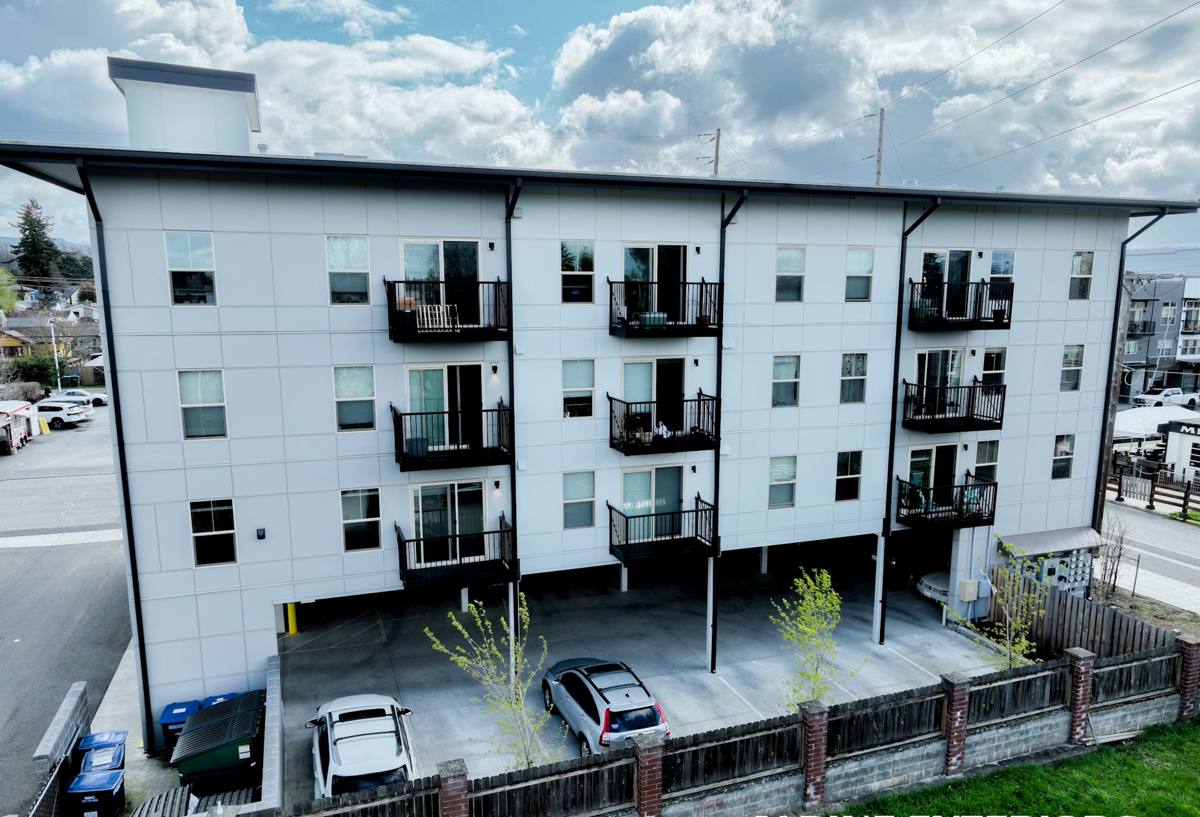
What Conway Homes Are Actually Up Against
Salt Air and Corrosion
Homes closer to the Sound and the tidal sloughs around Conway see more airborne salt than homes further inland in the county. Salt accelerates corrosion on window hardware — hinges, locks, balances, and screen frames — and it can degrade certain finishes faster than the manufacturer's warranty assumes. This isn't a reason to avoid windows near the water; it's a reason to be deliberate about frame material, hardware finish, and how the unit is sealed against the wall assembly.
Driving Rain
Skagit County doesn't just get rain — it gets wind-driven rain that hits windows sideways during winter storms. A window can be rated for water resistance in a lab test and still leak in the field if the flashing detail around it wasn't done correctly. Most window leaks we're called out to inspect aren't a bad window — they're a bad installation, usually a missing or improperly lapped flashing detail that let water behind the siding instead of directing it back out.
Long Moss Season
The extended damp season that makes moss thrive on roofs and north-facing siding does the same thing to window sills, trim, and any wood components that don't get enough sun and airflow to dry out between rain events. Wood-clad windows without a sound paint or stain schedule, or windows installed without adequate drainage at the sill, are the ones we see moss and rot creeping into first — usually starting at the bottom corners, where water sits longest.
What a Correct Window Installation Actually Involves
Swapping a window sounds simple — pull the old one, drop in the new one — but in a climate like this, the details around the window matter as much as the window itself.
- Removing the old unit without damaging the surrounding wall framing or existing weather-resistive barrier
- Inspecting the rough opening for hidden water damage or rot before anything new goes in — this is where problems from a decades-old install often surface
- Installing a sloped sill pan so any water that gets past the window sheds outward instead of pooling
- Flashing the opening in the correct shingle-lap sequence (sill, jambs, then head) so water is always directed down and out, never trapped behind the siding
- Setting the window level, plumb, and square, with proper shimming so the frame isn't under stress that can crack seals over time
- Sealing with the right sealant for the substrate — not just caulk everywhere and hope
- Insulating the gap around the frame without overpacking it, which can bow the frame and cause operational problems
- Finishing trim and siding tie-ins so the whole assembly sheds water as a system, not a patchwork
Skip any one of these steps and you can end up with a window that looks fine for a year or two, then starts showing water staining, fogging between panes, or soft trim — problems that are far more expensive to fix once they've spread into the wall.
Choosing the Right Window for a Conway Home
There's no single "best" window material — the right choice depends on your home's exposure, your maintenance appetite, and your budget. Here's how the common options actually compare for a home in this climate:
| Frame Material | Moisture & Salt Air Behavior | Maintenance | Typical Trade-Off |
|---|---|---|---|
| Vinyl | Won't rust or corrode; handles salt air well | Low — occasional cleaning | Limited color/custom options; can expand/contract with heat |
| Fiberglass | Excellent — very stable, resists moisture and corrosion | Low | Higher upfront cost than vinyl |
| Wood | Attractive but vulnerable if finish isn't maintained | High — repaint/reseal on a schedule | Best look for period-correct homes; needs commitment |
| Wood-Clad (wood interior, metal/vinyl exterior) | Good if clad and flashed correctly; failure point is usually the cladding seam | Moderate | Interior warmth of wood without full exterior maintenance |
| Aluminum | Prone to corrosion near salt air unless marine-grade and well-finished | Moderate | Slim sightlines, but generally not our first recommendation this close to the water |
For most Conway homes, we steer people toward vinyl or fiberglass for anything with real weather exposure, and reserve wood or wood-clad for spots that are more protected — under an eave, on a covered porch, or where the architectural look genuinely calls for it and the owner is ready to keep up with maintenance.
Signs Your Current Windows Are Already Losing the Fight
A lot of homeowners live with a failing window for years because the signs are subtle at first. Worth checking for:
- Fogging or a hazy film between the panes — the seal has failed and the gas fill is gone
- Soft or discolored trim and sill wood, especially at the bottom corners
- Visible moss or dark staining on the exterior sill or trim
- Drafts you can feel with your hand near the frame on a windy day
- Windows that are hard to open, close, or lock — a sign the frame has shifted or swollen
- Condensation forming on the interior glass regularly in cold weather
- Paint that's peeling or bubbling on wood frames, a sign moisture is already underneath
Catching these early usually means a window replacement. Ignoring them usually means a wall repair on top of it.
Our Process, Start to Finish
We keep this straightforward because homeowners have enough to manage without a confusing process on top of it.
- On-site assessment. We look at each window's exposure, the condition of the rough openings where possible, and talk through what you actually want — matching existing sightlines, upgrading glass performance, changing operable style, or all of the above.
- Straightforward proposal. You get a clear scope and price before any work starts — no vague allowances that turn into surprise add-ons.
- Careful removal and inspection. Old windows come out clean, and we flag anything we find in the opening — rot, prior water intrusion, undersized flashing — before covering it back up.
- Correct installation. Sill pan, flashing sequence, sealant, shimming, insulation, and trim tie-in done in the order that actually keeps water out, not the order that's fastest.
- Walkthrough. We check operation on every window with you before we call the job done — locks, latches, smooth opening, and a visual seal check.
Cost Factors Worth Understanding Before You Get Quotes
| Factor | Why It Moves the Price |
|---|---|
| Frame material | Vinyl is generally the most budget-friendly; fiberglass and wood cost more upfront |
| Number of openings | Per-window cost typically drops as the total count on a project goes up |
| Condition of the rough opening | Hidden rot or water damage found during removal adds repair work before the new window goes in |
| Glass package | Double-pane vs. triple-pane, low-E coatings, and gas fills all affect price and performance |
| Size and configuration | Custom shapes, large picture windows, and operable specialty styles (casement, awning, bay) cost more than standard sliders or single-hungs |
| Trim and exterior finish work | Matching existing trim profiles or re-siding around the opening adds labor |
We'd rather walk you through these factors on-site and give you a real number than throw out a ballpark that doesn't hold up once we're actually in your walls.
Why a Crew That Already Works Conway Matters
General contractors who occasionally take a window job in this area sometimes miss the details that matter here specifically — how far a home sits from the water, which exposures take the worst of the driving rain, or why a flashing detail that works fine in a drier part of the state isn't enough in Skagit County. A crew that regularly works Conway and the surrounding areas has already seen how these homes age in this climate, what fails first, and what actually holds up. That's not about brand loyalty to one product — it's about knowing which materials and installation details earn their keep here and steering you away from the ones that look good on a spec sheet but don't perform in salt air and driving rain over the long haul.
If you're weighing a window replacement or repair for a Conway home, we're happy to take a look and give you an honest read on what your windows actually need — no pressure, no upsell script. Use the form below to request a free estimate.