 Skagit County
 Building Decks for La Conner's Waterfront Climate
La Conner sits close to the water along the Swinomish Channel, and that setting shapes almost every decision that goes into a well-built deck here. Homes in this part of Skagit County deal with a combination most inland builders never have to plan for: salty, moisture-laden air off the channel and Puget Sound, driving rain that comes in sideways during winter storms, and a moss and algae season that can run eight months or more. A deck built to a generic spec sheet will show its age fast in this environment. A deck built for La Conner specifically holds its finish, its fasteners, and its structure for years longer.
This page covers what that actually means in practice — the materials, the construction details, the permitting realities, and the maintenance rhythm that make the difference between a deck that ages gracefully and one that needs rework in five years.
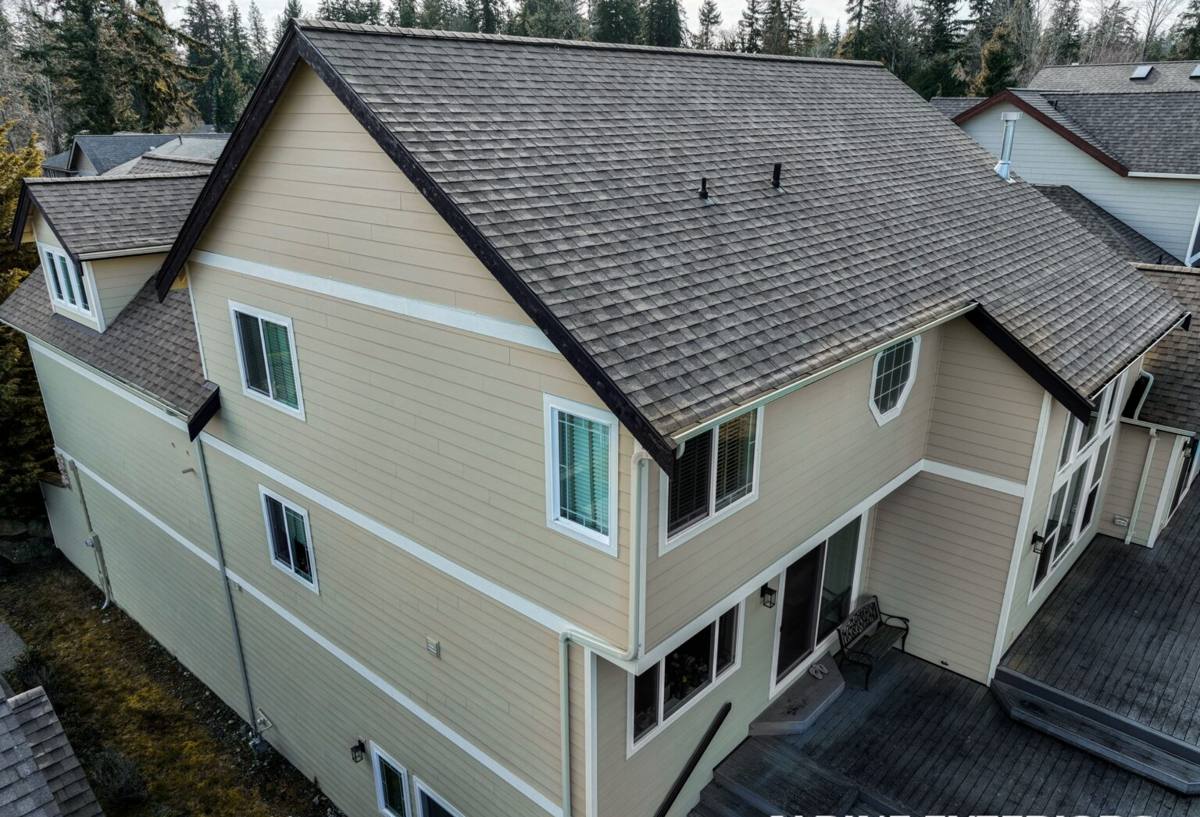
What Salt Air and Driving Rain Do to a Deck
Salt air is corrosive to anything metal, and a deck has more metal in it than most homeowners realize — joist hangers, structural screws, post bases, flashing, and railing hardware. Standard hardware coatings that hold up fine twenty miles inland can start pitting and staining within a couple of seasons this close to the water. Once a fastener or hanger starts corroding, it loses holding strength quietly, long before it looks bad enough to notice from the surface.
Driving rain is a different problem. It doesn't just fall on a deck, it gets pushed sideways into ledger connections, under railing posts, and into any gap where end grain is exposed. Wood that stays damp for extended stretches is where rot starts, and in this climate "damp" can mean most of the winter. The construction details that keep water moving off a deck and away from the house — not sitting in it — matter more here than in drier parts of the state.
Add in the long moss season and you get a third factor: any horizontal surface that doesn't drain and dry between rains becomes a growing surface. Moss and algae aren't just cosmetic — they hold moisture against the decking and make boards slick and dangerous underfoot.
What This Means for a La Conner Deck Specifically
- Fastener and hardware selection needs to account for salt exposure, not just general outdoor use.
- Flashing at the ledger board (where the deck attaches to the house) has to be done correctly the first time — it's the single most common source of hidden rot in Pacific Northwest decks.
- Board spacing and airflow underneath the deck need to be planned for drainage and drying, not just appearance.
- Any deck near ground level or close to the water needs extra attention to grading and moisture control at the footings.
Material Options for La Conner Decking
There's no single "best" decking material — each option is a trade-off between upfront cost, maintenance, and how it handles this specific climate. Here's how the common choices compare for a waterfront-adjacent, high-moisture setting like La Conner.
| Material | Moisture & Salt Air Performance | Maintenance | Typical Lifespan |
|---|---|---|---|
| Pressure-treated pine | Good if properly sealed; end cuts and fasteners are the weak point | Needs re-staining/sealing every 1-2 years in this climate | 15-20 years with upkeep |
| Cedar | Naturally rot- and insect-resistant, but softens and grays without finish care | Regular sealing to prevent moss uptake and splintering | 15-25 years with upkeep |
| Composite decking | Excellent — doesn't absorb water or rot, resists salt air well | Occasional washing to keep moss and algae from taking hold on the surface | 25-30+ years |
| PVC/capped polymer | Best moisture and salt resistance of any decking material | Lowest maintenance; periodic cleaning only | 25-30+ years |
We'll walk homeowners through this honestly based on budget and how the deck will be used. A wood deck done right, with the correct hardware and a realistic maintenance plan, is a perfectly good choice. Composite and capped polymer cost more up front but make sense for homeowners who want to spend less time maintaining a deck in a climate that's hard on wood. What we won't do is install a product and gloss over the maintenance it actually requires — that's how homeowners end up with a deck that looks tired years before it should.
The Structural Details That Actually Matter
Decking material is the part everyone sees, but the parts that determine whether a deck lasts are underneath and behind it.
Ledger Board and Flashing
Where the deck attaches to the house is the most water-vulnerable connection on the entire structure. Correct flashing — installed so water is shed away from the house sheathing, not trapped behind the ledger — is non-negotiable. This is also the detail most often done wrong on older or budget-built decks, and it's usually invisible until a homeowner finds soft framing or siding damage years later.
Footings and Frost Depth
Footings need to be sized and set to the depth required for the soil and frost conditions on the site. Undersized or shallow footings can shift over time, especially on sites with drainage challenges, which shows up later as a deck that feels bouncy or uneven.
Fasteners and Hardware
In a marine-air environment, we spec corrosion-resistant fasteners and connectors rated for coastal or treated-lumber exposure, not generic exterior-grade hardware. It costs a little more up front and it's the difference between hardware that's still solid in fifteen years and hardware that's rusting through in five.
Airflow and Drainage Underneath
Low decks especially need attention to grading and ventilation underneath so moisture doesn't sit trapped against the framing. This is a detail that's easy to skip and expensive to fix later.
Railings, Guardrails, and Code Requirements
Any deck above a certain height needs a code-compliant guardrail, and Skagit County follows the Washington State building code for height, baluster spacing, and load requirements. Beyond the legal minimum, railing hardware is another spot where salt air exposure matters — post connections and cable or baluster fasteners need the same corrosion-resistant treatment as the rest of the structure. We build railings to pass inspection and to still be solid to the touch a decade from now.
Permitting for Deck Projects in Skagit County
Most new decks and significant deck rebuilds in unincorporated Skagit County and within La Conner require a building permit, particularly once a deck exceeds a certain height or size. Depending on the property, there can also be setback requirements from property lines, and homes closer to the water or within shoreline jurisdiction may have additional review involved. We handle the permit submission and inspection process as part of the job rather than leaving homeowners to sort it out, and we'll tell you upfront if your property's location or setback situation is likely to add a review step.
Our Deck Building Process
Every deck we build in La Conner follows the same sequence, regardless of size or material:
- On-site assessment — we look at grading, sun/shade exposure, proximity to water, and how the deck will connect to the house.
- Design and material selection — sized to how the space will actually be used, with an honest material conversation based on budget and maintenance preference.
- Permit submission — handled by us, including any Skagit County or City of La Conner requirements that apply to the site.
- Footings and framing — set to correct depth, with corrosion-resistant hardware throughout.
- Ledger flashing and waterproofing — done to keep water out of the house connection point, not just off the surface.
- Decking, railing, and finish work — installed with the spacing and drainage details this climate requires.
- Final walkthrough — including a maintenance overview specific to the material chosen.
Living With a Deck Through a Long Moss Season
Even a well-built deck needs some seasonal attention in a climate this wet. The goal is to keep moisture from sitting on the surface long enough for moss and algae to establish.
- Sweep debris (leaves, needles, seed pods) off the deck regularly — trapped debris holds moisture and feeds moss growth.
- Wash the surface at least once or twice a year to remove early moss and algae before it embeds in the wood grain or composite texture.
- Check gaps between boards periodically to make sure they haven't filled with debris that blocks drainage.
- For wood decks, keep the sealer or stain schedule current — a failed finish is what lets moisture and moss get a foothold.
- Keep an eye on the underside and framing once a year if the deck is low to the ground, where airflow is limited.
Why Local Experience in La Conner Matters
A deck built to a general Western Washington spec isn't the same as one built for a home that sits close to the Swinomish Channel and takes the full brunt of marine air and winter storms off the water. Crews that already work in La Conner know which hardware actually holds up here, how the local permitting process runs, and what kind of maintenance schedule is realistic for homeowners rather than theoretical. That local knowledge shows up in the decisions made before the first board is ever cut — not just in the finished look of the deck.
If you're planning a new deck or need an honest look at an existing one, we're happy to come out, walk the site, and give you a straightforward assessment. Reach out for a free, no-pressure estimate using the form below.