 Skagit County
 Why Decks Wear Out Faster in Anacortes
Anacortes sits right on the water, and that location cuts both ways. The same marine setting that makes the views worth having also puts decks through conditions that inland Skagit County homes simply don't deal with. Salt-laden air corrodes fasteners and hardware faster than plain moisture does. Driving rain off the Sound gets pushed sideways under railings and against ledger boards by wind that a sheltered lot never sees. And the long, damp stretch from fall through spring gives moss, algae, and mildew months to work into any spot on a deck that doesn't drain or dry properly.
None of this means decks in Anacortes are doomed to fail early. It means they need to be built with this specific environment in mind, not built to a generic spec and hoped for the best. A deck that would last two decades in a dry inland climate can start showing real structural problems in half that time here if the flashing, fasteners, and drainage details were an afterthought.
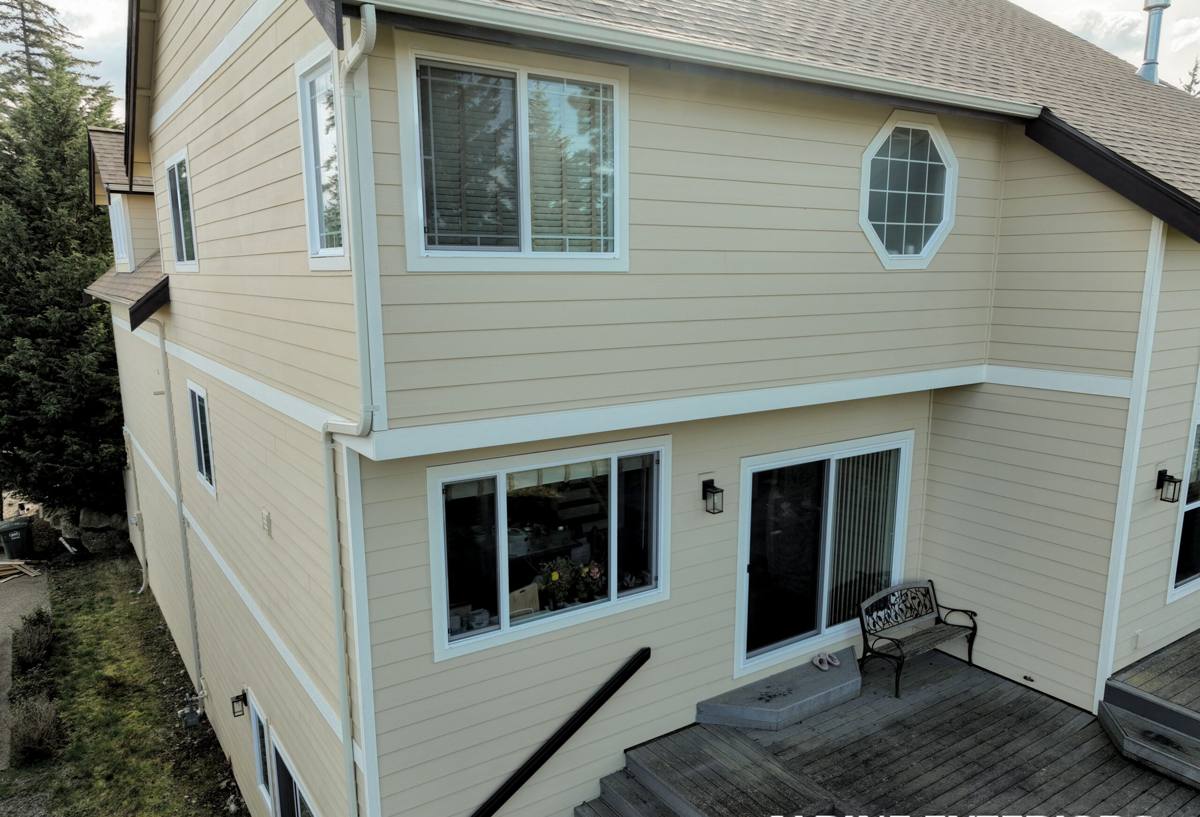
Signs a Deck Needs Replacement, Not Just Repair
Not every tired-looking deck needs to come out. But there's a point where patching boards or re-staining is just delaying a bigger problem, and pushing past that point on a coastal deck can mean the difference between a planned replacement and an unplanned collapse. Some signs point clearly to replacement:
- Soft, spongy, or spalling wood around the ledger board where the deck attaches to the house
- Rust streaking from fasteners, joist hangers, or post bases
- Persistent moss or dark staining that comes back within weeks of cleaning
- Visible gaps, cracks, or movement where posts meet footings
- Boards that feel bouncy or "give" underfoot, especially near the house or stairs
- A deck older than 15-20 years that has never had its structural framing inspected
If what you're seeing is limited to a handful of surface boards and the framing underneath is sound, a repair may genuinely be the right call. We'll tell you that honestly during an inspection rather than push a full rebuild you don't need. But if the ledger, joists, or footings are compromised, repair is usually a short-term fix on top of a long-term problem.
Why Ledger Boards Fail First Here
The ledger board — the piece that bolts the deck to your house's rim joist — is almost always where coastal deck failures start. It's the hardest area to keep dry because it sits against the house, catches runoff from the roofline above, and is easy to under-flash during original construction. Once water gets behind a poorly flashed ledger, it can rot both the ledger and the rim joist behind it without showing much on the surface until the damage is advanced.
What a Correct Deck Replacement Actually Involves
A deck replacement done right is a structural project, not a cosmetic one. The visible decking is the last thing installed, not the main event. What matters most happens underneath:
Footings and Posts
Footings need to be sized and set to current code depth, not just matched to whatever was there before — especially if the original deck predates current Skagit County requirements. Undersized or shallow footings are a common issue we find on older Anacortes decks, and they're not something worth carrying forward into a new build.
Ledger Flashing
This is the single most important detail on any deck replacement in our climate. A proper ledger installation uses flashing that directs water away from the house structure — not just caulk, which dries out and cracks within a few seasons of freeze-thaw and salt exposure. We treat ledger flashing as non-negotiable, because it's the one mistake that causes hidden rot years down the road.
Joist Protection
Untreated cut ends and joist tops are where framing lumber starts to fail first, since that's where water sits longest. Protecting joist tops and any field cuts is a small step during construction that pays off directly in how long the frame lasts.
Drainage Under the Deck
Standing water under a deck, whether from poor grading or clogged gaps between boards, keeps framing damp long after a storm has passed. Correct spacing and a slight slope away from the house give water somewhere to go instead of pooling against posts and beams.
Decking Material Options for a Marine Climate
Every decking material has a different relationship with salt air, rain, and moss. There's no single "best" choice for every homeowner — it depends on budget, maintenance appetite, and how the deck will be used. Here's an honest comparison:
| Material | How It Handles Salt Air & Moisture | Maintenance | Typical Lifespan |
|---|---|---|---|
| Pressure-treated wood | Good if sealed regularly; end grain and fastener holes are vulnerable points | Annual cleaning, re-sealing every 1-2 years | 10-15 years |
| Cedar | Naturally rot-resistant but still needs sealing near the coast; grays without maintenance | Regular sealing, moss treatment in shaded areas | 15-20 years |
| Composite decking | Doesn't rot or absorb moisture like wood; some boards can still stain if moss isn't cleaned | Occasional washing, no sealing needed | 25-30 years |
| PVC decking | Fully moisture-resistant, doesn't support rot; performs well in salt exposure | Low — periodic washing | 25-30+ years |
We install all of these, and we'll walk you through the real trade-offs rather than steer you toward whatever's easiest to sell. Wood costs less upfront but asks more of you every year. Composite and PVC cost more initially but hold up with far less attention in exactly the conditions Anacortes throws at a deck — repeated wetting, salt exposure, and shaded, moss-prone corners.
Fasteners and Hardware: The Detail Most Decks Get Wrong
Standard galvanized fasteners and connectors are fine in a lot of the country. Near the water, they corrode noticeably faster, and a rusted joist hanger or bolt is a structural weak point, not just an eyesore. On every deck replacement, we spec stainless steel or high-corrosion-rated coated hardware for fasteners, joist hangers, and post bases. It costs more than standard hardware, but it's a one-time cost against a problem that otherwise shows up again in five or six years, hidden inside the frame where you can't see it forming.
Dealing With Moss and the Long Wet Season
Skagit County's wet season runs long, and shaded or north-facing decks in Anacortes can stay damp for weeks at a stretch. Moss doesn't just look bad — it holds moisture against the decking surface and makes boards slick and unsafe underfoot. A few build choices reduce how much of a problem this becomes:
- Proper board spacing so water and debris don't collect between boards
- Materials matched to how much shade and airflow the specific deck location gets
- Grading and drainage that moves water away from the structure instead of pooling under it
- Railings and fascia detailed so water doesn't get trapped behind trim boards
No deck in this climate will stay moss-free without any upkeep at all, but the amount of upkeep required depends heavily on how it was built.
Permits and Local Requirements
Deck replacements in Anacortes and the surrounding parts of Skagit County typically require a permit, particularly when footings, framing, or the ledger connection are being rebuilt rather than just the surface decking. Requirements can vary depending on deck size, height, and whether the work falls under city or county jurisdiction. We handle the permitting and inspection process as part of the job, so you're not the one tracking down what applies to your specific property.
Our Deck Replacement Process
We approach every deck replacement in Anacortes the same structured way:
- Inspection: We check the ledger, framing, footings, and posts to confirm whether replacement or repair is the right call, and explain what we find.
- Plan and estimate: We put together a scope covering materials, footing work, flashing, and hardware, with a clear cost breakdown.
- Permitting: We pull the necessary permits and schedule required inspections.
- Demolition: The old deck comes out, and we check the house structure behind the ledger for any hidden rot before closing it back up.
- Framing and flashing: New footings, posts, joists, and ledger flashing go in to current code, with corrosion-resistant hardware throughout.
- Decking and railings: Final surface material and railing system are installed per your selection.
- Final walkthrough: We go over the finished deck with you, including any maintenance notes specific to the material you chose.
What Affects the Cost of a Deck Replacement
| Factor | Why It Matters |
|---|---|
| Deck size and shape | More square footage and multiple levels or angles increase material and labor |
| Decking material chosen | Wood costs less to install than composite or PVC, but composite/PVC reduce long-term maintenance cost |
| Height and stairs | Elevated decks need more substantial framing, railings, and stair structures |
| Condition of existing footings | Footings that don't meet current code need replacing, adding to the scope |
| Ledger and structural repair | Hidden rot found behind the ledger during demolition can add repair work |
| Railing style and hardware | Cable, glass, or custom railing systems cost more than standard wood or metal balusters |
We give you a firm, itemized estimate before work starts, not a number that grows once the deck is already torn apart. If we find something during demolition that changes the scope — hidden rot behind a ledger, for example — we stop and talk it through with you before proceeding.
Why Hiring a Crew That Already Works Anacortes Matters
A contractor who mainly works inland or in drier parts of the state may not default to marine-grade fasteners, may under-flash a ledger because it's "usually good enough," or may not know which decking materials actually hold up against salt air and long moss seasons versus which ones just look good in a showroom. A crew that regularly builds decks in Anacortes and coastal Skagit County treats corrosion-resistant hardware, proper ledger flashing, and drainage detailing as standard practice, not an upcharge — because we've seen firsthand what happens when those details get skipped.
Local experience also means fewer surprises with permitting, since we already know how the process works for decks in this area, and a faster read on what's actually happening structurally when we're standing on your deck during an inspection.
If your deck is showing signs of age, feels unsafe, or you're just ready to plan ahead before it becomes a bigger problem, we're happy to come take a look. We offer a free, no-pressure estimate for Anacortes homeowners — walk us through your deck, and we'll tell you honestly what it needs.