 Skagit County
 Windows Built for the Skagit Valley, Not a Showroom
Lyman sits up the Skagit River corridor, away from the open coast but squarely inside the same wet, marine-influenced weather system that soaks the rest of Skagit County. Homes here deal with long stretches of driving rain, heavy fall and winter humidity, and a moss season that seems to start earlier every year. Add in the temperature swings between valley fog mornings and warm afternoons, and older windows in this area tend to show their age fast — fogged glass, swollen wood sashes, drafts you can feel from across the room.
Energy-efficient window replacement in Lyman isn't just about a lower heating bill, though that's real. It's about stopping moisture from getting a foothold in your wall assembly in the first place. A window that's rated well on paper but installed poorly will still leak, still fog, and still rot the framing around it within a few years. This page covers what actually matters for a Lyman home: the climate factors, the product tradeoffs, and the install details that separate a window job that lasts twenty-plus years from one that needs redoing in five.
How the Local Climate Wears Down Windows
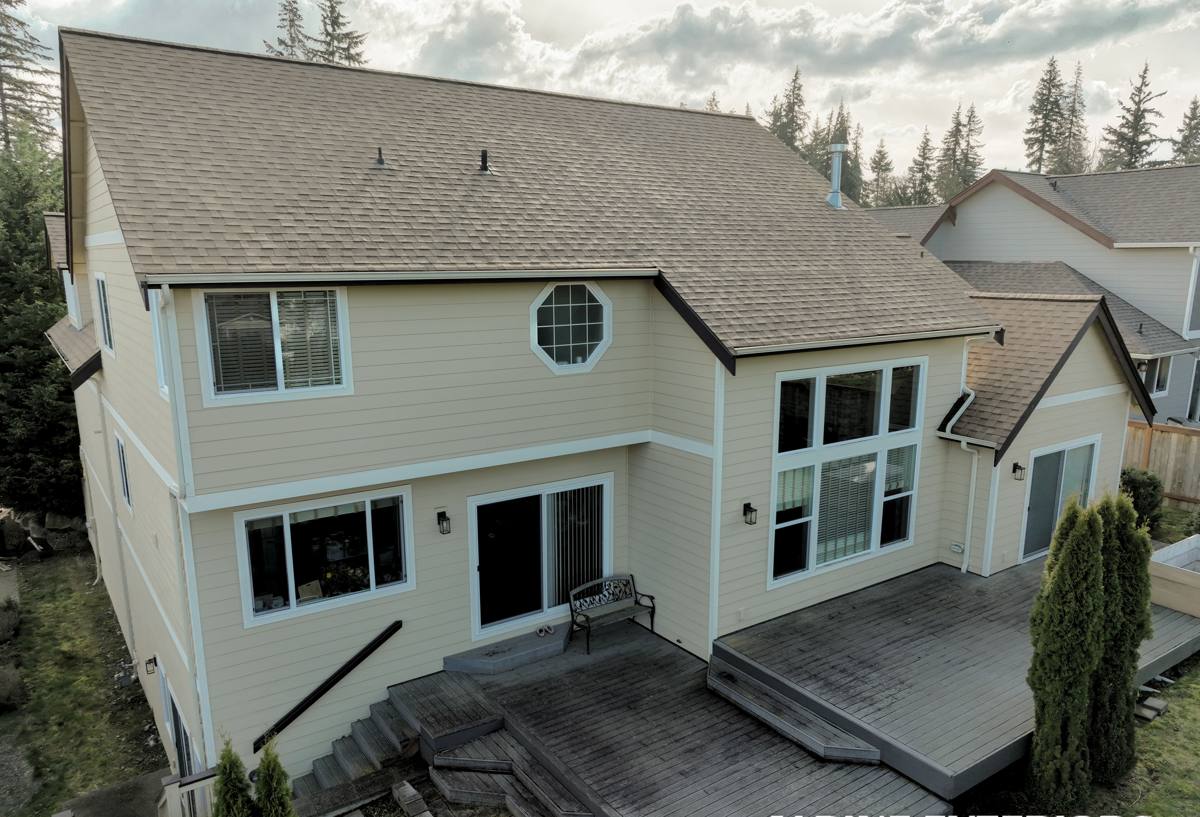
Skagit County's weather isn't extreme, but it's relentless. Whether it's driving rain off the Sound closer to the coast or the steady valley drizzle around Lyman, the pattern is the same: long duration wetting, short drying windows, and moss and algae that thrive in the shade and shadow lines around window trim and sills.
- Driving rain: wind-driven rain pushes water sideways into any gap in flashing or caulking, not just straight down — this is where most window leaks start.
- Moss and algae: shaded north and east-facing walls stay damp longer, and moss growth on sills and trim holds moisture against wood and caulk joints.
- Condensation: single-pane and older double-pane windows in this climate fog up and sweat on cold mornings, and that moisture runs down into the sill and framing over time.
- Temperature swings: valley fog followed by afternoon sun stresses seals and glazing compound, which is often the first thing to fail on an aging window.
None of this is unique to Lyman, but it's a fair description of what any window on a Skagit County home is up against year after year — and it's why the install details matter as much as the window itself.
Signs Your Current Windows Are Underperforming
Homeowners usually notice a problem before they can name it. Here's what typically shows up first:
- Visible condensation or fog between the panes of a double-pane window — the seal has failed and the argon gas (if any) is gone.
- Cold drafts near the frame even with the window latched shut.
- Wood sashes or sills that feel soft, are discolored, or have moss or black staining building up.
- Windows that are hard to open, close, or lock — frames can warp slightly as wood absorbs moisture.
- A noticeable difference in comfort between rooms, especially rooms with older or west/north-facing windows.
- Rising heating costs without a clear other cause.
Any one of these on its own isn't an emergency. Several together, especially soft wood or persistent fogging, usually means it's time to stop patching and start planning a replacement.
What "Energy-Efficient" Actually Means
The term gets used loosely in marketing, but for the Pacific Northwest climate zone, two numbers matter more than any brand name:
U-Factor
This measures how well the window keeps heat from escaping — lower is better. In a mild, wet climate like ours, a good U-factor keeps interior surfaces warmer, which cuts down on condensation as much as it cuts down on heat loss.
Solar Heat Gain Coefficient (SHGC)
This measures how much solar heat passes through the glass. Western Washington doesn't need aggressive solar rejection like a hot, sunny climate would — but on windows that get direct afternoon sun, a moderate SHGC still helps even out room temperatures.
Look for the NFRC (National Fenestration Rating Council) label on any window you're quoted. It's an independent, third-party rating — not a manufacturer's marketing claim — and it's the only reliable way to compare products on an apples-to-apples basis. We size windows to Washington State Energy Code requirements as a baseline, then adjust up where a specific wall, orientation, or room calls for it.
Frame Material: What Holds Up in This Climate
Frame material affects how the window handles moisture over decades, not just how it looks on day one.
| Material | Moisture Behavior | Maintenance | Typical Fit For |
|---|---|---|---|
| Vinyl | Won't rot; seams and welds are the main failure point if manufactured poorly | Low — occasional cleaning | Most standard replacements; good value |
| Fiberglass | Excellent — dimensionally stable, doesn't expand/contract much with temperature | Low | Larger openings, higher-exposure walls |
| Wood-clad | Good if the cladding is intact, but any breach exposes wood core to rot | Higher — cladding seams need monitoring | Homes prioritizing a wood interior look |
| Aluminum | Poor thermal performance in this climate; prone to condensation without a thermal break | Low | Rarely our recommendation for residential replacement here |
For most Lyman homes, vinyl or fiberglass makes the most sense given the exposure and maintenance-averse reality of rural and semi-rural properties. We'll walk through the actual tradeoffs for your specific walls and orientation rather than push one product line — the right call depends on the house, not a sales quota.
The Install Is What Actually Determines Performance
This is the part that gets skipped by crews in a hurry, and it's the part that decides whether a window lasts twenty years or leaks into the wall in five. A high-rated window with a sloppy install will underperform a mid-grade window installed correctly, every time.
What a correct install includes
- Removing old flashing and building paper back far enough to inspect and repair any hidden rot before the new window goes in.
- Installing a sloped sill pan so any water that does get past the exterior seal drains back out, not into the framing.
- Proper flashing tape sequencing — sill first, then jambs, then head — shingle-lapped so water always sheds downward and outward.
- Correct shimming and fastening so the window operates smoothly and doesn't rack out of square over time.
- Low-expansion foam or backer rod and sealant at the interior gap — never packed solid with standard foam, which can bow the frame.
- Exterior caulking at the trim joints using a sealant rated for this climate's wide humidity range.
Skipping the sill pan or rushing the flashing lap are the two most common shortcuts we see when we're called in to fix someone else's window job. Both failures are invisible from the outside until the wall behind the window is already wet.
How Our Process Works
- On-site assessment: we look at every window being considered, check for existing rot or moisture damage, and measure openings accurately — no guessing from a photo.
- Honest scope and pricing: a straightforward quote showing what's included, what frame and glass options fit your budget, and any repair work the old opening needs before a new window goes in.
- Scheduling around weather: we plan installs to minimize how long any opening sits without a window, which matters in a climate that rains as often as ours does.
- Install with full flashing and sill pan detailing: as described above — no shortcuts on the parts nobody sees once trim goes back on.
- Cleanup and walkthrough: every window operated and checked before we consider the job finished.
Cost Factors Worth Knowing Upfront
| Factor | Why It Moves the Price |
|---|---|
| Existing rot or water damage | Hidden framing repair adds labor and material that only shows up once the old window is out |
| Window size and configuration | Larger openings, picture windows, and multi-unit combinations cost more than a standard single unit |
| Frame material | Fiberglass typically costs more upfront than vinyl but needs less long-term attention |
| Access and story height | Second-story and hard-to-reach windows take more labor time and equipment |
| Number of units | Whole-house replacement usually brings a better per-window rate than one-off swaps |
We'll give you a real number after we've actually looked at your windows — broad ballpark ranges over the phone rarely hold up once we see the condition of the existing openings.
Why Local Experience in Skagit County Matters
A crew that works Skagit County regularly has already seen how the valley's rain patterns and moss growth behave against different wall assemblies, roof overhangs, and window orientations common in this area's housing stock. That matters when we're deciding where a sloped sill pan is non-negotiable versus where standard flashing is adequate, and it matters when we're advising on frame material for a wall that gets more weather than the rest of the house.
It also means we're not learning the region on your dime. We know that a window job finished right before a wet fall stretch needs different sequencing than one done in a dry August window, and we plan installs accordingly rather than treating every job the same regardless of season.
Maintenance After Install
Even a well-installed, high-quality window benefits from basic upkeep in this climate:
- Rinse moss and organic buildup off sills and trim once or twice a year, especially on shaded sides of the house.
- Check exterior caulk lines annually for cracking or separation and re-seal as needed — small gaps are cheap to fix before they become leaks.
- Keep gutters and downspouts clear so roof runoff isn't sheeting down over window heads.
- Operate every window through its full range a few times a year so hardware doesn't seize up from disuse.
None of this is heavy maintenance — it's the kind of thing that takes twenty minutes and saves a much bigger repair down the line.
If your Lyman home has windows that fog, draft, or just feel tired, we're happy to take a look and give you a straight answer about what's actually needed — no pressure, no upsell. Reach out using the form below for a free estimate.