 Skagit County
 Composite Decking Built for Hamilton's Wet, Shaded Climate
Hamilton sits in the Skagit River valley, tucked against timber and hillside, which means a deck here deals with a different set of pressures than one out on open, sunny ground. Homes in this part of Skagit County get long stretches of shade from surrounding trees, heavy seasonal rain, and the kind of persistent dampness that keeps wood surfaces wet for days after a storm passes. That combination is exactly where composite decking earns its keep — it doesn't absorb water the way wood does, it doesn't need refinishing every couple of years, and it holds up to the freeze-thaw swings that show up in the valley during colder snaps.
We install composite decking across Skagit County, and the honest truth is that no decking product is maintenance-free. What changes from town to town is which failure points matter most. In Hamilton, the priorities are moisture management underneath the deck, airflow to fight moss and algae, and hardware that won't corrode in a damp, shaded environment year after year.
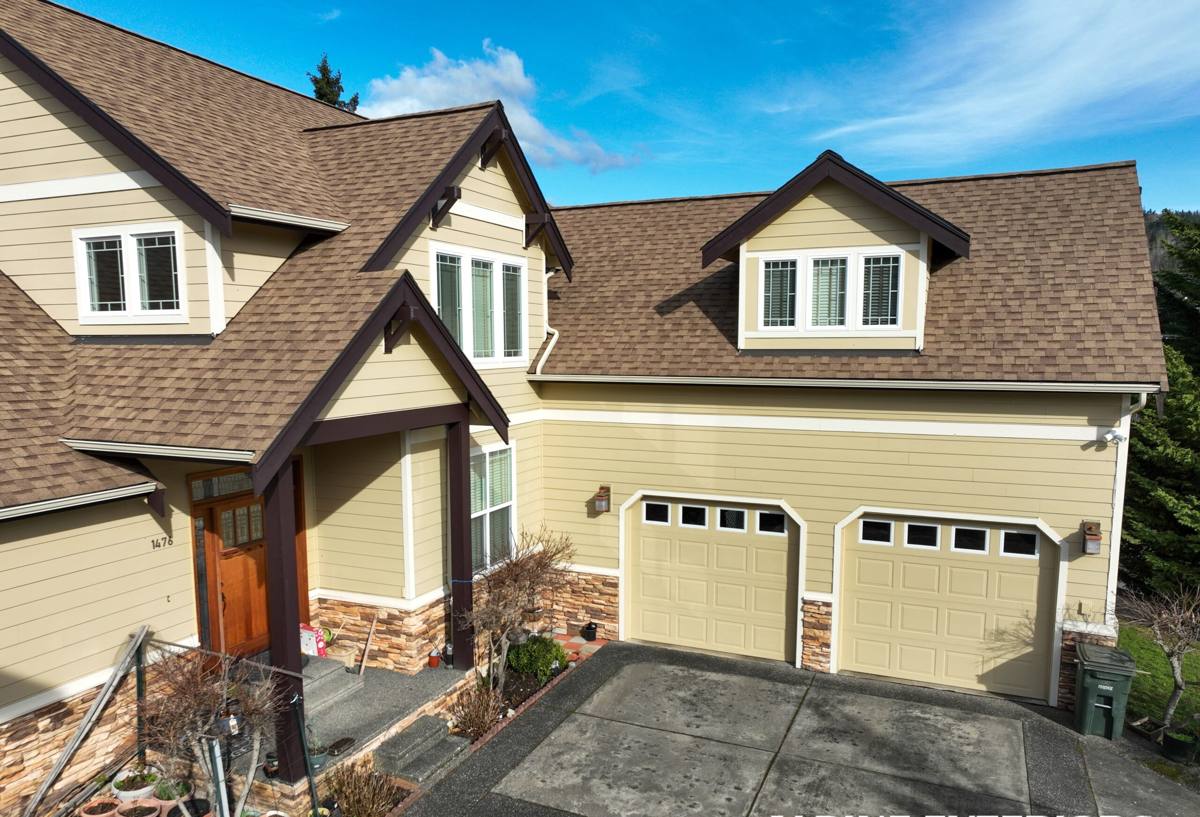
What Hamilton's Setting Does to a Deck Over Time
Rain, Humidity, and River-Valley Shade
The same marine-influenced weather pattern that brings salt-tinged air to the Skagit County coastline also drives heavy, sustained rainfall inland to river-valley communities like Hamilton. Add tree cover and lower sun exposure, and you get surfaces that stay damp longer than they would in a more open, wind-exposed spot. Wood decking in these conditions is prone to swelling, cupping, and rot at fastener points. Composite boards don't swell or rot the same way, but they still need proper drainage underneath and enough gap between boards to let water move through instead of pooling.
Moss, Algae, and Organic Buildup
A long moss season is a fact of life in this part of the county. Any horizontal surface that stays shaded and damp — decks, walkways, roofs — will collect moss and algae if it isn't built to shed water and dry out between rain events. Composite decking resists the kind of surface breakdown that lets organic growth get a foothold, but a poorly ventilated deck with tight board spacing and no airflow underneath will still grow moss on top of composite just as readily as on wood. The material helps; the build quality is what actually prevents it.
Ground Moisture and Substructure Exposure
Low-lying, river-adjacent settings like Hamilton tend to hold more ground moisture than upland lots, especially through fall and winter. That affects the substructure more than the decking surface — footings, joists, and ledger connections are where moisture problems actually start. A deck can have premium composite boards on top and still fail early if the framing underneath wasn't built with drainage and ventilation in mind.
Composite Decking Options: What We Recommend and Why
Not all composite decking is built the same way, and the differences matter more in a climate like this than they would somewhere dry and sunny. We steer most Hamilton customers toward fully capped composite boards rather than uncapped or first-generation composite products, for practical reasons tied to how each handles constant moisture exposure.
| Feature | Capped Composite | Uncapped Composite |
|---|---|---|
| Moisture resistance | Sealed polymer shell resists water absorption at the surface | More porous surface can absorb moisture and stain over time |
| Mold/mildew resistance in shade | Stronger resistance, easier to keep clean | More prone to surface mildew in low-sun areas |
| Fading over time | UV-stable cap resists fading better long-term | Can fade or chalk faster, especially with freeze-thaw cycling |
| Upfront cost | Higher material cost | Lower material cost |
| Long-term upkeep | Occasional wash-down | May need periodic cleaning treatments |
We're not going to tell you uncapped composite is a bad product across the board — it has a place in drier climates or budget-driven projects. Our professional standard for a river-valley, moss-heavy environment like Hamilton is that the added upfront cost of capped composite pays for itself in fewer callbacks, less staining, and a board that still looks good after several wet winters.
What a Correct Composite Deck Installation Involves
Composite decking is forgiving compared to wood in some ways, but it's less forgiving in others — installed wrong, it telegraphs every framing mistake underneath it. A correct job in this climate includes:
- Joist spacing matched to the manufacturer's spec for composite (often tighter than standard wood-deck spacing, especially at angles or picture-frame borders)
- A ledger connection properly flashed and sealed where the deck meets the house, so water can't work its way behind siding
- Hidden fastener systems or approved face-screwing patterns that won't back out or corrode over time
- Consistent board gapping to allow drainage and airflow, not just a tight, "finished" look
- Ventilation gaps or skirting designed to breathe, not seal moisture in underneath the deck
- Corrosion-resistant structural hardware — joist hangers, screws, and brackets rated for ground contact and prolonged dampness
- Footings sized and set below frost depth and clear of standing water, given the valley's ground moisture
Skip any one of these and the deck surface can look fine for a year or two while the framing underneath quietly deteriorates. That's the failure pattern we get called out to fix most often — not the composite boards themselves, but the structure they were fastened to.
Our Process for a Hamilton Composite Deck
1. On-Site Assessment
We walk the site, look at drainage patterns, sun/shade exposure, and how the deck will tie into the house. If you're replacing an existing deck, we check the substructure for rot or moisture damage before quoting anything — no point building on a compromised frame.
2. Framing and Drainage Plan
Given how much moisture Hamilton lots tend to hold onto, we plan footing depth, joist layout, and ventilation before we talk board colors. This is the part of the job that determines whether the deck lasts fifteen years or thirty.
3. Material Selection
We walk you through composite board options, colors, and price points honestly, including where a lower-cost option is genuinely fine for your situation versus where it's a false savings given the shade and moisture on your lot.
4. Installation
Framing first, then decking, with attention to fastener pattern, board spacing, and edge details like fascia and stair nosing. We don't rush the framing stage to get to the "visible" part faster.
5. Final Walkthrough
We go over basic care with you — what to expect in year one, what to watch for, and how to keep moss from getting a foothold — before we consider the job done.
Maintaining a Composite Deck Through Skagit County's Wet Season
Composite decking cuts maintenance significantly compared to wood, but "low maintenance" isn't "no maintenance," especially in a shaded, damp environment. A simple seasonal routine keeps things looking right:
- Sweep debris and fallen leaves off the deck regularly through fall — trapped organic matter is what feeds moss and algae
- Rinse or lightly scrub with a composite-safe cleaner once or twice a year, more often in heavily shaded spots
- Check gaps between boards periodically to make sure they haven't clogged with debris and blocked drainage
- Inspect under-deck ventilation or skirting for blockages after big storms
- Keep gutters and downspouts near the deck clear so runoff isn't dumping directly onto or under the structure
- Look at fastener heads and board ends once a year for any early signs of movement or wear
What Composite Decking Typically Costs in This Area
Pricing depends on deck size, framing complexity, height off the ground, railing choice, and board tier. Rather than quote a number that won't mean much without seeing your project, here's what actually moves the cost:
| Cost Factor | Why It Matters |
|---|---|
| Board tier (uncapped vs. capped composite) | Capped boards cost more per square foot but resist moisture and fading better long-term |
| Substructure condition | Replacing rotted or undersized framing adds cost but is non-negotiable for a safe deck |
| Deck height and footing depth | Taller decks and deeper footings (relevant to soggier ground) require more structural work |
| Railing and stair complexity | Composite or metal railing systems, multiple stair runs, and custom angles add labor |
| Site access | Tight lots or limited equipment access in some Hamilton properties can add labor time |
We'd rather walk your property and give you a real number than throw out a broad range that doesn't reflect your actual lot, framing needs, or the board tier that makes sense for your exposure.
Why It Matters to Hire a Crew That Already Works in Hamilton
Composite decking installation isn't exotic work, but building for this specific stretch of Skagit County — shaded lots, river-valley moisture, a long moss season — rewards a crew that's already seen how decks age here. We've built and repaired enough decks in this climate to know which framing shortcuts cause callbacks in year three, not year one, and which board choices actually hold up under sustained shade and dampness rather than just looking good on a showroom sample. A crew unfamiliar with the area might build a deck that would be perfectly fine in a drier, sunnier part of the state and still run into moss, drainage, or fastener problems here within a couple of seasons.
If you're planning a new composite deck or replacing a tired wood deck in Hamilton, we're happy to take a look at your property and walk you through what makes sense for your specific lot — no pressure, no upsell, just a straight assessment and a free estimate.