 Skagit County
 Roofing in Hamilton's Skagit River Valley
Hamilton sits up the Skagit River valley, tucked between forested hillsides that hold onto moisture and shade far longer than the open lowlands closer to the Sound. That matters for roofs. Unlike the coastal stretches of Skagit County, homes here see less salt air off the water, but they make up for it with more shade, more standing humidity, and a longer window each year where a roof surface simply never fully dries out between storms. Add in tree cover from the surrounding timber and you get a climate that's tough on roofing in its own way — heavy, driving rain during fall and winter storms, and a moss and algae season that can run from early fall through late spring.
A roof replacement done right in Hamilton isn't just about swapping old shingles for new ones. It's about building a roof system that sheds water fast, resists moss growth in shaded areas, and keeps moisture out of the attic and decking for the next 20-30 years. That's a different job than replacing a roof in a dry, sunny part of the state, and it's worth working with a crew that treats it that way.
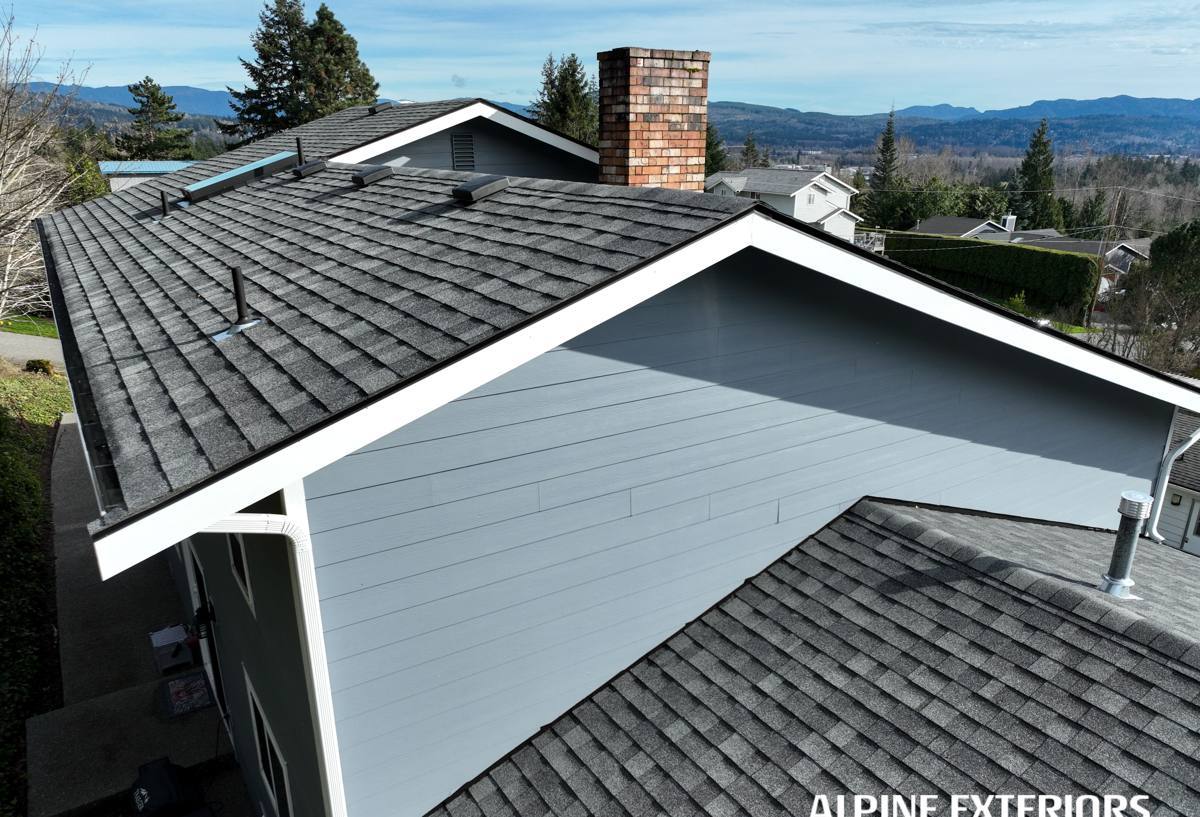
Signs a Hamilton Home Needs Replacement, Not Repair
Most roofs give warning signs well before they fail outright. In a wet, shaded valley climate, those signs tend to show up as moisture damage rather than obvious storm damage. Here's what we look for during an inspection:
- Shingles that are cupping, curling, or losing granules in patches, especially on north-facing or shaded slopes
- Moss or algae streaking that keeps coming back within weeks of cleaning
- Soft or spongy spots in the decking when walked on, usually near valleys or eaves
- Daylight visible through the roof deck from inside the attic
- Water stains on ceilings or in the attic that appear after heavy rain, not just wind events
- Rusted, lifted, or missing flashing around chimneys, skylights, and roof-wall intersections
- A roof that's already 20+ years old, regardless of how it looks from the ground
One or two of these on their own might mean a repair is enough. Several at once, especially combined with age, usually means the underlying materials are failing and a patch will only buy a season or two.
What a Correct Roof Replacement Involves
Full Tear-Off, Not a Layover
We remove the old roofing down to the deck rather than installing over existing layers. In a climate that holds moisture as long as Hamilton's does, trapping old shingles under new ones traps whatever moisture and rot is already working on the deck. A tear-off is the only way to actually see what's underneath.
Deck Inspection and Repair
Once the old material is off, we check the decking for soft spots, delamination, and rot — common wherever moss has been holding water against the roof for years, or where valleys and eaves have taken the brunt of driving rain. Any damaged sheathing gets replaced before anything new goes down. Skipping this step is the single most common shortcut that leads to early failure.
Ice and Water Shield at the Vulnerable Points
Eaves, valleys, and any roof-wall intersection get a self-adhering waterproof membrane underneath the main underlayment. These are the spots where wind-driven rain backs up under shingles and where debris from overhanging trees tends to collect and hold water. This layer is cheap insurance against the leaks that show up first.
Proper Ventilation
A roof that can't breathe traps warm, moist attic air against the underside of the deck, which speeds up rot and helps mold and moss take hold from the inside out. We balance intake at the eaves with exhaust at the ridge so the attic actually vents the way it's supposed to, instead of just having vents installed for the sake of it.
Flashing Done Right
Chimneys, skylights, pipe boots, and wall intersections fail more roofs than the field shingles ever do. New step flashing, counter-flashing, and boots go in with every replacement — not just a bead of caulk over the old metal.
Choosing the Right Material for This Climate
There's no single "best" roofing material — the right choice depends on budget, roof pitch, how much shade the property gets, and how much upkeep the homeowner wants to do. Here's how the common options stack up for a shaded, wet valley property like most homes in and around Hamilton:
| Material | Moss / Moisture Resistance | Typical Lifespan | Maintenance |
|---|---|---|---|
| Architectural asphalt shingle (algae-resistant) | Good with copper/zinc granules; needs clear sun or occasional cleaning in heavy shade | 25-30 years | Periodic moss removal in shaded sections |
| Standard 3-tab asphalt shingle | Fair; more prone to moss in shaded, damp areas | 15-20 years | More frequent cleaning |
| Metal (standing seam or panel) | Excellent; sheds water fast, little for moss to grip | 40-60 years | Low; occasional debris clearing |
| Cedar shake | Poor in shaded, damp settings without diligent upkeep | Varies widely with maintenance | High; regular treatment needed |
We generally steer homeowners with heavily shaded, tree-covered lots away from cedar shake and toward algae-resistant architectural shingles or metal, not because any product is bad, but because a shaded roof in this valley stays damp longer than the manufacturer's warranty testing usually assumes. That's a maintenance-burden and moisture-behavior conversation, not a knock on any brand — we're happy to install what a homeowner wants once they understand the upkeep involved.
What Drives the Cost of a Roof Replacement
Every roof is priced on its own specifics, but the same handful of factors move the number up or down on most Hamilton homes:
| Factor | Why It Matters |
|---|---|
| Roof size and complexity | More valleys, dormers, and cut-ups mean more labor and material waste |
| Number of existing layers | Tear-off and disposal cost more with multiple old layers to remove |
| Decking condition | Rotted sheathing found during tear-off adds material and labor |
| Pitch and access | Steep roofs and difficult site access (tree cover, long driveways) slow the work |
| Material choice | Standard asphalt, architectural shingle, and metal all carry different price points |
| Ventilation and flashing needs | Older homes often need new vent baffles, boots, and flashing as part of the job |
We'd rather walk a roof in person and give an honest number than throw out a broad range that doesn't hold up once we're actually on the ladder.
Our Roof Replacement Process
- Inspection: We walk the roof and attic, check the decking, flashing, and ventilation, and document what we find.
- Written estimate: A clear scope of work and price, with material options explained, not just a single number.
- Protection and tear-off: Landscaping and gutters get protected, then the old roofing comes off down to the deck.
- Deck repair: Any soft or rotted sheathing found is replaced before underlayment goes down.
- Underlayment and flashing: Ice and water shield at eaves and valleys, synthetic underlayment across the field, new flashing throughout.
- Installation: New roofing installed to manufacturer specification, with ventilation balanced at intake and exhaust.
- Cleanup and magnetic sweep: Full site cleanup, including a nail sweep of the yard and driveway.
- Final walkthrough: We review the finished roof with the homeowner before calling the job done.
Why Hire a Crew That Already Works in Hamilton
A roofing crew that regularly works this stretch of the Skagit Valley already knows things a crew driving in from outside the area has to learn on your job: which properties sit low and hold water longer, how much moss pressure a shaded, tree-lined lot actually gets over a winter, and how to plan around long driveways, gravel access, or septic systems common on rural Hamilton-area properties. That familiarity shows up in fewer surprises during tear-off and a more realistic estimate up front, rather than change orders once the old roof comes off.
It also matters for response time. When a wind-driven storm knocks a tree limb into a roof or opens up a valley leak, a crew already working the area can usually get out for a tarp or repair faster than one dispatching from farther away.
Keeping Your New Roof in Good Shape
A correctly installed roof still needs some basic upkeep in this climate. Gutters and downspouts on tree-covered lots fill with needles and leaf debris faster than in open areas, and a clogged gutter backs water up under the eaves. Moss and algae growth is slowed by algae-resistant shingles and good sun exposure, but shaded sections will still need an occasional soft wash — never pressure washing, which strips granules and shortens shingle life. A yearly look at flashing, vents, and valleys catches small issues while they're still small.
If your Hamilton roof is showing its age, or you just want an honest opinion on repair versus replacement, we're glad to come take a look. There's no cost and no pressure to move forward — just a straight assessment and a written estimate you can use to make the call. The form below will get you on our schedule.