 Skagit County
 Why La Conner's Waterfront Climate Is Hard on Siding
La Conner sits right on the water, and that changes what a house needs from its exterior. Sitting along the Swinomish Channel means homes here take on salt-laden air, wind-driven rain, and long stretches of overcast, damp weather that don't let siding fully dry out between storms. Add in the shade from mature trees and close-set lots common around town, and you get a moss season that can run most of the year on north- and east-facing walls.
None of that is unusual for Skagit County as a whole, but La Conner gets it in a more concentrated form than inland towns. Salt air accelerates corrosion on fasteners and metal trim. Constant moisture feeds mold, algae, and moss on any surface that stays damp. And driving rain off the water finds every gap in flashing or caulking that a less exposed home might get away with. Siding on a La Conner home isn't decorative — it's the first line of defense against a genuinely tough coastal microclimate.
What "Correct" Fiber Cement Siding Installation Actually Means
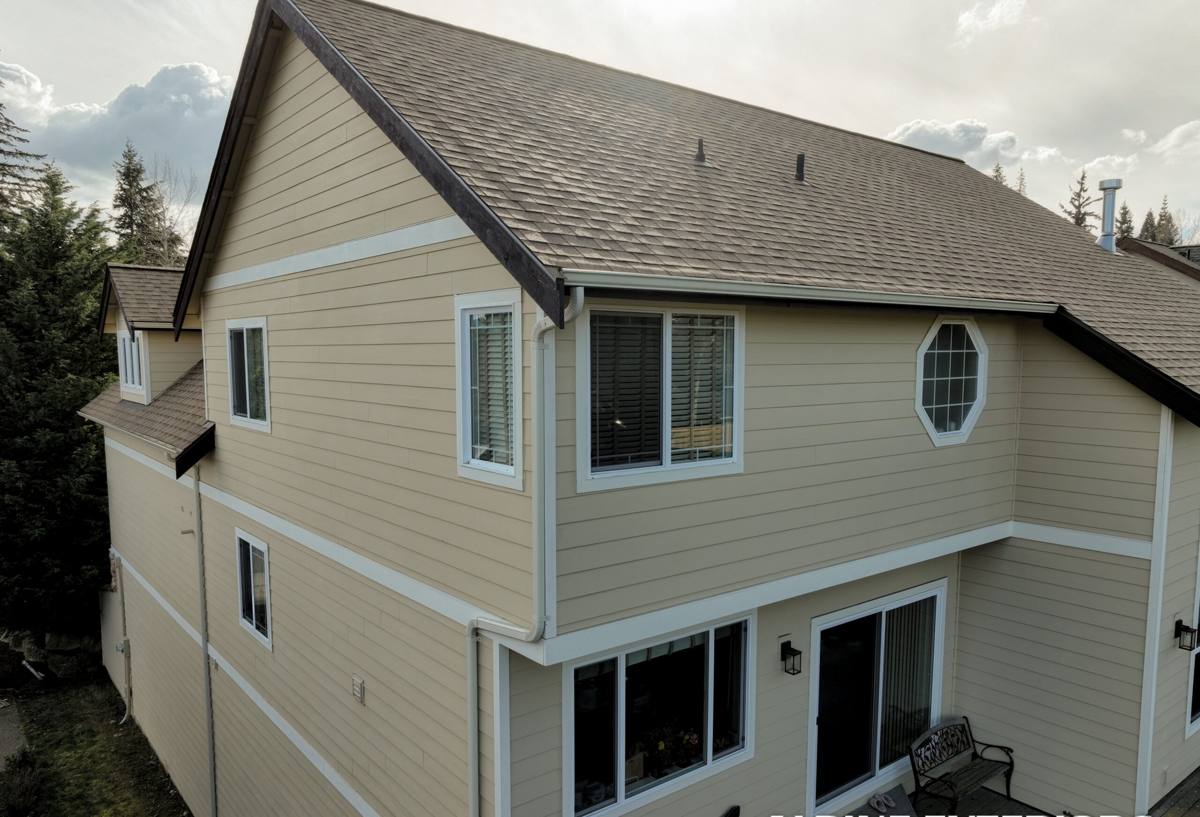
Fiber cement is only as good as the install behind it. The material itself resists rot, pests, and fire, but water management is what actually determines whether a wall assembly stays dry for the next 30-plus years. On a waterfront-adjacent home, we don't treat any of the following as optional.
Clearance and gaps
Siding needs a minimum gap above roofing, decks, and grade, plus consistent gaps at trim and window casings. Too tight, and the board wicks water instead of shedding it. In a wet climate like La Conner's, that clearance is what keeps the bottom edge of every course from staying saturated.
Flashing and water management
Every window, door, and horizontal transition needs flashing that directs water out and away from the wall assembly, not siding caulked over top of a gap and hoped for the best. A weather-resistant barrier and, ideally, a rainscreen gap behind the siding lets any moisture that does get in dry out instead of sitting against the sheathing.
Fasteners and caulk
Corrosion-resistant fasteners matter more here than in a drier inland town — salt air is genuinely harder on exposed metal. Caulk has a job at joints and penetrations, but it's a backup to good flashing, never a substitute for it. Over-reliance on caulk is one of the most common shortcuts we see on older siding jobs, and it's usually the first thing to fail in a marine climate.
Why We Install James Hardie HZ5 Specifically Here
We install James Hardie fiber cement exclusively, and in Skagit County that means the HZ5 product line, engineered for the Pacific Northwest's wetter, cooler climate zone. The formulation and factory finish are built around the reality that homes here spend more days damp than dry.
The ColorPlus factory finish matters as much as the substrate. It's baked on under controlled conditions, which gives it better resistance to fading and moisture intrusion at the finish layer than a field-applied paint job, and it holds up to salt air exposure better than repainting cycles most alternative sidings need. That's a real factor for a La Conner home, where a finish that fails early means repainting on a schedule most homeowners don't want to keep.
Salt Air, Moss, and the Details That Actually Prevent Damage
Beyond the siding material itself, a handful of details determine whether a La Conner home stays ahead of its climate or fights it every year.
- Kickout flashing at every roof-to-wall intersection, so water is diverted into the gutter instead of running down behind the siding.
- Starter strips and drip caps installed to spec, not skipped to save time.
- Gutter and downspout tie-ins checked during the siding job — a lot of "siding failure" is actually water overshooting a clogged or undersized gutter.
- Shaded, north-facing walls flagged during the estimate, since these are where moss and algae growth shows up first and fastest.
- Corrosion-resistant fasteners and trim hardware throughout, not just at the visible edges.
None of this is unique to fiber cement — it's just water management done right, on a house that will get tested by weather more often than most.
Fiber Cement vs. Other Siding Materials for a Waterfront Skagit County Home
| Material | Salt Air & Moisture Behavior | Moss/Mildew Resistance | Typical Maintenance |
|---|---|---|---|
| James Hardie fiber cement | Non-combustible, doesn't rot; factory finish holds up well to coastal exposure | Resists moss growth on the material itself; surface can still need occasional cleaning | Periodic rinse/wash; repaint only if ever desired, not on a fixed cycle |
| Vinyl | Can warp or fade faster under sun/salt cycling; seams are a moisture entry point | Moss and algae grip the textured surface readily | Regular washing; panels can crack and are hard to color-match if replaced individually |
| Cedar / untreated wood | Absorbs moisture directly; salt air speeds weathering and finish breakdown | High — organic material is a food source for moss and mildew | Frequent refinishing/staining; ongoing rot inspection |
| Engineered wood (e.g. LP SmartSide) | Wood-based core is more moisture-sensitive at cut edges and joints than fiber cement | Moderate; edge sealing and caulk maintenance is critical to keep moisture out | Requires diligent edge/joint maintenance to avoid swelling |
This isn't a knock on every one of these products in every setting — vinyl and engineered wood both have a place. But for a home taking direct salt air and driving rain off the water, fiber cement's non-combustible, moisture-resistant makeup is why it's the material we stand behind and the only one we install.
What Drives Cost on a La Conner Fiber Cement Project
| Cost Factor | Why It Matters in La Conner |
|---|---|
| Wind and water exposure | Waterfront-facing elevations often need extra flashing detail and fastener upgrades |
| Condition under the existing siding | Tear-off frequently reveals moisture damage in older coastal homes that needs repair before new siding goes on |
| Trim and color complexity | Multiple ColorPlus colors, board-and-batten accents, or custom trim add labor and material cost |
| Site access | Tight in-town lots, close setbacks, and limited staging space common in La Conner can add time |
We give a firm, itemized estimate after an in-person look at the house — not a phone-quote guess. Broad ranges without seeing the actual wall assembly and existing damage don't serve anyone well.
Our Process, Start to Finish
- On-site assessment — we look at exposure, existing siding condition, trim, and any visible moisture or moss problem areas.
- Tear-off and moisture check — once old siding comes off, we inspect sheathing and framing for hidden water damage before anything new goes up.
- Water management first — weather-resistant barrier, flashing at every penetration and transition, and correct clearances, before a single piece of siding is hung.
- Hardie installation to spec — proper fastener pattern, gapping, and caulk only where it's actually doing a job, not covering for a shortcut.
- Final walkthrough — we review the finished job with you, including care basics for ColorPlus finish and what to expect from the warranty.
Maintenance in a Salt-Air, Moss-Prone Environment
- Rinse siding with a garden hose once or twice a year to clear salt residue, pollen, and grime — pressure washing isn't necessary and can force water into seams if done wrong.
- Check shaded, north-facing walls each fall for early moss or algae growth and clean it before it spreads.
- Keep gutters clear so water doesn't overshoot onto the wall below during heavy rain.
- Re-caulk joints if you notice cracking or gaps, but don't rely on caulk to fix a flashing problem — call a contractor if water is getting behind the siding anywhere.
- Trim back vegetation that keeps a wall shaded and damp longer than the rest of the house.
Why a Crew That Already Works in La Conner Matters
Siding crews that mostly work drier, inland areas don't always adjust their detailing for a town like La Conner. A crew that already works Skagit County's waterfront knows which walls need extra flashing attention, which lots hold moisture longer, and where moss shows up first each year. That familiarity shows up in fewer callbacks and a house that's actually ready for the climate it sits in, not a generic install that happens to be made of the right material.
If you're weighing a siding replacement on a La Conner home, we're happy to take a look and walk you through what your specific house needs. Reach out for a free, no-pressure estimate — there's a form right below to get started.