 Skagit County
 Why La Conner Roofs Wear Differently Than Roofs Inland
La Conner sits right on the Swinomish Channel, and that waterfront location changes what a roof has to deal with. Salt-laden air moves in off the water and settles on every exposed surface, including your roof. Over years, that salt air accelerates corrosion on metal fasteners, flashing, and vents faster than the same materials would wear in a home twenty miles inland. It's a slow process, but it's constant, and it's one of the first things we check for on any La Conner roof inspection.
Add to that the wind-driven rain that comes across the channel and the surrounding flats. Rain that falls straight down is easy for a roof to shed. Rain that's being pushed sideways by wind off the water finds every gap in flashing, every lifted shingle tab, and every under-sized overhang. Skagit County gets a long wet season most years, and La Conner's exposure to open water makes wind-driven rain more of a factor here than it is in more sheltered parts of the county.
Then there's moss. Between the moisture, the shade from mature trees common on older La Conner lots, and mild temperatures that never really dry a roof out for long stretches, moss gets a foothold fast. Moss isn't just cosmetic — it holds water against the roofing material, lifts shingle edges, and works its way into fastener holes over time. A new roof done right here has to account for all three of these factors from the start, not patch around them later.
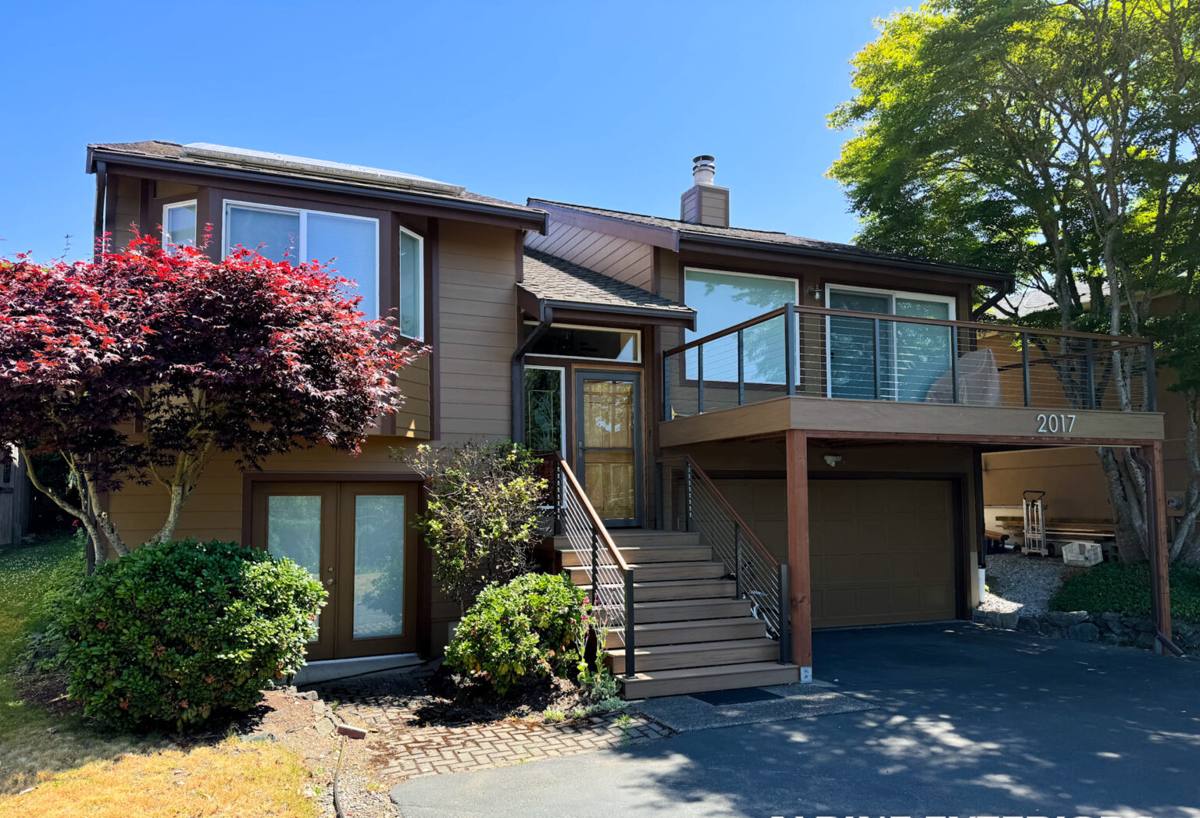
What a Correct New Roof Involves Here
A roof that's built for La Conner's climate isn't a different product line — it's the same quality materials installed with extra attention to the details that matter most in a salt-air, high-moisture environment.
Underlayment and Water Barrier
We install a synthetic underlayment as the base water barrier, and in valleys, around penetrations, and along eaves we add self-adhered ice-and-water membrane. That extra membrane matters more here than in drier parts of the state — it's the backup layer that keeps water out if wind-driven rain gets past the shingles or if ice forms during a cold snap.
Flashing Details Near Water
Flashing is where most roof leaks actually start, and it's also where salt air does the most damage if the wrong materials or fasteners are used. We use corrosion-resistant flashing and fasteners around chimneys, skylights, sidewalls, and roof-to-wall transitions, and we take the time to lap and seal each piece correctly rather than relying on caulk to make up for a shortcut in the metal work.
Ventilation to Fight Moisture and Moss
A roof deck that can't breathe stays damp longer, and a damp roof grows moss faster and rots sooner. We balance intake and exhaust ventilation so air actually moves through the attic space, which shortens how long the roof surface stays wet after every rain and reduces the conditions moss needs to spread.
Choosing a Roofing Material for a La Conner Home
There's no single "best" roofing material for every house — the right choice depends on your home's style, your budget, and how much long-term maintenance you're willing to take on. Here's how the common options compare specifically against La Conner's salt air, rain, and moss conditions.
| Material | Salt Air Durability | Moss Resistance | Typical Lifespan | Maintenance |
|---|---|---|---|---|
| Architectural asphalt shingle | Good with corrosion-resistant fasteners and flashing | Moderate — benefits from periodic cleaning | 25-30 years | Low to moderate |
| Standing seam metal | Very good with coated, marine-rated fasteners | High — sheds moss more easily than textured surfaces | 40-50+ years | Low |
| Composite/synthetic shake | Good, depends on fastener and flashing quality | Moderate | 30-40 years | Moderate |
| Cedar shake | Requires diligent maintenance in coastal moisture | Lower — natural wood holds moisture | 20-30 years with upkeep | High |
We're upfront that we steer most La Conner clients away from untreated cedar shake for new installs. It's a beautiful, traditional look, but wood roofing holds moisture longer than composition or metal, which means more moss, more maintenance, and a shorter realistic lifespan in this climate unless you're committed to regular upkeep. That's a maintenance-burden and moisture-behavior tradeoff we'd rather explain up front than have you discover five years in.
Older and Historic Homes in La Conner
La Conner has a well-known historic waterfront district and no shortage of older homes, and older roofs come with their own considerations. Original roof decking on an older home may be thinner or spaced differently than modern code requires, and decades of moisture exposure near the water can mean hidden rot that isn't visible until the old roofing is stripped off. Part of doing this job correctly is treating tear-off as a chance to actually inspect the deck, not just a step to get through — replacing any soft or damaged sheathing before new underlayment and roofing go down, rather than covering a problem up.
For homes in or near the historic district, we're also mindful of roofline and material choices that keep the home looking consistent with its era and its neighbors, while still using modern underlayment, flashing, and ventilation that the original builders didn't have access to.
Our New Roof Installation Process
- Inspection and estimate. We walk the roof, check the attic for ventilation and moisture signs, and give you a written scope and price before any work starts.
- Tear-off. Old roofing is removed down to the deck so we can see exactly what we're working with, including any hidden damage from past moisture intrusion.
- Deck repair. Any soft, rotted, or delaminated sheathing is replaced — this isn't an upsell, it's necessary for the new roof to perform.
- Underlayment and ice-and-water membrane. Installed per manufacturer spec, with extra membrane at valleys, eaves, and penetrations.
- Flashing. New, corrosion-resistant flashing at every chimney, skylight, sidewall, and transition point.
- Roofing installation. Shingles, metal panels, or composite material installed to manufacturer specification, not just "close enough."
- Ventilation check. Intake and exhaust venting confirmed or upgraded so the finished roof can actually dry out between rains.
- Cleanup and walkthrough. Magnetic sweep for stray fasteners, full debris removal, and a walkthrough so you know exactly what was done.
Cost Factors for a New Roof
Every La Conner roof is priced based on its own specifics, but the same handful of factors drive most of the difference between projects:
- Roof size and number of planes, valleys, and penetrations
- Pitch and accessibility — steep or hard-to-reach roofs take more time and safety setup
- Current deck condition and how much sheathing repair is needed
- Material selected — asphalt, metal, and composite carry different material and labor costs
- Amount of flashing and ventilation work required
- Whether the old roofing has one layer or multiple layers to remove
We give straight, itemized estimates rather than a single number with no explanation, so you can see where the cost is actually going.
Signs Your La Conner Roof May Need Replacing
- Moss buildup that returns quickly after cleaning, or moss on the north-facing slope that never seems to dry out
- Granule loss showing up in gutters or on the ground below the eaves
- Curling, cracking, or lifting shingle edges, especially on sides facing prevailing wind off the water
- Rust staining or visible corrosion around flashing, vents, or fasteners
- Daylight visible through the attic roof boards, or damp insulation after a wind-driven rain
- A roof that's approaching or past the manufacturer's expected lifespan for its material
Any one of these on its own might just mean a repair. Several together, especially on a roof that's already 20+ years old, usually mean it's time to talk about full replacement rather than another patch.
Why Hire a Crew That Already Works in La Conner
A roofing crew that mostly works inland can install a technically correct roof and still miss the details that matter here — under-spec'd fasteners that corrode early, flashing that isn't built for wind-driven rain off the channel, or a ventilation plan that doesn't account for how long moisture actually sits on a La Conner roof. A crew that already works Skagit County's waterfront communities builds those details in as standard practice, not as an afterthought, because they've seen what happens when they're skipped.
It also means we're not guessing at what your home needs — we're applying what we already know about how roofs perform in this exact climate to your specific project.
If you're weighing a repair against full replacement, or just want an honest look at where your current roof stands, we're happy to come take a look. Fill out the form below for a free, no-pressure estimate on your La Conner home.