 Skagit County
 La Conner's Climate Puts Real Stress on Siding
Homes in La Conner sit close to saltwater, tucked along the Swinomish Channel where Puget Sound weather moves through in fast, wet cycles. That combination of salt-laden air, driving rain off the water, and long stretches of overcast, low-drying-potential weather is a tougher test for exterior siding than most inland Skagit County neighborhoods see. Salt air accelerates corrosion of fasteners and metal trim, wind-driven rain forces water sideways into laps and seams that would stay dry in a calmer climate, and the region's mild, damp winters give moss and algae months at a time to establish themselves on anything that stays shaded or slow to dry.
None of this is unusual for the area — it is simply what siding here has to survive, year after year. The problem is that a lot of siding, especially older wood-based products or siding installed without the right moisture detailing, was never built with this specific combination of exposures in mind. Over time the cladding on a La Conner home is doing double duty: holding up cosmetically while also acting as the home's primary defense against a genuinely wet, salty, low-drying environment.
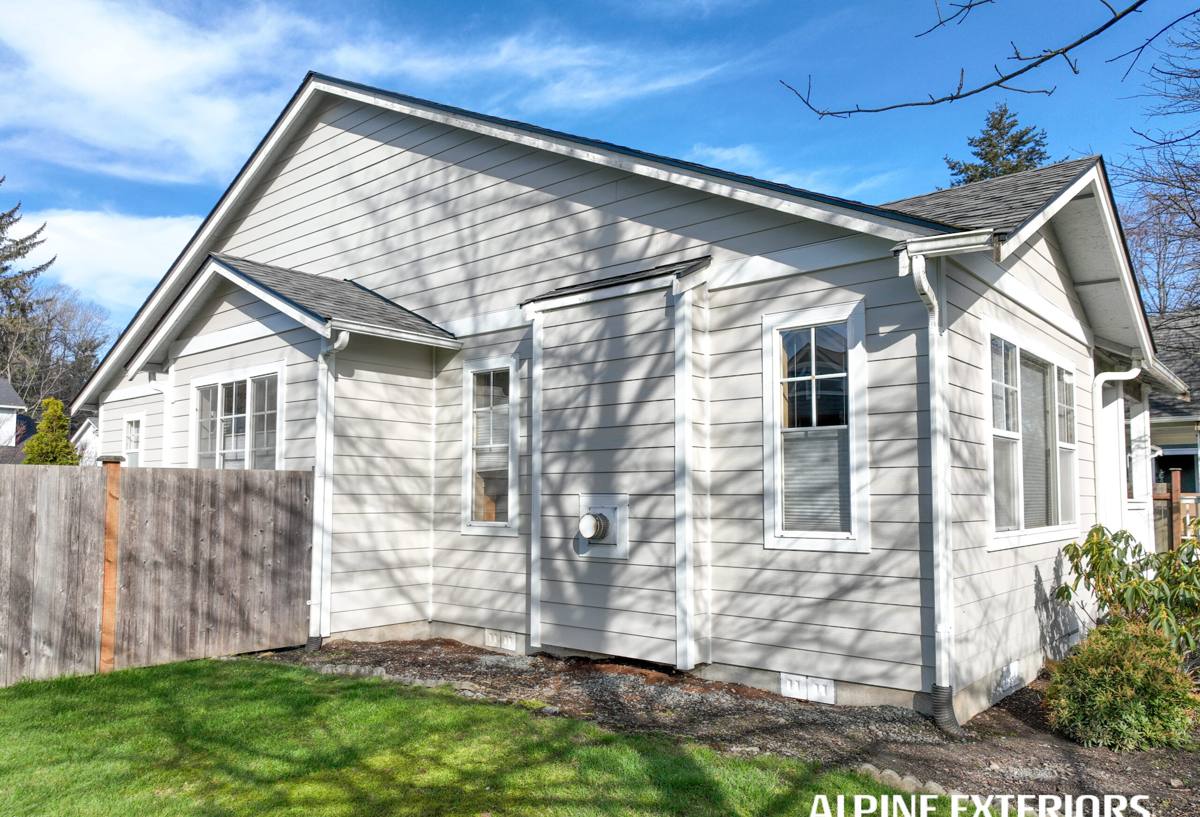
Signs Your La Conner Home's Siding Is Losing the Battle
Because the climate here works slowly, siding failure rarely shows up as a sudden problem. It shows up as a pattern of small issues that keep coming back. Homeowners in this area should watch for:
- Green or black staining on north- and shade-facing walls that returns within weeks of cleaning
- Soft, spongy, or crumbling spots near the bottom courses, around window trim, or at butt joints
- Paint that blisters, peels, or won't hold more than a couple of years between repaints
- Rust streaking from nail heads or corroding trim fasteners
- Visible cupping, warping, or gaps opening up between boards or panels
- A musty smell or damp feel to interior walls that back up to exterior siding
Any one of these can be a minor, fixable issue. Several showing up together, especially on a home that's had the same siding for 15-20+ years, usually means the siding itself — not just the paint or caulking — has reached the end of what it can reasonably protect against in this climate.
What a Correct Siding Replacement Actually Involves
Siding replacement done right is not just swapping old boards for new ones. In a marine climate like La Conner's, the work that happens underneath the visible siding matters as much as the siding itself.
Full Tear-Off and Sheathing Inspection
Every replacement should start with full removal of the old siding, not an overlay. This is the only way to actually see the sheathing and framing underneath. In homes that have been holding moisture for years, it's common to find soft sheathing, rot at window and door openings, or damaged framing that has to be addressed before any new siding goes up. Covering that up with new siding on top doesn't fix it — it just hides it for a while longer.
Weather-Resistive Barrier and Flashing Details
Behind the siding, a properly lapped weather-resistive barrier and correctly integrated flashing at every window, door, deck ledger, and roof-to-wall intersection is what actually keeps wind-driven rain out of the wall assembly. This is the detail work that separates a durable install from one that looks fine for a year or two and then starts failing at exactly the transitions and penetrations where water concentrates. Given how much sideways rain this area gets off the water, these details aren't optional extras — they're the part of the job doing the real work.
Fastening, Clearances, and Field-Cut Sealing
Fiber cement siding has specific fastening patterns, minimum clearances from grade, decks, and roof lines, and requirements for sealing field-cut edges before installation. Skipping these steps is the single most common cause of premature siding failure — not the product itself, but the installation shortcuts around it. In a salty, wet climate, corrosion-resistant fasteners and correct clearances aren't cosmetic details; they directly determine how many years the siding actually lasts.
Why We Install Only James Hardie Fiber Cement Siding
We standardized on James Hardie fiber cement for every siding replacement we do, including here in La Conner, because it's engineered to hold up to exactly this kind of exposure. It's non-combustible, dimensionally stable in wet-dry cycling, and available in HZ product lines specifically engineered for the moisture and humidity patterns of the Pacific Northwest. The factory-applied ColorPlus finish is baked on and warranted against fading and peeling, which matters in a climate where repainting siding every few years is a real, recurring cost for homeowners with other products.
We're honest that Hardie isn't the cheapest option up front, and it isn't the only fiber cement product on the market. But between moisture performance, fire resistance, factory finish durability, and a strong transferable warranty, it's the product we're willing to put our name behind on homes in this climate. We don't install vinyl, LP SmartSide, primed wood, or cedar siding, and we're glad to talk through the specific trade-offs of those products if you're weighing your options.
Our Siding Replacement Process for La Conner Homeowners
Every home is different, but the sequence we follow stays consistent because it's built around what this climate actually requires:
- On-site inspection of existing siding, trim, and visible signs of moisture or rot
- Full tear-off of old siding to expose sheathing and framing
- Repair or replacement of any damaged sheathing or framing found underneath
- Installation of a continuous, correctly lapped weather-resistive barrier
- Flashing installed at every window, door, and wall penetration before siding goes on
- James Hardie fiber cement siding installed to manufacturer fastening and clearance specs
- Sealed field cuts, corrosion-resistant fasteners, and trim detailing appropriate for salt-air exposure
- Final walkthrough so you understand what was done and why
We don't skip the tear-off and inspection steps to save time, even when the existing siding looks okay from the ground. On a home this close to saltwater, what's happening behind the siding is usually more telling than what's visible on the surface.
What Siding Replacement Costs Depend On
There's no honest flat price for siding replacement — it depends on the condition of what's underneath as much as the size of the home. The factors below are what actually move the number up or down on a typical La Conner project:
| Cost Factor | Why It Matters |
|---|---|
| Sheathing/framing condition | Rot or moisture damage found during tear-off requires repair before new siding can go on |
| Home size and wall complexity | More corners, dormers, and trim detail means more labor and material |
| Story height and access | Two-story walls and limited access require more staging and time |
| Siding profile and trim package | Lap width, shingle-style accents, and trim detailing affect material cost |
| Window and door count | Every opening needs flashing and trim work, adding time regardless of home size |
| Existing siding removal | Multiple layers of old siding or heavy staining/rot add tear-off labor |
We walk every home in person before giving a number, because guessing at sheathing condition from the street leads to bad estimates. A firm, itemized quote only comes after we've actually seen what's underneath the existing siding — or at minimum, given you an honest range based on the home's age and visible condition.
Why a Crew That Already Works in Skagit County Matters
Siding installation isn't identical everywhere. A crew that mostly works drier, inland climates can install a technically correct assembly that still isn't matched to what La Conner's wind and rain patterns demand — extra attention at deck ledgers, more conservative flashing at horizontal trim, fastener choices that account for salt exposure. Crews who work Skagit County regularly see how siding actually performs here over years, not just how it looks on install day, and that shows up in the small decisions made throughout the job. It also means we're a known, reachable local business if you ever have a question about your siding down the road, not a crew that finished the job and moved three counties away.
Living With Your New Siding: Maintenance in a Marine Climate
Correctly installed James Hardie siding is low-maintenance, but "low" doesn't mean "none," especially this close to the water. An occasional rinse-down removes salt residue and surface grime before it builds up. Keeping gutters clear and grading/downspouts directing water away from the foundation protects the bottom courses, which take the most splash-back exposure. Trimming back vegetation that shades and dampens a wall helps limit moss and algae growth, particularly on north-facing sides. None of this is heavy upkeep — it's the same kind of periodic attention any exterior surface needs in a wet coastal climate, and it's a fraction of what repainting or patching a failing product would require.
If you're seeing early signs of wear on your current siding, or you're simply due for a replacement and want it done right the first time, we're happy to walk your La Conner property, point out what we see, and put together a free, no-pressure estimate — no obligation, just a straight answer about what your home actually needs.