 Skagit County
 Deck Replacement in Lyman: Built for the Skagit Valley, Not a Showroom
Lyman sits in the upper Skagit Valley, tucked between the river and the foothills, and decks out here take a different beating than decks in a dry inland climate. The marine air that moves up the valley from Puget Sound carries moisture almost year-round, and that moisture doesn't just make things damp — it sits. Between the driving rain of fall and winter, the long gray stretch of spring, and a moss season that can run eight months or more, a deck in Lyman is fighting a slow, constant battle against water intrusion, wood rot, and organic growth. A deck built or repaired without that reality in mind will look fine for a season or two and then start failing from the inside out, usually before the surface ever shows it.
Deck replacement is a bigger decision than deck repair, and it's not always the right call. But when a deck has reached the point where the structure itself — not just the boards — has been compromised by years of Skagit County weather, replacement is the only way to get a deck that's actually safe and actually going to last. This page is about what that looks like for a home in Lyman specifically: what the climate does to a deck here, how to tell when replacement is the honest answer, what a correct rebuild involves, and what to expect if you have us do it.
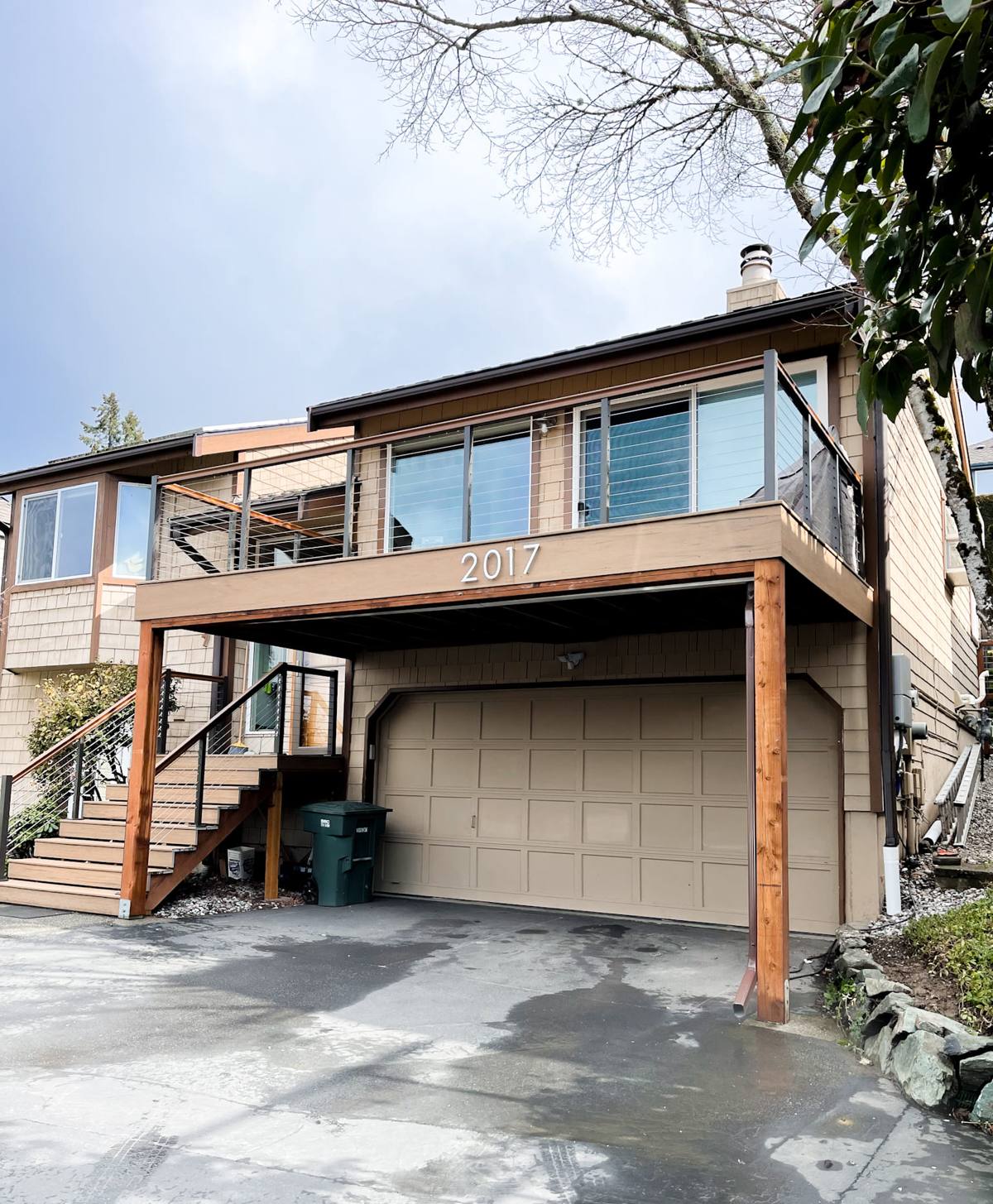
What Skagit County's Climate Actually Does to a Deck
It helps to understand the mechanism, not just the symptom. A few things are working against any deck in this part of Washington:
- Constant low-grade moisture. Skagit County doesn't just get rain events — it gets long stretches of damp air that never fully dries out between storms, especially under the deck and around ledger boards and framing that don't get direct sun.
- Driving rain. Wind-driven rain off the valley pushes water sideways into joints, fastener holes, and gaps between boards that a straight-down rain would never reach.
- Moss and algae. Once moss establishes on a deck surface or in the shaded gaps between boards, it holds moisture against the wood almost permanently, which accelerates rot far faster than rain alone.
- Freeze-thaw cycling. Skagit Valley winters aren't brutal, but the repeated freeze and thaw around footings and ledger connections still stresses fasteners and concrete over the years.
None of this is unique to Lyman, but it's more pronounced in the river valley than it is on a drier east-side property, and it's exactly why decks that would hold up fine in other parts of the country fail faster here — especially if they were built with minimal flashing, undersized footings, or ledger attachments that weren't properly sealed.
Signs a Deck Needs Replacing, Not Just Patching
A lot of homeowners call us wanting a repair, and sometimes that's the right call — a few rotted boards, a loose railing, a cracked stair tread. But there's a point where patching individual pieces stops making sense because the problem isn't the pieces, it's the structure underneath them. Here's how we tell the difference on a site visit:
| Signal | Usually a repair | Usually a full replacement |
|---|---|---|
| Surface boards | A few boards cupped, splintered, or gray | Most boards soft, spongy, or crumbling at fastener points |
| Ledger board | Minor surface weathering | Soft wood, visible rot, or gaps where it meets the house |
| Joists / framing | Isolated soft spot near one joist | Multiple joists soft, spongy, or showing rot when probed |
| Posts and footings | Cosmetic cracking, no movement | Post base rot, footing heave, or visible deck movement/bounce |
| Railings | Loose balusters, minor wobble | Posts pulling from rim joist, connections rotted or undersized |
| Age and history | Deck under 12–15 years, built to code | Deck older, unknown build history, or known code gaps (ledger flashing, connectors) |
The important line in that table is structure versus surface. New decking boards on a rotted frame is a cosmetic fix on a safety problem — it looks better and solves nothing. If your deck is showing more than one of the "replacement" signals above, especially anything involving the ledger, joists, or footings, that's the point where a rebuild is the honest recommendation, not just the more profitable one.
What a Correct Deck Replacement Actually Involves
A deck replacement is not just tearing off old boards and screwing down new ones. Done right, it's a structural project, and in a climate like Lyman's, the parts you don't see matter more than the parts you do.
Ledger Attachment and Flashing
The ledger board — where the deck attaches to the house — is the single most common failure point on decks in wet climates, and it's also the most common place for corners to get cut. A proper ledger connection uses through-bolts (not just lag screws) sized to code, and it always gets flashed so water is directed away from the house rather than trapped behind the ledger where it can rot both the deck framing and the house's wall sheathing. If your existing deck's ledger doesn't have proper flashing, that alone is often reason enough to rebuild rather than reuse it.
Footings and Posts
Footings need to be sized and set below frost depth per code, and posts need proper post bases that keep the wood up off standing water instead of sitting directly in or on concrete. In our experience, undersized or shallow footings are one of the most common shortcuts on older decks in this area, and they're not something you can fix without pulling the structure apart.
Joist Framing and Hardware
Joists need to be spaced and sized for the actual span and load, connected with proper joist hangers and structural screws — not just toe-nailed — and, importantly, treated or naturally resistant lumber that's rated for ground contact where it's close to grade or shaded and slow to dry.
Drainage Under the Deck
On a low deck or one over a patio, we pay attention to where water goes once it passes through the gaps in the decking. A deck that traps water and organic debris underneath it accelerates its own moss and rot problem — sometimes a simple grading or gap adjustment during rebuild prevents years of future maintenance.
Choosing Materials for a Skagit Valley Deck
There's no single "best" decking material — there's a best material for your budget, your maintenance appetite, and how much shade and moisture your specific deck sits in. We'll walk through the honest trade-offs rather than push whatever has the best margin.
| Material | Moisture / moss behavior | Maintenance | Rough lifespan |
|---|---|---|---|
| Pressure-treated wood | Resists rot well but surface still holds moss if shaded | Needs periodic cleaning and re-sealing | 15–20 years with upkeep |
| Cedar | Naturally moisture-resistant, ages gray if unfinished | Benefits from cleaning and occasional oil/stain | 15–25 years with upkeep |
| Composite decking | Doesn't rot, but surface moss/algae still needs washing | Low — no staining or sealing required | 25–30+ years |
| PVC decking | Fully moisture-immune, most resistant to moss staining | Lowest — occasional wash only | 30+ years |
In a climate like Lyman's, the biggest practical difference between wood and composite/PVC isn't strength — it's how much moss and mildew maintenance you're willing to keep up with. Wood decks in shaded, damp spots will need cleaning and resealing more often here than they would in a drier climate, or moss will get a foothold in the grain. Composite and PVC cost more upfront but largely take that maintenance burden off your plate. We'll give you real numbers for your specific deck and site conditions rather than a generic recommendation.
Our Deck Replacement Process
- On-site assessment. We inspect the ledger, framing, footings, and posts — not just the surface — and tell you honestly whether you're looking at repair or replacement.
- Design and material selection. We talk through size, layout, railing style, and decking material based on your budget and how much upkeep you want going forward.
- Permitting. We handle the permit process with Skagit County where required, so the structure is inspected and built to current code — not just to however the last deck happened to be built.
- Demolition. Full removal of the old structure, including hauling, and a check of the ledger area and any framing behind it once it's exposed.
- Structural rebuild. New footings, posts, ledger with proper flashing, and joist framing built to span and load requirements.
- Decking and railings. Installation of your chosen material with attention to gapping and drainage appropriate for our rainfall.
- Final walkthrough. We go over the finished deck with you, including what maintenance (if any) it needs going forward.
Permits and Building to Code in Skagit County
Deck replacement projects above a certain size or height typically require a permit in Skagit County, and for good reason — the permit process is what confirms footing depth, ledger attachment, guardrail height, and stair geometry are actually built to current code rather than to whatever was standard (or skipped) decades ago. We handle that process as part of the job. Skipping permits on a deck rebuild might save a little time up front, but it also means no third-party check on the structural elements that matter most for safety, and it can complicate things later if you ever sell the home.
Maintenance Checklist for a New Deck in This Climate
Whatever material you choose, a little seasonal attention goes a long way in a climate this wet. A simple routine we recommend to Lyman homeowners:
- Sweep debris (leaves, needles, seed pods) off the deck regularly — trapped organic matter is what feeds moss
- Rinse or wash the surface at least once or twice a year to interrupt moss and algae before it establishes
- Check that gaps between boards stay clear so water can drain through rather than pool
- Inspect railings and stair connections annually for looseness
- For wood decks, plan on cleaning and resealing on a multi-year cycle rather than waiting until it looks bad
- Keep gutters and downspouts near the deck clear so roof runoff isn't dumping extra water onto or under it
- After major windstorms, do a quick visual check for movement at the ledger or posts
Why Hire a Crew That Already Works in Lyman
A deck built by a crew that's never worked in a wet river valley climate can still be technically "up to code" and still be a poor fit for this environment — the code sets a minimum, not a recommendation for how to handle moss, shade, and constant moisture. Working regularly in Skagit County means we've seen which ledger details actually keep water out over time, which materials hold up under real moss pressure rather than lab conditions, and where local footing and drainage habits tend to go wrong. That's the difference between a deck that looks good for the photos and one that's still solid in fifteen years.
If your deck in Lyman is showing its age — soft boards, a spongy feel underfoot, visible rot at the ledger, or just years of moss you're tired of fighting — we're happy to take a look and give you a straight answer on repair versus replacement. Reach out for a free, no-pressure estimate using the form below.