 Skagit County
 Roof Repair in Lyman: Built for What the Skagit Valley Does to a Roof
Lyman sits up the Skagit River valley, tucked against tree-covered hillsides that keep a lot of roofs in shade for a good part of the day. That shade is part of what makes this stretch of Skagit County beautiful, and it's also exactly what shortens a roof's life if the roof isn't maintained or repaired correctly. Homes here deal with a long wet season, heavy tree cover, and driving rain that doesn't just fall straight down — it gets pushed sideways into laps, flashing, and valleys by wind moving through the valley. A roof repair here isn't the same job as a roof repair in a dry, open subdivision. It has to account for moisture that lingers, moss that regrows fast, and materials that need to shed water even when it's coming in at an angle.
This page is about roof repair specifically — patching, flashing fixes, leak chases, and targeted section replacement — not a full tear-off. If your roof still has useful life left in it, a correctly done repair is the right call. Our job is to tell you honestly when that's true and when it isn't.
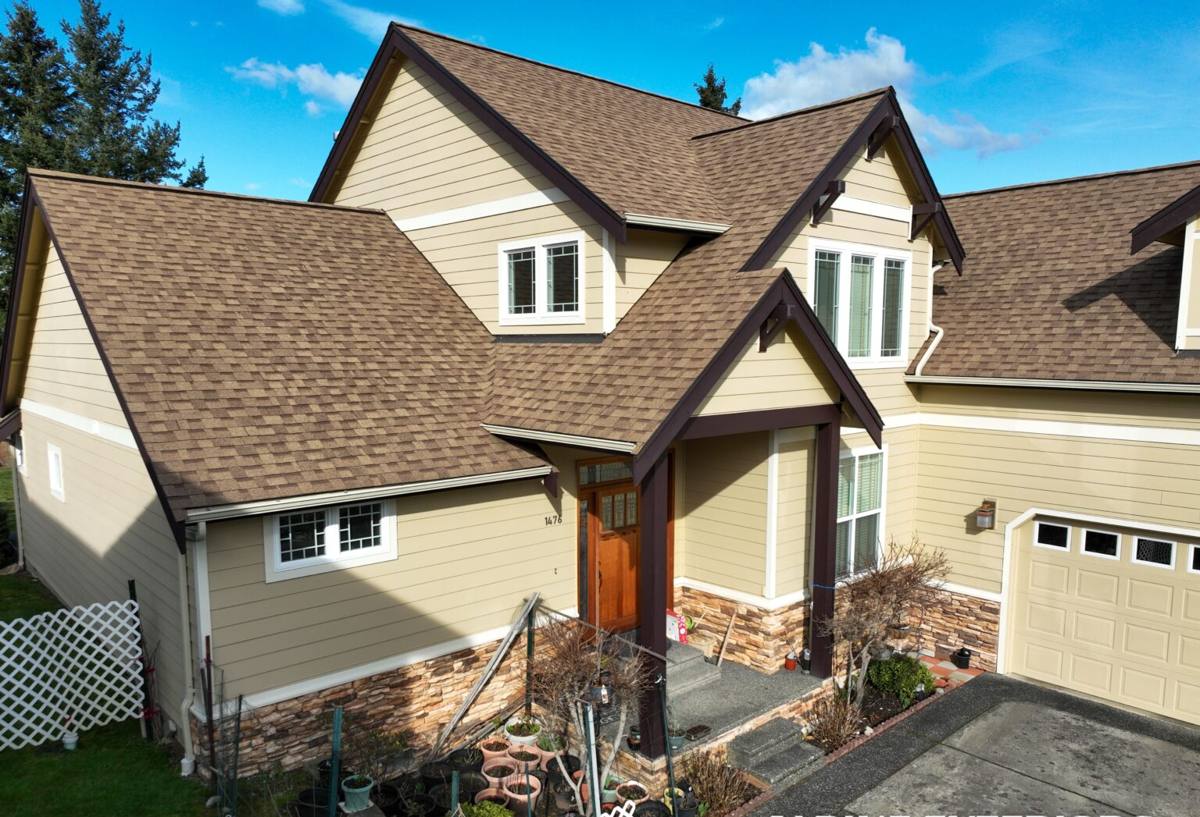
How Moss, Rain, and Shade Shorten a Lyman Roof's Life
Moss and Organic Growth
Shaded, north-facing slopes and roofs under overhanging trees stay damp far longer after a rain than roofs out in the open. That extended dampness is what moss needs to take hold. Once moss establishes, it holds moisture directly against the roofing material, works into laps and butt joints, and lifts shingle edges as it grows — which is exactly where wind-driven rain finds its way underneath. On composition shingle roofs, moss also traps grit and organic debris that breaks down the surface granules faster than plain weather exposure would.
Driving Rain and Wind-Driven Water
Skagit County gets a long stretch of wet months, and in a river valley like this, wind can push rain sideways instead of letting it fall straight. That matters at every transition point on a roof — where a chimney meets shingles, where a lower roof ties into a wall, around skylights, and in valleys where two roof planes meet. Flashing and underlayment details that would hold up fine in light rain can leak under sustained, wind-driven weather if they weren't installed with enough overlap and the right lap direction to begin with.
Freeze-Thaw and Ice
Lyman doesn't see the ice-damming problems that colder inland areas get, but the valley floor does run a few degrees cooler than areas closer to the water, and it isn't unusual to get a handful of freezing nights each winter. A small amount of trapped moisture that freezes and expands can turn a minor gap in flashing or underlayment into a real leak by spring. This is one more reason small issues shouldn't sit unaddressed through a wet season.
Signs Your Lyman Home Needs Roof Repair Now
Most roof repairs start small and get cheaper the earlier they're caught. Here's what we tell homeowners to watch for between inspections:
- Visible moss or thick green growth on shaded slopes or roof edges
- Shingle granules collecting in gutters or at downspout outlets
- Curling, cupping, or lifted shingle edges, especially on lower, shaded sections
- Dark stains or streaks on interior ceilings or upper walls, especially after a heavy rain
- Daylight visible through the roof deck from inside the attic
- Soft or spongy spots when the roof is walked, which usually means the decking underneath has taken on moisture
- Rusted, lifted, or missing flashing around chimneys, vents, or skylights
- Sagging along a roofline or in a valley, which can mean structural moisture damage, not just a surface issue
What a Proper Roof Repair Actually Involves
Diagnosis Before Patching
A leak often shows up inside the house well downhill or downslope from where the water is actually getting in. A correct repair starts with tracing the water path back to its real entry point — not just patching the spot where a stain appeared on the ceiling. That means checking flashing, underlayment laps, and the roof deck itself, not just the visible shingle surface.
Matching Materials and Technique
Repairs need to tie into the existing roof correctly — right lap direction, right fastener pattern, and shingles or materials that are compatible with what's already up there so the patch doesn't stand out or create a new weak point. On an older roof, this sometimes means sourcing a close match rather than an exact one, and we'll always tell you honestly when that's the case.
Flashing, Ventilation, and Moisture Control
A huge share of "roof leaks" in this climate are actually flashing failures, not shingle failures. Chimney flashing, step flashing along walls, and valley flashing all take the brunt of wind-driven rain and need to be replaced correctly, not just re-sealed with caulk as a temporary fix. We also check attic ventilation while we're up there — poor ventilation traps moisture underneath the roof deck, which speeds up rot and gives moss and mold exactly the damp environment they need.
Repair or Replace? How We Help You Decide
Not every roof problem calls for a repair, and not every roof problem calls for a full replacement either. We walk you through the honest tradeoffs rather than defaulting to the bigger job.
| Factor | Repair Usually Makes Sense | Replacement Usually Makes Sense |
|---|---|---|
| Age of roof | Roof is within its expected service life | Roof is near or past its material's typical lifespan |
| Extent of damage | Damage is isolated to one section, flashing point, or slope | Damage is spread across multiple slopes or the deck itself |
| Decking condition | Deck underneath is sound and dry | Deck shows soft spots, rot, or repeated moisture intrusion |
| Moss and organic buildup | Surface growth with no underlying material failure | Long-term moss damage has degraded granules and mat across large areas |
| Prior repair history | First real repair needed in a number of years | Same areas have needed repeated patching |
Our Roof Repair Process
- On-site inspection. We walk the roof and check the attic where accessible, tracing any reported leak back to its actual source rather than assuming based on the interior stain location.
- Honest assessment. We tell you plainly whether this is a repair situation, a "repair now, plan for replacement in the next few years" situation, or a replacement situation — and why.
- Written scope and quote. You get a clear description of what's being fixed, the materials involved, and the price before any work starts.
- The repair itself. This includes proper tie-in of new material, correct flashing work, and moss/debris removal from the surrounding area so the repair isn't undermined by what's growing next to it.
- Cleanup and walkthrough. We clear debris and go over what was done and what to watch for going forward.
What Roof Repair Typically Costs
Roof repair pricing varies a lot based on what's actually wrong, so we avoid quoting flat numbers before seeing the roof. What we can tell you is what drives the price up or down.
| Cost Factor | Why It Matters |
|---|---|
| Roof pitch and access | Steeper roofs and limited access points take longer and require more safety setup |
| Extent of moss and debris removal | Heavy moss buildup adds cleanup time before any actual repair work can begin |
| Decking condition | Rotted decking found under the roofing material has to be replaced before new material goes back on |
| Flashing complexity | Chimneys, skylights, and multiple roof valleys each add labor and material |
| Material match | Matching an older or discontinued roofing product can take more sourcing time than a straightforward patch |
We'll always separate "this is what the repair costs" from "this is what we found that you should plan for," so you're not surprised by scope creep once the roof is opened up.
Why Hiring a Crew That Already Works in Lyman Matters
A crew that regularly works this part of Skagit County already knows how shaded, tree-lined properties behave differently than open rooftops closer to town, and adjusts the repair approach accordingly — heavier moss treatment, closer attention to flashing laps, and awareness that a roof here may hold moisture longer after a storm than one a few miles away. That familiarity also means fewer surprises on scheduling and access, since valley properties can have different driveway, tree-clearance, or debris-hauling considerations than in-town lots. Hiring locally isn't about convenience alone — it's about a crew that has already seen how this specific stretch of the county's weather behaves on a roof, and repairs accordingly instead of applying a generic approach.
If you're dealing with a leak, visible moss, or just want an honest opinion on whether your roof needs repair or can hold for now, we're happy to take a look. Reach out for a free, no-pressure estimate using the form below.