 Skagit County
 Lyman's Climate Is Harder on Siding Than It Looks
Lyman sits up the Skagit River valley, tucked between farmland and the tree line of the Cascade foothills. It doesn't get the same direct salt exposure as the county's waterfront towns, but it gets its own version of the same problem: months of steady, driving rain, river humidity that lingers in low-lying areas, and heavy tree cover that keeps siding shaded and damp long after a storm has passed. Add in the broader Skagit County weather pattern — wet winters, short drying windows, and a moss season that can stretch from October into May — and you have a climate that quietly punishes any siding material that can't handle sustained moisture contact.
Homeowners in Lyman often don't notice the damage until it's well established, because the failure points — behind gutters, under eaves, along the north wall that never sees direct sun — are the parts of the house nobody looks at closely. By the time paint is peeling or boards are soft to the touch, the damage has usually been building for a couple of years.
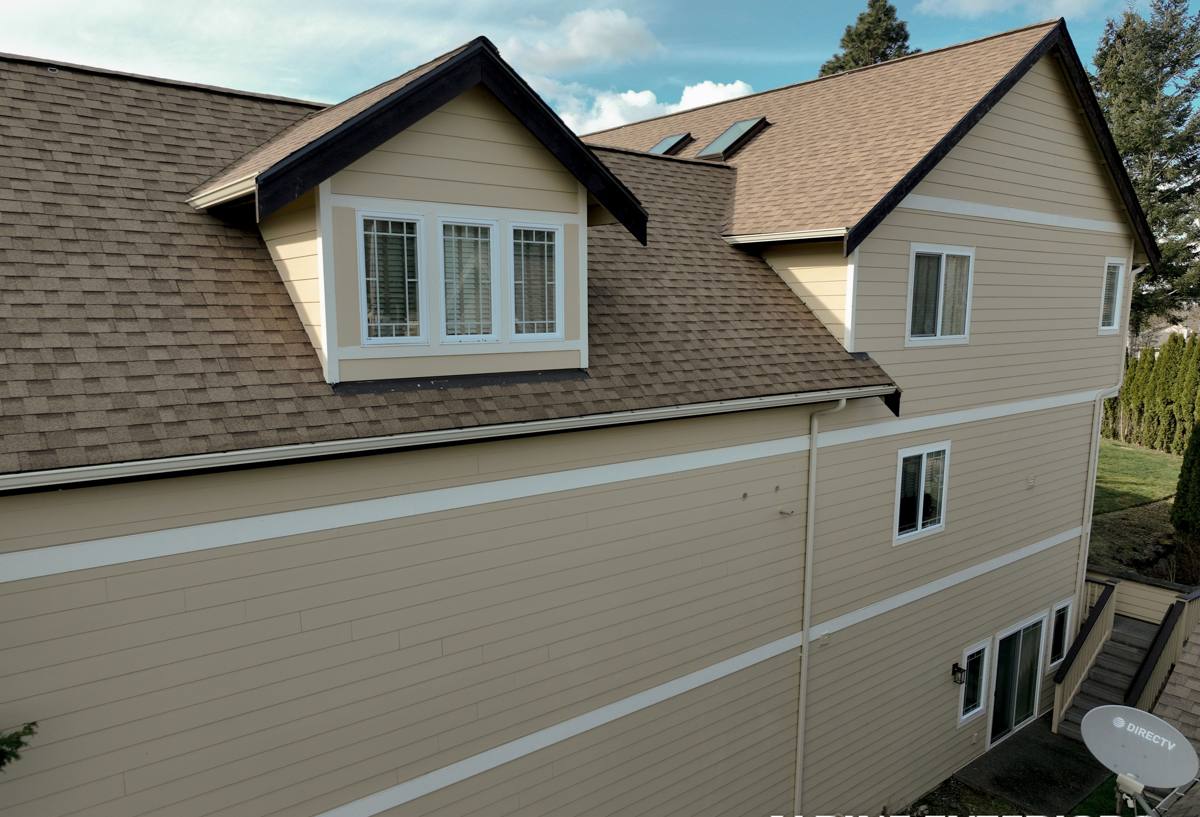
Signs a Lyman Home May Be Due for Siding Replacement
Siding replacement is a bigger job than a repair, and it's worth getting an honest assessment before committing to it. These are the signs we look for on Skagit Valley homes specifically:
- Soft or spongy spots when you press on the siding, especially near the bottom courses and around window trim
- Persistent moss or dark streaking that comes back within weeks of being cleaned
- Visible cupping, warping, or delaminating on wood-based or engineered wood siding
- Paint that won't hold — blistering, peeling, or needing a repaint far more often than it used to
- A musty smell near exterior walls, which can point to moisture getting behind the siding, not just sitting on top of it
- Gaps opening up at seams, corners, or where siding meets trim, letting wind-driven rain track in
One or two of these can sometimes be spot-repaired. Multiple signs, especially spread across different walls of the house, usually mean the siding system as a whole has reached the end of its useful life.
Why Damage Shows Up Differently Wall by Wall
On most Lyman homes, the north and west-facing walls take the worst of it — less sun to dry them out, more exposure to the prevailing wet weather moving up the valley. A proper inspection checks every elevation separately rather than assuming the whole house is in the same condition, because it usually isn't.
What a Correct Siding Replacement Actually Involves
Replacing siding is not just swapping old boards for new ones. Done correctly, it's a system, and skipping steps in that system is exactly how homes end up with the same moisture problems five years later. A proper job includes:
- Full removal of the old siding and a real inspection of the sheathing underneath for rot before anything new goes up
- Repair or replacement of any damaged sheathing, framing, or trim found during tear-off
- A new water-resistive barrier (house wrap), installed with correct overlaps and taped seams
- Properly flashed windows, doors, and any penetrations — this is the single most common point of failure on older installs
- Correct fastener type, spacing, and placement per the manufacturer's installation instructions
- Adequate clearance between the bottom of the siding and grade, decks, roofs, and walkways so water has somewhere to go
- Caulking and sealing only where the manufacturer specifies it — over-sealing can trap moisture instead of shedding it
Every one of those steps matters more in a climate like Skagit County's than it would somewhere dry. A house wrap seam that's slightly off, or a piece of flashing installed backward, might not show a problem for a year or two in a dry climate. Here, with the rain volume Lyman sees, it shows up fast.
Why We Install Only James Hardie Fiber Cement
We standardized on James Hardie siding because of what it's asked to do on homes in this valley, year after year. It's fiber cement, not wood or wood-based, so it doesn't absorb water the way wood, engineered wood, or wood-composite products can. That matters directly here: moisture absorption is what drives swelling, soft spots, and the moss and mildew growth that Skagit County's long wet season practically guarantees on the wrong material.
Hardie's HZ5 product line is engineered specifically for climates with heavy moisture exposure — it's built to resist moisture-related damage better than the standard HZ10 line meant for drier regions, which makes it a sensible fit for a river valley town like Lyman. The factory-applied ColorPlus finish is baked on under controlled conditions, so it holds color and resists the fading, peeling, and repainting cycle that plagues field-painted siding in wet climates. And because it's non-combustible, it adds a layer of fire resistance that matters increasingly to homeowners near the wildland-urban interface in the foothills.
We won't pretend Hardie is the cheapest option on the shelf, and we won't pretend it's the only material that can be installed correctly. But it's the product we're willing to put our name behind on Skagit Valley homes, because we've seen what the climate does to the alternatives.
What We Don't Install, and Why
We don't install vinyl, LP SmartSide, cedar, primed spruce, Cemplank, or Allura. Vinyl can warp and gap over time and offers less impact resistance in a region with branch-drop and windstorms. Wood-based products like LP SmartSide and cedar require more diligent, ongoing maintenance to stay ahead of moisture, and a missed year or two of upkeep costs more than it saves. Cemplank and Allura are also fiber cement, and reasonable products in their own right — our reason for not installing them is standardization: one product line, one warranty structure, one installation standard we train our crews to every time, rather than switching systems project to project.
Our Process for a Lyman Siding Replacement
- On-site assessment: We walk every elevation of the house, check for moisture behind the current siding where accessible, and identify problem areas before quoting anything.
- Written scope and estimate: You get a clear breakdown of what's being replaced, what product line and color, and what happens if we find sheathing damage once tear-off starts.
- Tear-off and inspection: Old siding comes off, sheathing gets inspected, and any rot or damage gets addressed before the new system goes on — not covered up.
- Weather barrier and flashing: House wrap, window and door flashing, and all penetrations get sealed correctly, in the order the manufacturer specifies.
- Hardie installation: Siding goes on to spec — fastener pattern, clearances, and joint treatment all following James Hardie's installation guidelines.
- Final walkthrough and cleanup: We check the work with you, answer questions about care, and leave the site clean.
What Drives Cost on a Lyman Siding Job
Every home is different, and we'll always give you a specific number after an on-site look rather than a number pulled from a general range. But these are the main factors that move the price up or down on jobs in this area:
| Factor | Why It Matters |
|---|---|
| Sheathing condition | Rot found during tear-off adds repair scope that can't be known until the old siding is off |
| Home size and wall complexity | More corners, dormers, and trim details mean more cutting, fitting, and labor time |
| Access and site conditions | Steep grades, tree cover, or tight access common on foothill properties can slow staging and setup |
| Product line and profile | HZ5 vs. HZ10, lap width, and panel vs. plank styles carry different material costs |
| Trim and accessory scope | Fascia, soffits, and trim replaced alongside siding add to the total but improve the finished system |
Why It Matters to Hire a Crew That Already Works Skagit County
A siding installer who mostly works dry-climate jobs and occasionally takes on a Skagit County project doesn't have the same instinct for where water actually goes on a house here. Crews who work this valley regularly know which details get skipped on cheap installs and cause problems in year three — the flashing shortcuts, the missing kick-out flashing above rooflines, the clearance gaps that seem fine until the first hard rain finds them. Hiring locally isn't just about convenience; it's about experience with the specific way this climate attacks a house.
Keeping New Siding Performing Well in the Skagit Valley
Fiber cement siding is low-maintenance compared to wood, but "low-maintenance" doesn't mean "no maintenance." A short annual routine keeps a Hardie installation performing the way it's designed to:
- Rinse siding once or twice a year to clear pollen, dust, and early moss growth before it takes hold
- Keep gutters clear so overflow doesn't run down the face of the siding
- Trim back trees and shrubs to keep airflow and sunlight reaching shaded walls
- Check caulking at trim and penetrations annually and touch up as needed
- Address any paint chipping at cut edges promptly to protect the underlying material
If your Lyman home is showing signs of wear, or you're just trying to plan ahead before it becomes an urgent problem, we're happy to take a look. The estimate is free, there's no pressure, and you'll get a straight answer about what your siding actually needs.