 Skagit County
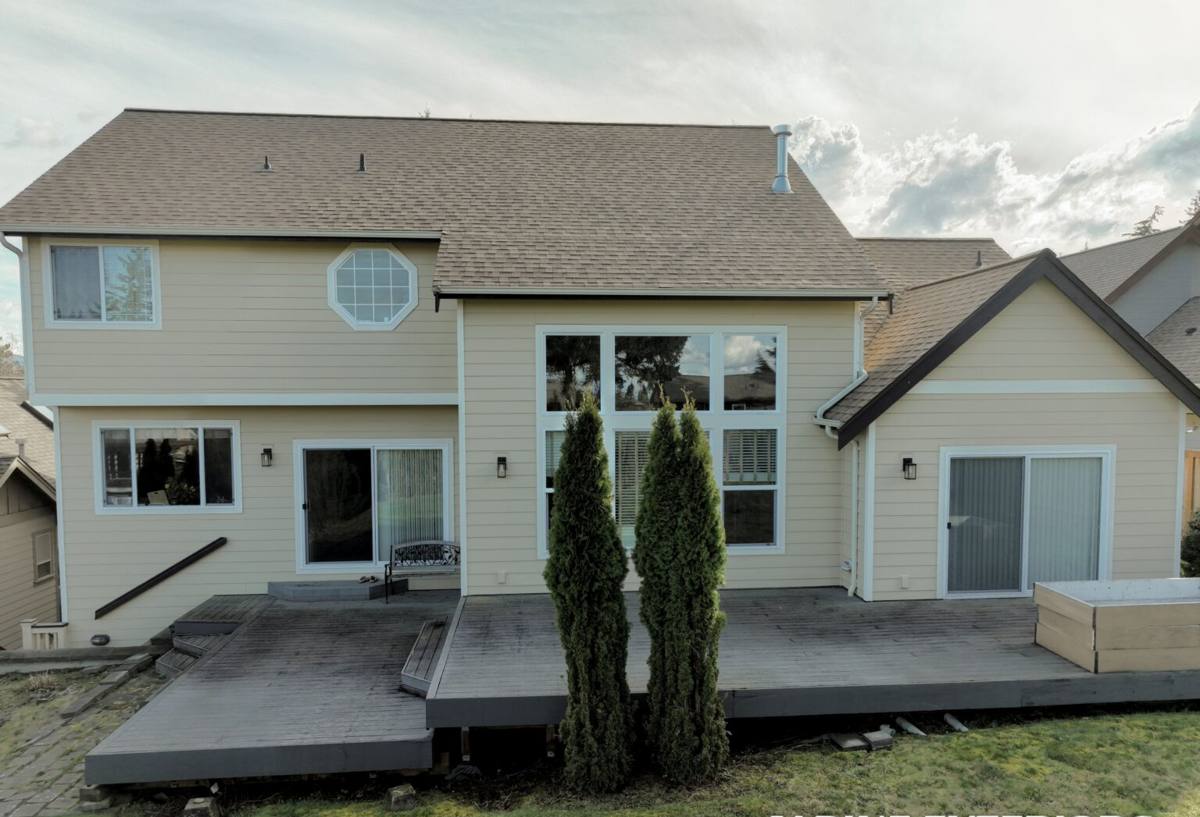
 Why Mount Vernon Decks Wear Out Faster Than You'd Expect
A deck in Mount Vernon lives a harder life than the same deck would in a drier part of the state. Skagit County sits in a corridor where marine air off the Salish Sea, regular driving rain, and a long stretch of gray, low-sun months combine to keep wood and hardware wet for days at a time. Add the moss and algae season that runs from fall through spring, and you've got a structure that's constantly fighting moisture even when it looks fine from the porch door.
None of that means a deck is doomed — it means the repair has to account for how this climate actually behaves, not just patch what's visible. We've repaired decks all over Mount Vernon and the surrounding county, and the failure patterns repeat: they start where water sits, where two materials meet, or where a fastener has started to let go. Knowing where to look first is most of the job.
The Deck Problems We See Most Often Here
Moss and Algae on Decking Boards
Moss doesn't just look bad — it holds moisture directly against the wood or composite surface, blocks drying, and turns boards slick and dangerous underfoot. On shaded decks (common under mature trees or on the north side of a house) it can establish itself within a single wet season. Left alone, moss growth on real wood decking accelerates surface rot; on composite decking it's mostly cosmetic but still a slip hazard.
Ledger Board Rot
The ledger board — the piece that attaches the deck to the house — is the single most important structural connection on most decks, and it's also the piece most exposed to water intrusion if flashing was skipped or installed wrong. A rotted or improperly flashed ledger is a safety issue, not a cosmetic one, and it's one of the first things we check on any repair call.
Fastener and Hardware Corrosion
Constant damp air corrodes standard fasteners faster than homeowners expect, especially on older decks built before corrosion-resistant hardware was standard practice. Rusted or failing nails, screws, and joist hangers show up as squeaking, slight movement, or rust streaks bleeding down the wood — all signs the connection underneath is weakening.
Joist and Beam Damage
Where decking boards overlap joists, or where joists meet beams, water collects and sits longer than it does on open, sloped surfaces. Soft spots, discoloration, or a spongy feel when you walk a section usually trace back to structural framing that's been absorbing moisture for a season or more.
Loose or Failing Railings
Railing posts anchored into a deteriorating rim joist or ledger will loosen even if the railing itself is in good shape. This is a common and often overlooked safety issue — a railing that wiggles is telling you something about the wood behind it, not just the hardware.
Repair vs. Replace: How We Make the Call
Not every problem means tearing the whole deck out. We look at how much of the structure is affected, where the damage is located, and how the deck is used, then walk homeowners through the honest trade-offs.
| Situation | Usually Repairable | Usually Needs Replacement |
|---|---|---|
| Isolated surface rot on a few boards | Yes — spot replace boards | No, unless rot has spread underneath |
| Rotted ledger board | Sometimes, if framing behind it is sound | Yes, if house rim joist is also compromised |
| Rusted fasteners, wood still solid | Yes — re-fasten with corrosion-resistant hardware | No |
| Multiple soft or spongy joists | Sometimes — sistering joists can work | Yes, if more than a third of framing is affected |
| Deck is 20+ years old with recurring issues | Case by case | Often, if repair costs approach replacement cost |
As a general rule, if the framing underneath is sound and the damage is limited to decking boards, railings, or hardware, repair is the right call and the more cost-effective one. When rot has reached the ledger-to-house connection or spread through multiple structural members, we'll say so plainly rather than patch around a problem that will resurface.
What a Correct Deck Repair Actually Involves
A repair that only replaces what's visible from the top often misses what caused the damage in the first place. Our approach on every Mount Vernon deck repair includes:
- Checking the ledger board connection and flashing before touching decking boards
- Probing joists and beams near any visible soft spot, not just the spot itself
- Identifying the moisture source — poor drainage, missing flashing, plant growth, shade and airflow — not just the symptom
- Replacing corroded fasteners with hardware rated for exterior, high-moisture use
- Confirming railing posts are anchored into solid wood, not just re-tightened into soft material
- Checking that decking boards have proper gapping for drainage and airflow underneath
Skipping any of these steps is how a deck ends up needing the same repair again two winters later. We'd rather spend the extra time diagnosing correctly than come back out for the same problem.
Our Repair Process
- On-site assessment. We walk the full deck, check the ledger connection, probe suspect boards and framing, and look at drainage and grading around the structure.
- Honest scope and estimate. We explain what needs repair, what's optional, and what we'd watch but leave alone for now — with a clear, itemized estimate.
- Structural work first. Any framing, ledger, or hardware issues get addressed before cosmetic work, since surface repairs on a weak structure don't hold.
- Decking, railing, and surface repair. Boards, railings, and stairs are repaired or replaced to match the existing deck as closely as possible.
- Final check and cleanup. We walk the finished repair with the homeowner, confirm everything is solid underfoot, and leave the site clean.
Materials and Hardware We Use
Given how much moisture this region deals with, material choice matters as much as workmanship. For structural repairs, we use corrosion-resistant fasteners and hangers rated for exterior exposure rather than standard interior-grade hardware, since standard fasteners are a common cause of repeat failures we see on older decks. For decking board replacement, we'll discuss whether matching the existing wood species makes sense or whether a composite or capped composite board is worth considering for high-moss, high-shade areas — composite carries a higher upfront cost but sheds moisture differently and needs less seasonal maintenance. We lay out the maintenance burden and moisture behavior of each option honestly rather than pushing one product, since the right choice depends on the deck's exposure and the homeowner's maintenance preference.
Maintenance That Extends the Life of a Repair
A good repair lasts longer with a little seasonal attention, especially given how long the wet season runs here. We give every customer the same basic checklist:
- Sweep leaves and debris off the deck surface regularly through fall — trapped debris holds moisture against boards
- Treat visible moss or algae promptly rather than letting it establish through a full wet season
- Keep gutters and downspouts clear so runoff isn't draining directly onto or under the deck
- Trim back vegetation that shades the deck or blocks airflow underneath it
- Check railings and stair connections for movement once or twice a year
- Reseal or refinish wood decking on the manufacturer's recommended schedule, not just when it looks faded
Why Local Experience in Mount Vernon Matters
A crew that only sees a handful of decks a year in this climate is guessing at where problems hide. We work on decks throughout Mount Vernon and Skagit County regularly enough to know which details — flashing at the ledger, drainage gaps between boards, hardware choice — actually matter here versus in a drier climate where a repair guide from somewhere else might apply. That local pattern recognition is what keeps a repair from becoming a recurring expense.
It also means we're familiar with the range of deck ages and construction styles common around Mount Vernon, from older wood-frame decks that have been through decades of Skagit County winters to newer builds that still need the same moisture-smart maintenance to hold up going forward.
Get a Straight Answer on Your Deck
If your deck has soft spots, loose railings, moss buildup, or you just want a second opinion before your next wet season, we're happy to take a look. We'll give you a clear assessment of what's actually going on, what it'll take to fix it right, and an honest estimate — no pressure, no upsell. Use the form below to request a free estimate.