 Skagit County
 Why Decks in Sedro-Woolley Wear Out Faster Than You'd Expect
Sedro-Woolley sits in the Skagit Valley, where moisture-laden air moves up from Puget Sound and settles against the foothills. That means more days of sustained dampness than a lot of homeowners realize, even when it isn't actively raining. Add driving rain events off the water, a long shoulder season where surfaces barely dry between storms, and a moss season that can run from fall through spring, and you have conditions that are hard on any exterior wood structure. A deck built with the same materials and details you'd use in a drier climate simply won't hold up as long here.
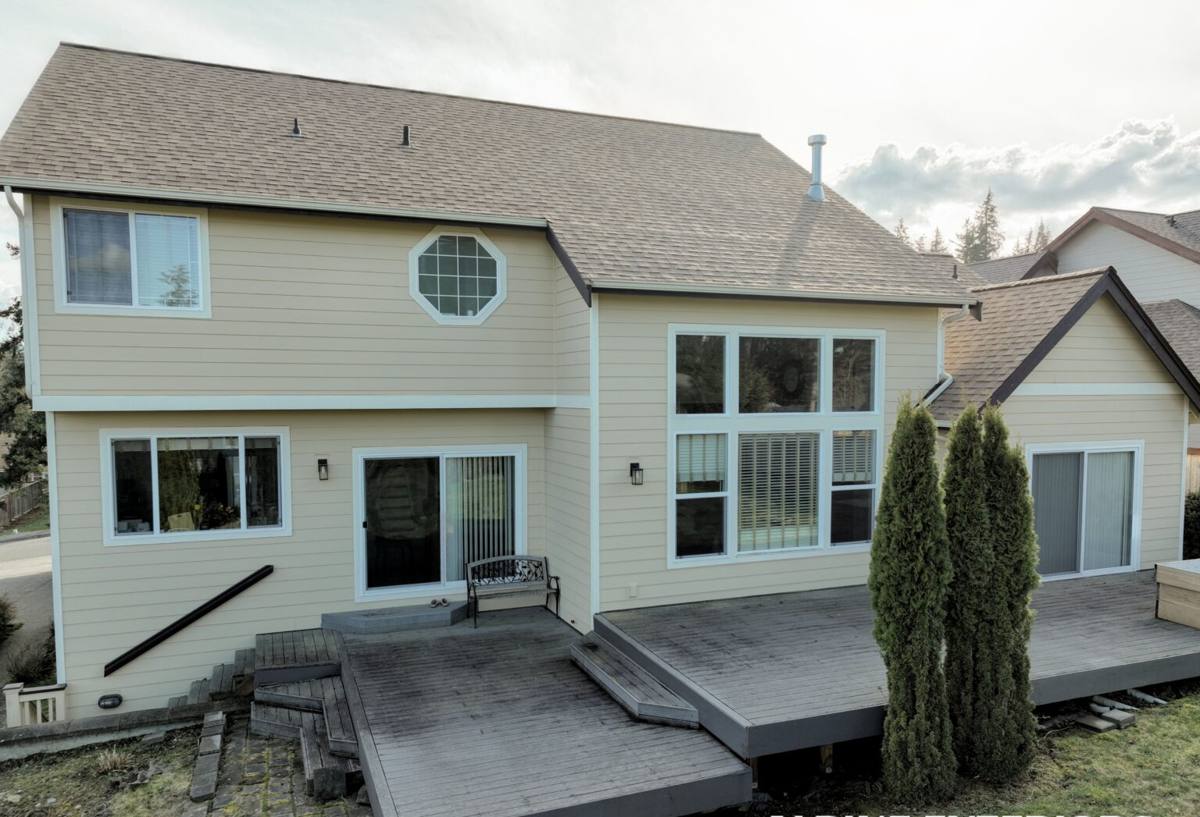
Most of the deck failures we see in Sedro-Woolley aren't dramatic. They're slow: a ledger board that's been quietly absorbing water behind the siding for years, fasteners that have corroded from the inside out, or a joist that's been sitting under a layer of moss and organic debris that never fully dries. By the time it's visibly sagging or soft underfoot, the damage has usually been building for a season or two.
Signs Your Deck Needs Repair (Not Just Replacement)
A lot of homeowners assume a problem deck means a full teardown. In our experience, that's often not necessary if the framing is sound and the damage is caught early. Here's what we look for to tell the difference:
- Soft, spongy, or discolored decking boards — usually a surface or fastening issue, not structural
- Visible gaps, wobble, or movement where the deck meets the house — often a ledger board or flashing problem
- Rust streaks around screws or nails — a sign fasteners are corroding and losing grip
- Green or black film that keeps coming back within weeks of cleaning — moss and algae holding moisture against the wood
- Stair stringers or railing posts that flex or feel loose — a safety issue that should never wait
- Standing water or slow drainage on the deck surface after rain — a sign of pitch or drainage problems, not just cosmetic wear
Some of these are simple board-level fixes. Others point to something happening underneath the deck that needs a closer look before we can tell you honestly what it will take to fix.
What a Correct Deck Repair Actually Involves
It starts underneath, not on top
Replacing a few worn boards is the easy, visible part of a deck repair. The part that actually determines whether the repair lasts is what's underneath: the ledger board connection to the house, the joists, the posts and footings, and the flashing that's supposed to keep water out of all of it. In a climate like Skagit County's, a deck repair that only addresses what you can see from the top is a repair that will need to be redone.
The ledger board and flashing connection
The ledger board — where the deck attaches to your house — is the single most common failure point we find on older decks in this area. If it was installed without proper flashing, or if the flashing has failed over time, water gets trapped between the ledger and the house framing every time it rains. That's a slow, hidden rot problem that can affect both the deck and the wall behind it. Any real repair addresses this connection directly, not just the boards near it.
Fasteners and hardware
Standard fasteners corrode faster in a persistently damp climate, and once a screw or joist hanger starts rusting, it loses holding strength well before it looks obviously bad. Repairs done right use fasteners and structural hardware rated for exterior, high-moisture use — not whatever matches the existing hardware if that hardware is part of the problem.
Framing and structural members
Joists, beams, and posts get probed and checked for soft spots, not just looked at. Wood can look intact on the surface while being significantly weakened underneath. Any framing member that's compromised gets sistered or replaced — patching decking over a weak joist just moves the problem down the road.
Common Deck Problems We See in Sedro-Woolley
| Problem | Typical Cause | Repair Approach |
|---|---|---|
| Rot at the house connection | Missing or failed ledger flashing | Remove affected boards, correct flashing, rebuild connection |
| Persistent moss and green film | Shade, poor airflow, long damp season | Clean, treat, and improve drainage/airflow where possible |
| Rusting fasteners, loosening boards | Standard-grade hardware in a wet climate | Replace with corrosion-resistant fasteners rated for exterior use |
| Soft or spongy decking | Water trapped between boards or under debris | Replace affected boards, address the moisture source |
| Wobbly stairs or railings | Loosened connections, weathered posts | Rebuild connections to current structural standards |
Repair or Rebuild? An Honest Comparison
We'd rather tell you a repair will hold up than sell you a rebuild you don't need — and vice versa. Here's generally how we think about it:
| Factor | Repair Usually Makes Sense | Rebuild Usually Makes Sense |
|---|---|---|
| Framing condition | Solid, only isolated soft spots | Widespread rot in joists, beams, or posts |
| Ledger connection | Sound or fixable with new flashing | Failed for years, wall framing also affected |
| Age of structure | Under 15-20 years, built to a reasonable standard | Older, undersized, or built without permits/inspection |
| Scope of damage | Limited to specific boards or a section | Spread across most of the deck surface and structure |
| Your plans | Keep the current footprint and layout | Want a different size, layout, or added features |
We'll always give you our honest read on which category your deck falls into, with the reasoning behind it — not just a recommendation to rebuild because it's the bigger job.
How Our Deck Repair Process Works
- Inspection. We check the surface, the framing underneath, the ledger connection, and the footings, not just the boards that prompted the call.
- Honest assessment. You get a clear picture of what's actually wrong, what's driving it, and what your realistic options are — repair, partial rebuild, or full replacement.
- Written scope and estimate. No guessing after the fact about what's included.
- Repair work. Structural issues get addressed first, then decking, railings, and stairs. Flashing and drainage details are corrected as part of the job, not treated as extras.
- Final walkthrough. We check the work with you and explain what maintenance, if any, will help it last.
Decking Material Considerations for This Climate
Part of a good repair is deciding what to replace failing sections with — and that decision matters more in a consistently damp climate than in a dry one.
- Pressure-treated lumber: Affordable and widely used for framing repairs; needs consistent maintenance (cleaning, sealing) to perform well long-term in this climate.
- Cedar: Naturally resists some decay and looks good, but still needs regular upkeep and isn't immune to moisture damage if drainage details are poor.
- Composite decking: Higher upfront cost but far less ongoing maintenance, and generally more forgiving of the moss and moisture cycle common here. Installation quality and proper gapping/ventilation still matter — a poorly installed composite deck can trap moisture just like wood.
We don't push one material over another as a blanket rule. We'll walk you through the maintenance burden, moisture behavior, and upfront-versus-long-term cost tradeoffs for your specific deck so you can decide what fits your budget and how much upkeep you want to do.
Maintenance That Actually Extends the Life of a Repair
A repair is only as good as the upkeep that follows it. This is especially true in Skagit County, where the long moss season undoes neglected maintenance faster than in drier parts of the state.
- Sweep off leaves, needles, and debris regularly — trapped organic material holds moisture against the wood
- Clean moss and algae growth as soon as it appears rather than letting it establish
- Check that gaps between boards stay clear so water can drain instead of pooling
- Inspect the ledger board area and any flashing once a year, ideally before the wet season ramps up
- Reseal or restain wood decking on the schedule appropriate to the product, not just when it visibly needs it
- Watch for early rust on fasteners and hardware — it's cheaper to address than the rot that follows
Why Hire a Crew That Already Works in Sedro-Woolley
A contractor who works this area regularly already knows what Skagit Valley moisture does to a deck over time, which failure points to check first, and which repair details actually hold up here versus what just looks fine on installation day. That's different from a general handyman approach that treats every deck repair the same regardless of climate. We also know the reality of scheduling around this region's wet stretches, and we build our repair timelines around getting structural work done and protected before weather works against it, not after.
If you're dealing with a soft spot, a wobbly rail, a ledger board you're not sure about, or a deck that just needs an honest once-over, we're happy to take a look. Reach out for a free, no-pressure estimate using the form below, and we'll give you a straight answer on what your deck actually needs.