 Skagit County
 Siding Built for Avon's Corner of the Skagit Valley
Avon sits in one of the wetter, more exposed pockets of Skagit County — low valley floor, open farmland around it, and enough distance from any windbreak that weather moves through with real force. Homes here deal with a longer wet season than a lot of homeowners realize, plus the added moisture load that comes with proximity to the Skagit River and the tidal influence closer to Skagit Bay. Salt-tinged air, driving rain that hits siding at an angle instead of straight down, and a moss season that can stretch from fall through spring all put steady pressure on whatever material is covering the walls.
None of that is a reason to over-build or over-spend on a house. It is a reason to be precise about material choice and installation detail. A siding job that would hold up fine in a drier, more sheltered part of the county can fail early in Avon if the water management details are skipped. This page walks through what that means in practice, and how we handle a siding installation on an Avon home from the first walk-around to the final inspection.
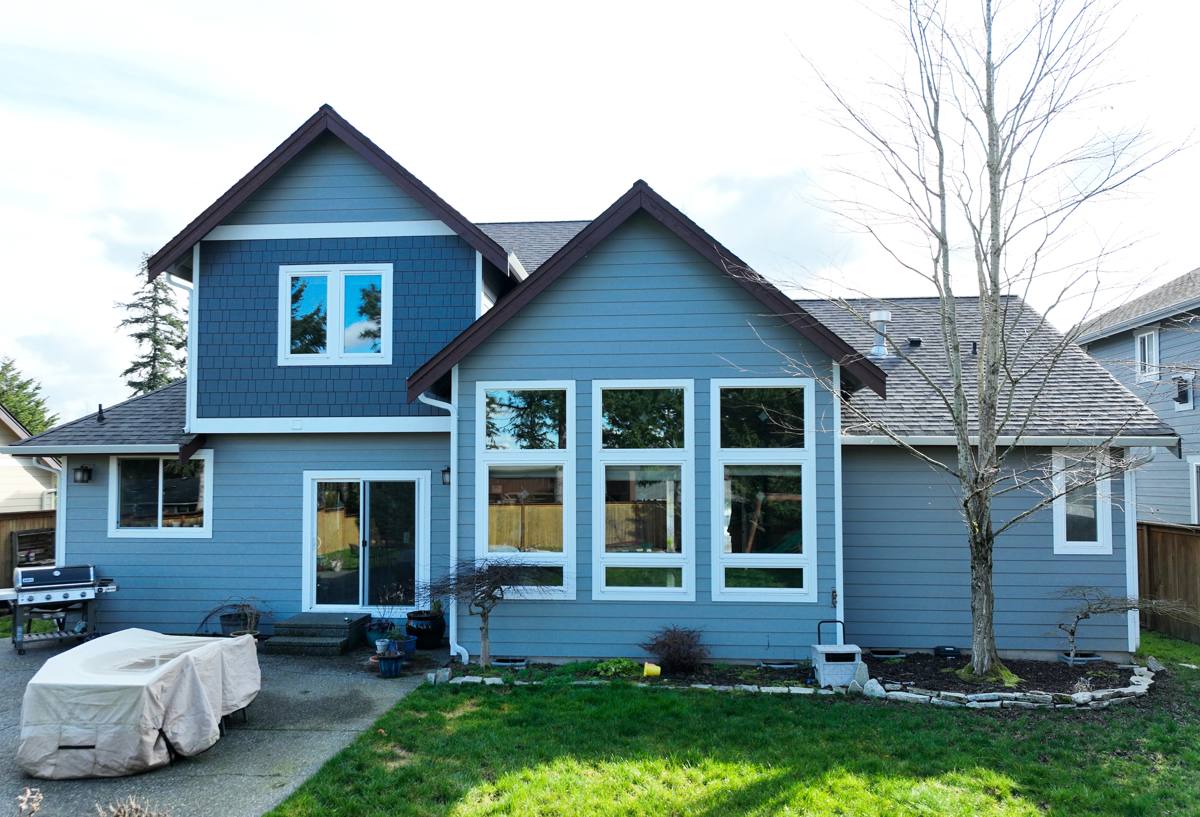
What the Local Climate Actually Does to Siding
Driving rain and wind-driven moisture
Open exposure means rain doesn't just fall on a house in Avon — it gets pushed sideways into seams, laps, and trim joints. Siding that relies on caulk alone to keep water out, rather than proper flashing and lap geometry, tends to show staining and soft spots at those joints years before it should.
Salt-influenced air
Being close to the Skagit River delta and the broader Puget Sound airshed means fasteners, trim, and lower-grade coatings see more corrosion pressure than they would further inland. Materials and fasteners that aren't rated for that environment age faster — chalking, streaking, or corroding at the head long before the siding itself would otherwise need attention.
Moss and organic growth
Shaded north and west walls, plus the valley's humidity, give moss and algae a long runway to establish themselves on siding that holds moisture at the surface. Beyond the cosmetic issue, moss and algae mats hold water against the substrate, which is exactly the condition that leads to rot in wood-based products over time.
What a Correct Siding Installation Involves
A siding job is really a water-management system with a finished surface on top. Get the water management wrong and the finish doesn't matter — moisture will find its way behind the cladding eventually. Here's what we treat as non-negotiable on every Avon installation:
Weather-resistive barrier, done right
A code-compliant house wrap or building paper goes on first, lapped correctly (upper courses over lower, always shedding water downward) and sealed at every penetration — hose bibs, light fixtures, vents, meter bases. This layer is the actual waterproofing; the siding above it is the second line of defense, not the only one.
Flashing at every transition
Windows, doors, decks, roof-to-wall intersections, and any horizontal trim need flashing that directs water back out and away from the wall assembly. This is the single most common place we find shortcuts on older installations, and it's the detail most responsible for early rot around openings.
Proper clearances and fastening
Siding needs clearance off grade, off roof lines, and off any horizontal surface where water can pool or wick upward. Fasteners need to be corrosion-resistant, driven to the manufacturer's spec (not overdriven, which crushes fiber cement and creates a crack point), and placed where the manufacturer's install guide actually calls for them — not wherever is fastest.
Ventilation behind the cladding
A drainage gap or rainscreen behind the siding lets any moisture that does get past the outer layer dry out instead of sitting against the sheathing. In a climate with Avon's rainfall totals, this detail earns its keep.
Why We Install James Hardie Fiber Cement — and Only That
We standardized on James Hardie fiber cement siding for every home we side, including in Avon, and we don't install vinyl, LP SmartSide, Cemplank, Allura, or bare cedar or spruce. That's not a marketing position — it's a decision based on what holds up under the conditions this part of Skagit County actually produces.
Hardie's HZ5 product line is engineered specifically for wetter, harsher climates like the Pacific Northwest — it's built to resist moisture-related damage better than the standard HZ10 formulation sold in drier regions. It's non-combustible, which matters as wildfire smoke seasons have become a regular late-summer feature even west of the Cascades. The factory-applied ColorPlus finish is baked on under controlled conditions, which gives it a more consistent, longer-lasting bond than field-applied paint on wood-based or cement-fiber alternatives — a real advantage in a climate where paint failure from moisture cycling is a common complaint. And the warranty structure is transferable to a future owner, which matters to buyers when a home eventually sells.
We're not going to tell you cedar looks bad or that vinyl is junk — both have real, honest uses. What we will say is that we've made a professional call, after years of doing this work in this specific climate, that fiber cement engineered for wet Pacific Northwest exposure is the material that lets us stand behind an installation for the long haul. That's what goes on Avon homes when we do the work.
Our Installation Process
- Walk-around and assessment. We look at existing siding condition, trim, window flashing, moisture staining, and any rot at the base of walls or around openings before quoting anything.
- Removal and substrate inspection. Old siding comes off and we check the sheathing underneath for soft spots, especially near grade, decks, and window openings — the places Avon's rain exposure tends to find weaknesses first.
- Repair before covering anything up. Any damaged sheathing or framing gets repaired. Covering rot with new siding just hides a problem that gets worse.
- Weather-resistive barrier and flashing installation. New house wrap, correctly lapped, with flashing at every window, door, and penetration.
- Hardie installation to manufacturer spec. Correct fastener spacing, clearances, and joint treatment, following James Hardie's published installation guidelines — not a generalized approach borrowed from a different product.
- Trim, caulking, and paint touch-up at cut edges and field-painted trim pieces, using products suited to the coastal-influenced, high-moisture environment.
- Final walk-through so you can see the work up close and ask questions before we call the job done.
Comparing Siding Materials in Avon's Climate
| Material | Moisture Resistance | Maintenance Burden | Warranty/Longevity Profile |
|---|---|---|---|
| James Hardie fiber cement (HZ5) | Engineered for wet climates; non-combustible | Low — factory finish resists moss and fading | Long, transferable manufacturer warranty |
| Vinyl | Sheds water but seams and edges can trap moisture | Low, but can warp or fade in sustained damp/sun cycles | Typically shorter, non-transferable warranty terms |
| LP SmartSide (engineered wood) | Treated wood strand product; sensitive to sustained moisture exposure if details fail | Moderate — edge sealing and caulking upkeep matter | Warranty often more restrictive on moisture-related claims |
| Cedar / untreated wood | Natural material; absorbs moisture without regular refinishing | High — refinishing, moss treatment, and rot inspection needed regularly | Longevity depends heavily on ongoing maintenance |
Signs an Avon Home May Need Siding Work
Because of the local moisture load, we tend to see the same handful of warning signs repeatedly on older homes in and around Avon:
- Persistent moss or algae streaking on north- or west-facing walls that comes back quickly after cleaning
- Soft or spongy spots when pressing on siding near the ground, around hose bibs, or below window sills
- Paint that's peeling or bubbling in patches rather than fading evenly across a wall
- Visible gaps, warping, or separation at seams and corner trim
- Interior signs like musty smells or discoloration on walls that back up to exterior siding
- Rust streaking from fastener heads, a common sign of hardware that wasn't rated for this environment
Any one of these on its own isn't necessarily an emergency, but they're worth having a professional look at before the next wet season adds to the damage.
Maintaining Hardie Siding After Installation
Part of why we like putting Hardie on Avon homes is how little ongoing work it asks for compared to the alternatives — but "low maintenance" isn't "no maintenance." A simple seasonal routine keeps it performing the way it's designed to:
- Rinse siding annually with a garden hose and soft brush to keep moss and pollen from building up, especially on shaded sides of the house
- Check caulking at trim joints and window edges once a year and touch up anywhere it's cracked or pulled away
- Keep gutters clear so overflow isn't running down the face of the siding during heavy rain events
- Trim back vegetation and keep at least a few inches of clearance between plantings and the siding to let air circulate
- Watch for any fastener staining or loose boards after major wind events and have them addressed promptly
Why Hire a Crew That Already Works in Avon and Skagit County
Installation quality is the difference between siding that lasts its full rated lifespan and siding that needs premature repair. A crew that already works this part of Skagit County knows which details matter most for this specific exposure — how much clearance to leave at grade given local rainfall patterns, where moss pressure is worst, and which flashing details get skipped on lower-quality installs but can't be skipped here. That local pattern-recognition, combined with manufacturer-correct installation, is what actually protects the investment over time — not just the brand of siding on the truck.
If you're considering a siding replacement or new installation on an Avon home, we're happy to take a look and walk you through what we'd recommend for your specific house — no pressure, no obligation. Reach out using the form below to schedule a free estimate.