 Skagit County
 Why Skyline Homes Need Siding Built for This Climate
Skyline sits close enough to Skagit County's saltwater shoreline that salt-laden air is a daily fact of life for anything on the outside of a house. Add in the region's long stretch of driving rain each fall and winter, plus the shaded, damp conditions that let moss and algae take hold on north- and west-facing walls, and you've got a climate that is genuinely hard on exterior materials. Siding here isn't just a cosmetic choice — it's the first line of defense against moisture intrusion, wood rot, and the slow, grinding wear that salt air causes to fasteners, finishes, and seams.
We install James Hardie fiber cement siding exclusively, and Skyline is a good example of why that standard exists. Fiber cement doesn't absorb water the way wood-based products do, it won't rot, and it holds up to the freeze-thaw and wet-dry cycling that this part of Skagit County sees most winters. That combination matters more here than in a lot of inland neighborhoods.
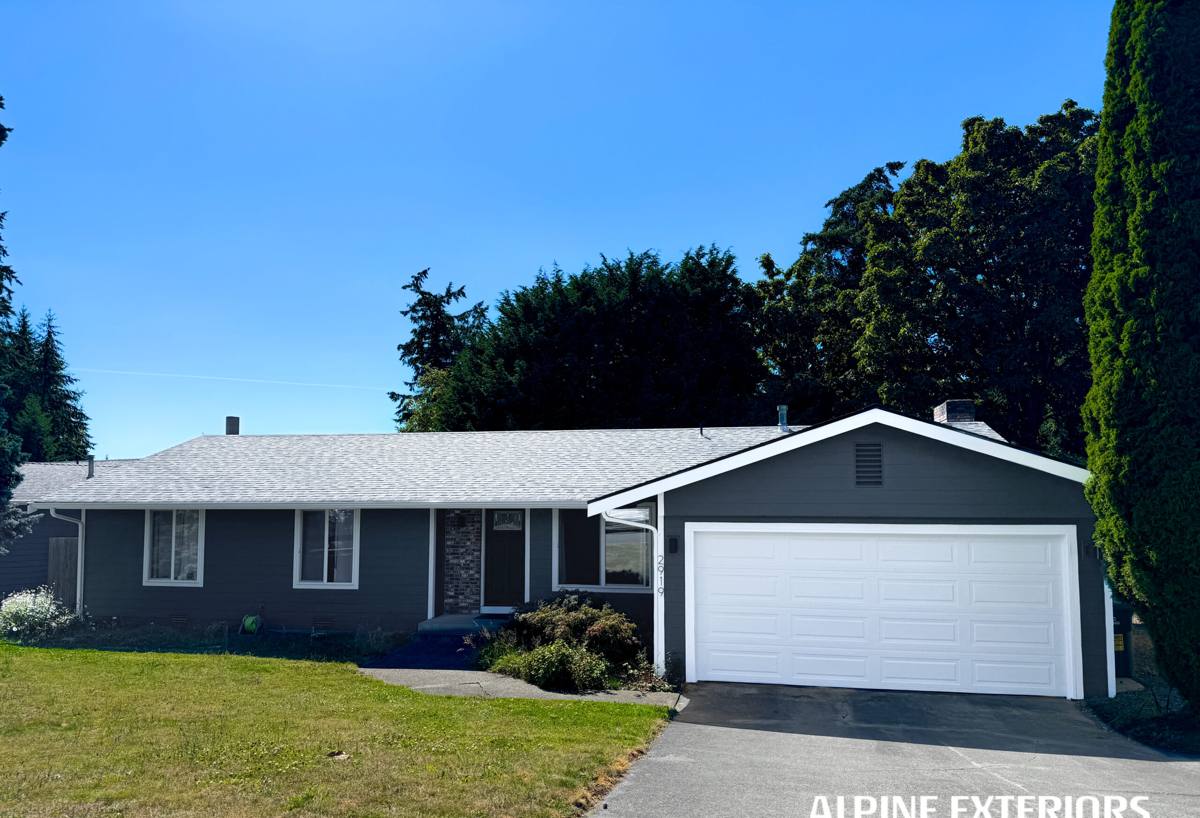
What Salt Air, Rain, and Moss Actually Do to Siding
Salt Air
Airborne salt is corrosive to metal fasteners, trim flashing, and any exposed hardware. It also accelerates the breakdown of lower-quality paint finishes, which is why factory-applied, baked-on finishes hold up so much better than field-applied paint in coastal-adjacent areas like Skyline.
Driving Rain
Wind-driven rain doesn't just wet a wall — it pushes water sideways into laps, seams, and butt joints. If a siding system isn't installed with the right overlaps, flashing, and drainage plane behind it, water finds its way behind the cladding and into the sheathing, where it can sit for months before anyone notices.
Moss and Algae
Shaded walls that stay damp for days at a time grow moss and algae readily. On wood or wood-composite siding, that moisture retention speeds up rot from the inside out. On fiber cement with a factory finish, moss and algae growth is mostly a surface issue that a rinse can handle, rather than a structural threat.
Why We Install Only James Hardie — Not the Alternatives
Homeowners in Skyline sometimes ask why we don't offer vinyl, LP SmartSide, or lower-cost fiber cement alternatives. It comes down to how each product actually performs in this specific climate, not brand loyalty.
- Vinyl siding is affordable and low-maintenance in dry climates, but it can warp or buckle with temperature swings, and its seams and J-channels give wind-driven rain more opportunities to work moisture behind the panel over time. It's also a petroleum-based product with a thinner, less impact-resistant profile than fiber cement.
- LP SmartSide is an engineered wood product. It performs well when detailed and maintained correctly, but it's still a wood-based substrate — meaning any breach in the coating or caulking gives moisture a path into a material that can swell and deteriorate. In a climate with this much sustained dampness, that's a maintenance burden we'd rather not hand a homeowner.
- Cedar and primed spruce look great new but require ongoing refinishing, and both are vulnerable to the rot and moss-related moisture retention we see constantly in shaded, damp Skagit County lots.
- Other fiber cement brands (Cemplank, Allura) use the same base material science as Hardie, but we've standardized on Hardie for its ColorPlus factory finish, its climate-engineered HZ product lines, and a warranty structure we trust to actually back the product long-term.
None of these are "bad" products in every setting. They're just not what we'd choose to put on a Skyline home, given what this climate does to a wall over 20-plus years.
What Correct Fiber Cement Installation Involves
Fiber cement siding is only as good as its installation. A rushed or undertrained crew can turn a premium product into a callback-prone problem, especially in a climate with this much wind-driven rain. Here's what we consider non-negotiable:
- Weather-resistive barrier and drainage plane — a properly lapped house wrap with a rain screen gap so any water that gets behind the siding can drain and dry out, rather than sit against the sheathing.
- Correct fastener pattern and type — corrosion-resistant fasteners, driven at the manufacturer's specified spacing and depth, not just "close enough."
- Proper flashing at every penetration — windows, doors, hose bibs, light fixtures, and vents all need flashing details that shed water outward, not into the wall assembly.
- Minimum clearances — siding held back from grade, roof lines, and decks per Hardie's published specs, so standing water and splash-back don't sit against the bottom edge.
- Caulked and painted cut edges — any field-cut end of a Hardie board needs to be sealed, or it becomes the one spot on the house where the factory finish isn't protecting the material.
- Panel and joint layout — butt joints backed and sealed correctly, with attention to how water will actually move across the wall in a real Skagit County storm, not just how the layout looks from the street.
Skip any one of these steps and you can end up with a wall that looks fine for a few years and then starts failing at the seams — usually right where wind-driven rain hits hardest.
Our Process for Skyline Siding Projects
| Step | What Happens |
|---|---|
| 1. On-site assessment | We walk the exterior, check for existing moisture damage, rot, or moss buildup, and evaluate the current wall assembly. |
| 2. Scope and product selection | We recommend the right Hardie product line and profile for the home's exposure — more weather-facing walls may warrant a different specification than sheltered elevations. |
| 3. Written estimate | A clear, itemized quote — no vague allowances, no surprise change orders for standard scope items. |
| 4. Prep and removal | Old siding removed, sheathing inspected and repaired as needed, and any hidden moisture damage addressed before new siding goes up. |
| 5. Installation | House wrap, rain screen, flashing, and Hardie siding installed to manufacturer spec by a crew that works this material regularly. |
| 6. Final walkthrough | We review the finished work with the homeowner and confirm everything meets both our standard and Hardie's installation requirements. |
Cost Factors Specific to a Skyline Job
Every home is different, but a few things tend to move the price on jobs in this area more than elsewhere:
| Factor | Why It Matters Here |
|---|---|
| Existing moisture damage | Homes with years of exposure to damp, shaded conditions sometimes have sheathing or framing repairs to address before new siding goes on. |
| Wall exposure | Elevations that take the brunt of wind-driven rain may call for extra flashing detail or a heavier-duty product line. |
| Site access | Sloped lots and tight setbacks, common on parts of Fidalgo Island and the surrounding hillside terrain, can affect staging and labor time. |
| Trim and detail work | Homes with more corners, dormers, and window trim take more time to flash and finish correctly. |
| Current siding removal | Tear-off complexity varies with the existing material — some come off clean, others require more careful handling. |
What to Ask Before Hiring Anyone for Fiber Cement Work
- Are you factory-certified to install James Hardie products, and can you show it?
- Will you follow Hardie's published fastening, clearance, and flashing specifications, not just "how we've always done it"?
- Do you install a rain screen / drainage gap behind the siding, given how much wind-driven rain this area gets?
- How do you handle cut-edge sealing on every field cut, not just the visible ones?
- What's covered under both the manufacturer's warranty and your own workmanship warranty?
- Have you worked in Skyline or elsewhere in Skagit County before, and do you understand the moisture and moss conditions specific to this area?
Why Local Experience Matters for This Job
A crew that mostly works drier, inland climates can install fiber cement siding perfectly well on paper and still miss the details that matter most in a place like Skyline. Knowing which elevations take the worst of the wind-driven rain, how much clearance to leave near grade given the wet ground conditions here, and where moss tends to build up fastest all come from having actually worked this part of Skagit County — not from a general installation manual. That local knowledge is what separates a siding job that looks good at handoff from one that's still performing correctly ten winters later.
If you're weighing a siding replacement or repair in Skyline, we're happy to take a look and give you a straightforward, no-pressure estimate. Fill out the form below and we'll follow up to schedule a time that works.