 Skagit County
 Windows Built for Hamilton's Weather, Not Just Its Style
Hamilton sits along the Skagit River corridor, tucked into the kind of Cascade foothill weather pattern that gets more rain, more humidity, and a longer wet season than towns closer to the water. Old single-pane or first-generation vinyl windows in this area take a real beating: driving rain gets pushed sideways by wind funneling through the valley, humidity sits against the glass and frame for months at a time, and moss and algae find every shaded, damp surface they can grab onto. A window installation here isn't just about picking a style you like — it's about picking a window and an install method that can shed water, resist rot at the sill, and keep moisture out of the wall cavity year after year.
We've worked on homes throughout Skagit County long enough to see what fails first in this climate: not usually the glass itself, but the flashing, the sealant joints, and the wood framing around the opening. Get those details right and a window will outlast its warranty. Get them wrong and you're looking at soft framing, fogged glass, and drafts within a few years — no matter how good the window itself was.
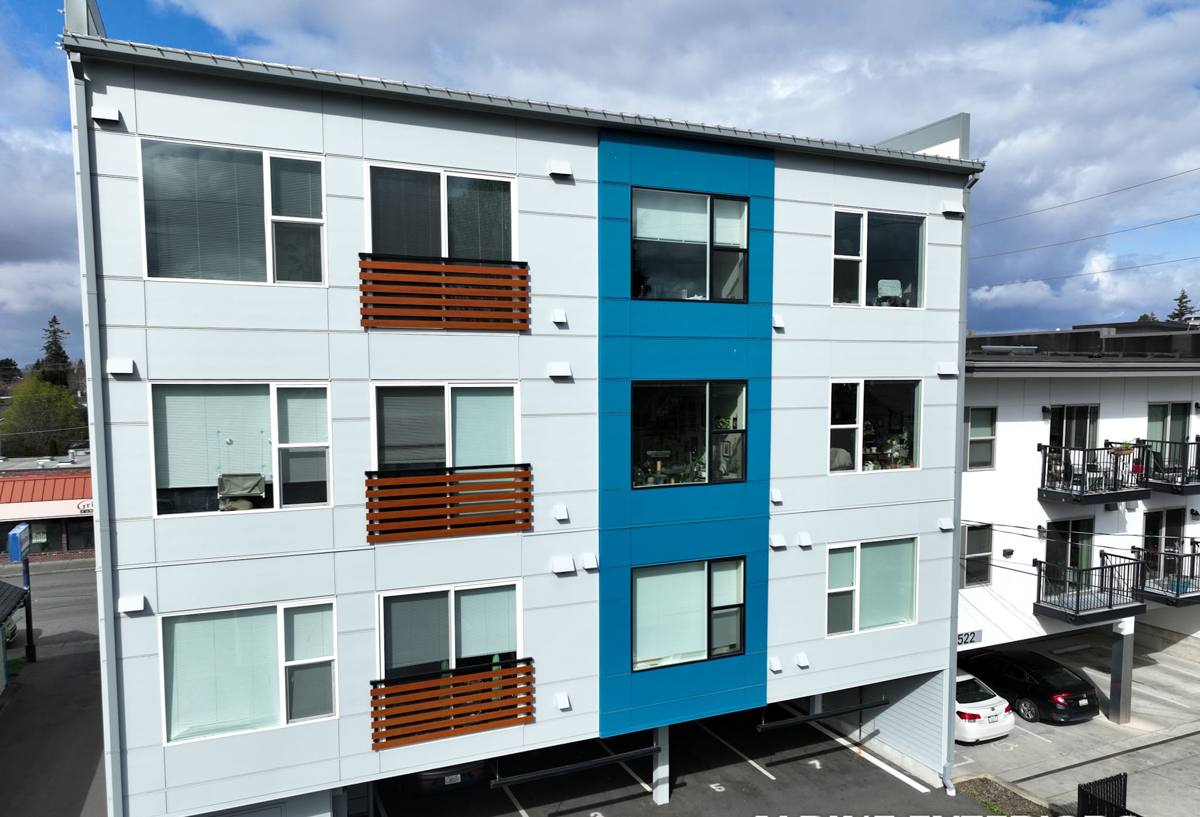
Signs a Hamilton Home Needs New Windows
Most homeowners call us for one of a handful of reasons. If you're seeing any of these, it's worth an honest look before another wet season passes:
- Fogging or a visible haze between the panes — the seal has failed and the insulating gas is gone
- Soft, spongy, or discolored wood at the sill or the trim below the window
- Windows that are noticeably harder to open, close, or lock than they used to be
- Visible daylight or a draft you can feel around the frame on a windy day
- Moss or dark streaking on the exterior trim that keeps coming back no matter how often it's cleaned
- Condensation forming on the inside of the glass regularly, even in a normally ventilated room
None of these mean you need to replace every window in the house at once. Plenty of Hamilton homes get by fine with a phased approach — worst-exposure windows first, others as budget allows.
What a Correct Installation Actually Involves
A window installation is judged almost entirely by what you can't see once it's done. The window itself is largely the same product whether it's installed well or poorly — the difference is in the opening prep and the flashing sequence.
Removing the Old Window Without Making Things Worse
We remove the old unit carefully and inspect the rough opening before anything new goes in. This is the point where hidden rot or water staining shows up, and it's far better to find it now than to seal a problem behind a brand-new window.
Flashing and Water Management
This is the step that matters most in our climate. Flashing tape and a properly lapped weather-resistive barrier direct any water that gets past the exterior siding down and out, rather than letting it pool at the sill or work its way into the wall framing. In a region with Skagit County's rainfall totals, a sloppy flashing job is the single most common cause of window failure we're called out to fix — not the window brand, the installation.
Setting, Shimming, and Sealing
The window has to sit level, plumb, and square in the opening, shimmed so it isn't relying on the frame screws alone to hold its shape. Insulation goes around the perimeter — not packed too tight, which can bow the frame — and exterior sealant goes on in the right locations, not everywhere, since some gaps are meant to stay open as drainage paths.
Interior and Exterior Finish Work
Trim, casing, and any siding disturbed during the install get put back cleanly. On homes with fiber cement or wood siding, this often means recutting or replacing a section of trim rather than just caulking around the gap.
Choosing Windows for a Wet, Mossy Climate
There's no single "best" window for every home — it depends on your budget, your home's age, and how exposed the window is to weather. Here's how the common options generally compare for a home in this area:
| Window Type | Moisture Performance | Maintenance | Typical Lifespan |
|---|---|---|---|
| Vinyl (standard) | Good — won't rot, but low-end seals can fail early | Low | 20–30 years |
| Vinyl (double/triple-pane, quality seal) | Very good | Low | 25–35 years |
| Fiberglass | Excellent — dimensionally stable in wet/dry cycles | Low | 30–40+ years |
| Wood-clad | Good if maintained; vulnerable if paint/finish fails | Higher — needs periodic finish upkeep | 20–30 years with upkeep |
| Aluminum | Fair — prone to condensation without thermal breaks | Moderate | 20–25 years |
We steer most Hamilton homeowners toward vinyl or fiberglass for general use, simply because they handle constant humidity without the upkeep that wood-clad units demand. That's not a knock on wood windows — they can look great and perform well — it's a matter of honestly weighing the ongoing maintenance against how much rain and shade a given wall of the house gets.
Our Installation Process, Step by Step
- On-site assessment — we measure openings, check for existing rot or moisture damage, and talk through window options and budget
- Written estimate — clear scope, product selection, and pricing before any work starts
- Scheduling around weather — we plan installs for dry stretches where possible, since an open wall cavity shouldn't sit exposed to Skagit County rain
- Removal and opening prep — old window out, opening inspected and repaired if needed
- Flashing and weather barrier installation — the step that determines long-term performance
- Setting the new window — leveled, shimmed, insulated, and sealed correctly
- Exterior and interior finish — trim and siding restored to a clean, weathertight appearance
- Final walkthrough — we test operation, check the seal, and make sure you're satisfied before we call it done
Mistakes We See From Past Installations
A lot of our window calls in Hamilton aren't first-time installs — they're fixes for work done elsewhere, sometimes by well-meaning DIYers, sometimes by crews rushing a job. The recurring problems:
- Caulk used as the primary water barrier instead of proper flashing underneath it
- Window not shimmed square, causing the sash to bind or fail to latch fully
- Insulation packed too tightly around the frame, distorting it slightly and affecting the seal
- Old, rotted framing left in place and simply covered rather than repaired
- Exterior trim reinstalled without a drainage gap, trapping moisture against the siding
Every one of these is invisible from inside the house on day one. They show up two, five, or ten years later as a leak, a soft spot, or a window that suddenly won't close right.
What Affects the Cost
Every home is different, but the main variables that move a window installation estimate up or down are consistent:
| Factor | Why It Matters |
|---|---|
| Window material and glass package | Fiberglass and triple-pane options cost more upfront than standard vinyl |
| Number of windows and access | Second-story or hard-to-reach windows take more time and equipment |
| Condition of the existing opening | Rot or water damage found during removal adds repair time |
| Siding type around the opening | Fiber cement and stucco require more careful trim work than vinyl siding |
| Full-frame vs. insert replacement | Full-frame replacement (removing to the studs) costs more but is often the right call on older, moisture-compromised openings |
We give straightforward, itemized estimates so you can see exactly what's driving the number — no vague lump sums.
Why a Crew That Already Works Hamilton Matters
Window installation done right depends on understanding the conditions a specific home faces — which wall takes the worst wind-driven rain, how much shade a north-facing window gets and how that affects moss growth, and how the local building department expects flashing and moisture barriers to be documented. A crew that regularly works Skagit County homes has already seen how houses in this area age, which cuts down on surprises during removal and keeps the job moving instead of stalling out mid-project. It also means we're a known, findable local business if you ever have a question down the road — not a name from an out-of-town lead-gen list.
Keeping New Windows Performing Long-Term
Once new windows are in, a little seasonal attention keeps them performing the way they should:
- Clear debris from window tracks and weep holes so water can drain as designed
- Rinse exterior trim and sills periodically to slow moss and algae buildup before it takes hold
- Check exterior caulk lines once a year for cracking or separation, especially after a hard winter
- Operate each window a few times through the seasons so hardware doesn't seize up from disuse
These take a few minutes a season and go a long way toward getting the full lifespan out of your investment.
If your Hamilton home has windows showing their age — or you're just ready to stop losing heat and fighting moss every winter — we're happy to take a look and walk you through honest options. Fill out the form below for a free, no-pressure estimate.