 Skagit County
 Roofing in Avon: A Different Set of Demands
Avon sits low in the Skagit River delta, close enough to Puget Sound and Padilla Bay that homes here deal with a mix most inland roofs never see: salt-laden air off the water, long stretches of driving rain funneled through the valley, and short, dark winters that keep roof surfaces damp for weeks at a time. That combination is hard on asphalt shingles if they weren't installed with this specific climate in mind. A roof that would perform fine in a drier part of the state can start showing granule loss, moss colonization, and soft decking within a handful of years out here.
We install and repair asphalt shingle roofs across Skagit County, and Avon's low elevation and proximity to open water put it in a category that calls for extra attention to ventilation, flashing, and moisture management. This page covers what that actually means for your roof, what a properly done job looks like, and how we approach the work.
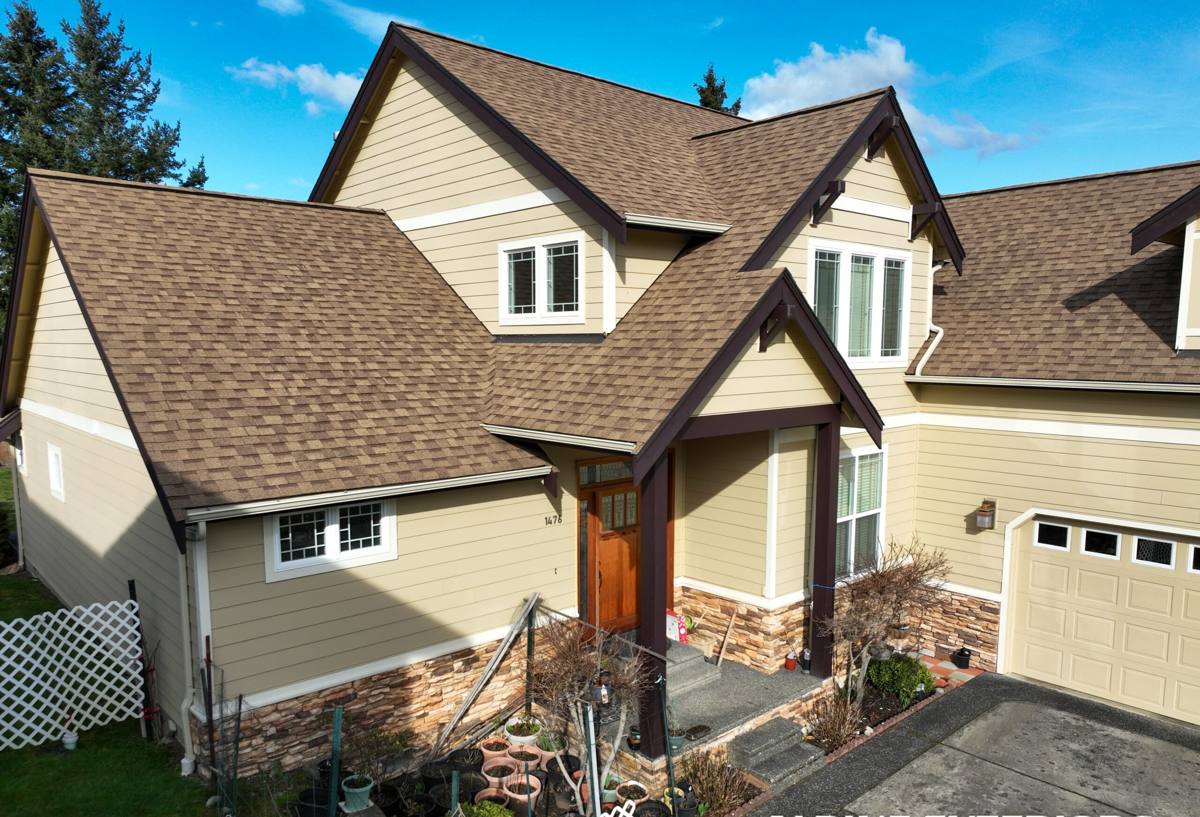
What Avon's Climate Actually Does to a Roof
Three factors define roofing conditions in this part of Skagit County, and each one attacks a roof differently.
Salt Air
Airborne salt from the Sound and bay carries inland on the prevailing winds and settles on every exterior surface, including your roof. Over time it accelerates corrosion on unprotected metal — nail heads, flashing, vent stacks, and gutter hardware. A roof detailed with standard-grade fasteners and thin flashing in a coastal-influenced area like Avon will show rust and pitting sooner than the same roof would forty miles inland.
Driving Rain
Skagit County gets a lot of rain, but what matters more for roofing is how it arrives. Wind off the flats pushes rain sideways as often as it falls straight down, which means water finds its way under shingle edges, around chimneys, and into valleys that a calmer climate would never test. Underlayment quality and flashing detail work do more here than in areas where rain mostly falls straight.
Moss Season
Avon's tree cover, shade patterns, and near-constant winter moisture create ideal conditions for moss and algae growth on north-facing and shaded roof slopes. Moss isn't just a cosmetic problem — it holds moisture against the shingle surface, lifts shingle edges as it grows, and can work its way under tabs, giving water a path to the decking underneath. In this area, moss season effectively runs from fall through spring.
What a Correctly Installed Roof Includes
A roof isn't just shingles nailed to plywood. In a climate like Avon's, the parts you don't see matter as much as the parts you do.
- Deck inspection and repair: Any soft, delaminated, or water-damaged sheathing gets identified and replaced before new material goes down — covering a bad deck just traps the problem.
- Ice-and-water shield at vulnerable points: Eaves, valleys, and roof-to-wall transitions get a self-adhering waterproof membrane, not just felt, because these are exactly the spots driving rain and moss moisture exploit.
- Synthetic underlayment across the field: A durable, water-resistant layer under the shingles that keeps performing even if a shingle is damaged or lifted by wind or moss.
- Corrosion-resistant flashing and fasteners: Given the salt exposure this area sees, we use metal that's rated to hold up rather than the minimum-grade hardware that shows rust within a few seasons.
- Balanced ventilation: Intake at the eaves and exhaust at the ridge, sized to the attic, so moisture-laden air actually moves instead of condensing on the underside of the deck.
- Proper shingle nailing pattern and exposure: Manufacturer nailing specs exist for wind resistance — skipping or rushing this step is one of the most common causes of early shingle failure we see on re-roofs.
Our Process for an Avon Re-Roof
1. On-Site Assessment
We walk the roof (or inspect from a lift when pitch or condition calls for it) and check the attic from the inside — moisture staining, insulation condition, and existing ventilation tell us more about a roof's real condition than the shingles do.
2. Tear-Off and Deck Check
Old material comes off down to the deck. This is when we find soft spots, rot, or prior water damage that wasn't visible from above, and we address it before moving forward rather than building over it.
3. Waterproofing Details First
Ice-and-water membrane goes down at eaves, valleys, and penetrations before the field underlayment — these are the spots that fail first in a driving-rain climate, so they get the most robust treatment.
4. Field Underlayment and Flashing
Synthetic underlayment covers the rest of the deck, and new flashing goes in around chimneys, skylights, and wall transitions rather than reusing old, potentially corroded pieces.
5. Shingle Installation
Shingles go down to manufacturer spec — correct exposure, nailing pattern, and starter course — because these details directly determine wind and wear performance, not just appearance.
6. Ventilation and Final Details
Ridge and soffit ventilation get installed or corrected as part of the job, since a new roof with poor ventilation just repeats the same moisture and moss problems on a new set of shingles.
7. Cleanup and Walkthrough
We clear debris, run a magnetic sweep for stray nails, and walk the finished roof with you so you know what was done and what to watch for going forward.
Shingle Options: What Actually Matters for This Climate
Most manufacturers offer three general shingle tiers. In Avon, the difference between them shows up faster than it would in a drier climate, because moss, moisture, and wind all put extra stress on lower-grade material.
| Shingle Type | Typical Lifespan | How It Handles Avon Conditions |
|---|---|---|
| 3-Tab (economy) | 15–20 years | Lower wind rating and thinner profile; edges are more prone to lifting under driving rain and moss intrusion |
| Architectural / Dimensional | 25–30 years | Heavier mat and stronger wind rating; the standard choice for most re-roofs in this area |
| Algae-Resistant (AR) Architectural | 25–30 years | Copper- or zinc-infused granules resist algae and moss growth on shaded, north-facing slopes |
| Premium / Designer | 30+ years | Thickest mat and best wind resistance; worth considering on exposed or highly visible roof planes |
For most Avon homes, an algae-resistant architectural shingle is the sensible middle ground — it costs more than a basic 3-tab up front but meaningfully slows the moss and staining cycle on shaded slopes, which is the single biggest maintenance headache in this area.
Signs Your Roof Needs Attention
Because moss and moisture damage build slowly, many Avon homeowners don't notice a problem until it shows up as an interior stain. Worth checking for periodically:
- Moss visible on shaded or north-facing slopes, especially near valleys
- Granules collecting in gutters or at downspout outlets
- Shingle edges that look lifted, curled, or cupped
- Dark streaking that isn't moss — often algae staining rather than dirt
- Rust streaking near flashing, vent stacks, or nail heads
- Soft or spongy spots when walking the roof (or visible sagging from the ground)
- Daylight visible through the roof deck from inside the attic
- Water stains on interior ceilings, especially after a windy rain event
Maintenance That Actually Helps in Moss Season
A well-installed roof still needs periodic attention in a climate like this one. Gutters should be cleared before the fall rains start, since clogged gutters back water up under the lowest shingle course. Overhanging branches that keep a slope shaded and damp longer than the rest of the roof are worth trimming back where practical. Moss should be removed carefully — scraping or pressure-washing shingles damages the granule surface and shortens the roof's life, so we recommend low-pressure treatments or manual removal timed for dry weather. None of this replaces a correct initial installation, but it extends the life of one.
Why a Crew That Already Works Avon Makes a Difference
Roofing crews unfamiliar with this specific stretch of Skagit County sometimes treat it like any other Western Washington job and skip details that matter here — standard-grade flashing instead of corrosion-resistant hardware, felt instead of a real waterproof membrane at the eaves, or a ventilation setup sized for a drier climate. Those shortcuts don't usually show up as a failure in year one. They show up in year five or six, as premature moss colonization, rust streaking, or a soft spot on the north slope that started as a slow leak nobody caught early.
Working this area regularly means we've seen how these roofs age under real Skagit conditions, not just how they look on installation day. That shapes decisions on underlayment, flashing material, and ventilation before the first shingle ever goes down.
Get a Straight Answer on Your Roof
If you're dealing with visible moss, a roof that's due for replacement, or just want an honest read on how much life is left in your current shingles, we're happy to take a look. We'll walk the roof, check the attic, and give you a clear picture of what's needed — no pressure, no upsell. Reach out using the form below for a free estimate.