 Skagit County
 Windows Built for Avon's Particular Climate
Avon sits in the Skagit River valley, close enough to Skagit Bay and the Salish Sea that salt-laden air is a real factor in how exterior materials age here, not just a coastal talking point. Add in the long, wet stretch of fall through spring that Skagit County is known for, and you've got three things working against your windows every single year: salt air that accelerates corrosion on hardware and fasteners, driving rain that gets pushed sideways into every gap a poor installation leaves behind, and a moss and mildew season that runs longer here than it does on the drier east side of the state. None of that is exotic weather. It's just relentless, and it's exactly the kind of relentless that finds every shortcut in a window installation within a few years.
Custom windows for an Avon home aren't about a fancier look than the next town over. They're about matching frame material, glazing, and flashing detail to a valley climate that stays damp for months at a stretch, sits low relative to the river and surrounding farmland, and gets enough wind-driven weather off the water that standard big-box installation practices leave gaps that show up as soft trim and stained sills within a few seasons.
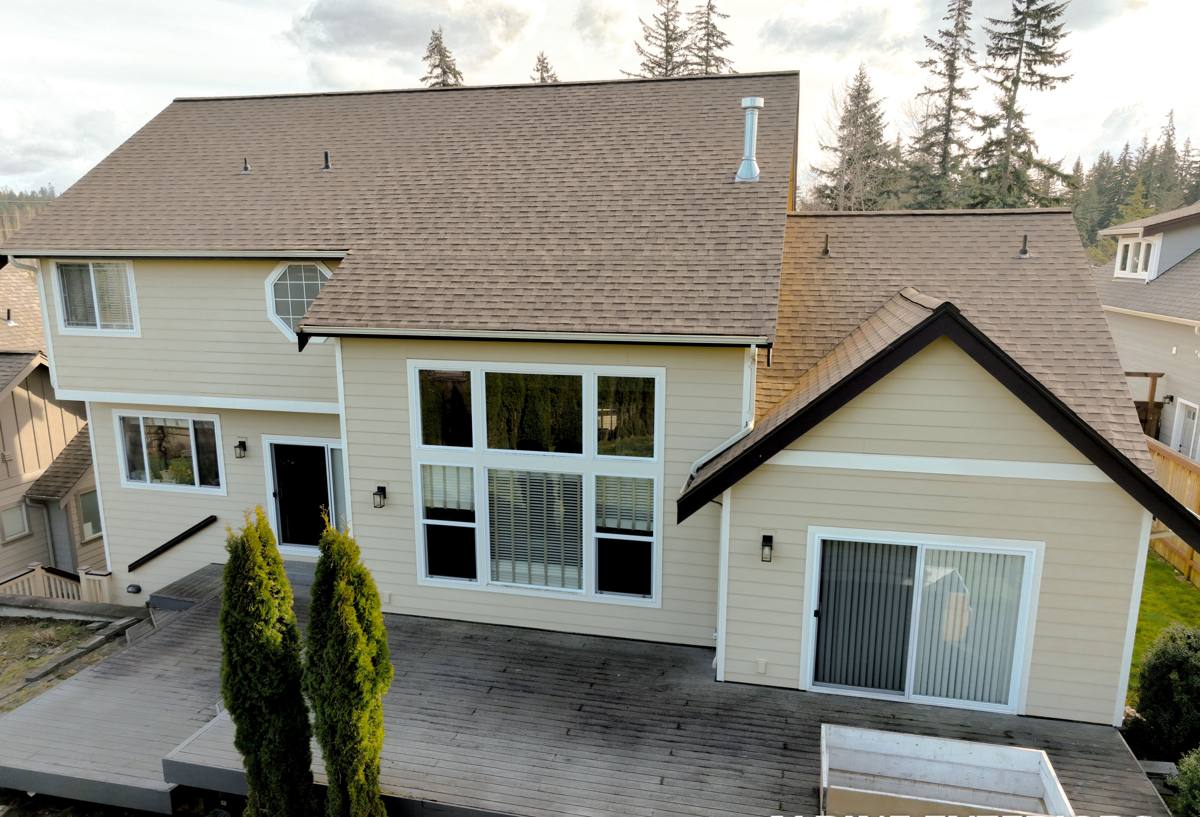
What "Custom" Actually Means Here
Custom doesn't mean expensive for the sake of it. It means the window is sized, framed, and detailed to fit your home's actual rough openings and actual exposure, instead of forcing a stock size into a wall and papering over the gaps with trim and caulk. For older Avon-area homes — and there are plenty of farmhouses and older residential builds in this part of the valley — rough openings are rarely a perfectly standard size. A custom order means:
- Exact width and height measurements taken from the actual opening, not a catalog size
- Frame material selected for the specific wall's sun and weather exposure
- Glazing package matched to which side of the house it faces — west and south walls take more direct weather here than north-facing ones
- Flashing and moisture barrier details built around how water actually moves down your specific wall assembly
- Hardware and finish chosen with salt-air corrosion resistance in mind, not just color matching
Skip any one of those and you can still end up with a window that looks right on day one but underperforms by year three.
Frame Material Trade-Offs for This Climate
There isn't one "best" frame material for every Avon home — there's a best fit for your specific wall exposure, your maintenance appetite, and your budget. Here's how the common options actually compare under sustained damp, salt-influenced conditions:
| Frame Material | Moisture Behavior | Maintenance | Where It Fits Best |
|---|---|---|---|
| Vinyl | Won't rot or corrode; seams are the weak point if welding is poor | Low — occasional cleaning | Budget-conscious replacements, most wall orientations |
| Fiberglass | Excellent — dimensionally stable, resists warping in wet-dry cycles | Low | High-exposure walls, homes staying long-term |
| Wood-clad | Good if cladding and flashing are done right; interior wood needs a healthy indoor humidity balance | Moderate — periodic finish checks | Homes prioritizing a traditional wood interior look |
| Aluminum | Prone to condensation and corrosion in salt air unless thermally broken | Higher | We use this selectively, and only with a thermal break, given local salt exposure |
We'll walk through this table against your actual home during the estimate — the right answer depends on which walls take the weather and how long you plan to stay in the house.
Why Installation Detail Matters More Than the Window Itself
A quality window installed carelessly performs worse than a mid-grade window installed correctly. That's not a sales line — it's how water intrusion actually works. Most window failures we see in the Avon area didn't start with a bad window. They started with:
- Flashing tape or pan flashing skipped or installed in the wrong order relative to the house wrap
- Gaps around the frame filled with caulk alone instead of proper backer rod and sealant, or insulated with the wrong material
- Nailing fins fastened without allowing for the frame to sit plumb and square in an opening that's shifted slightly over the decades
- No sloped sill pan, so any water that does get past the glazing has nowhere to drain but into the wall
Every one of those failure points gets worse, faster, in a climate that stays wet for months and carries salt air off the bay. A gap that might take a decade to cause damage in a dry inland climate can show staining or soft framing in a fraction of that time here.
Reading the Signs Your Current Windows Are Losing the Fight
Homeowners in Avon usually notice one of these first, long before a window fails outright:
- Condensation building up between panes — a sign the seal on a double or triple-pane unit has failed
- Soft or discolored trim and sill wood, especially on west- and south-facing walls
- Visible moss or dark mildew staining around the frame edges, even where the siding itself looks fine
- Drafts you can feel by hand along the frame perimeter during a windy, wet spell
- Hardware — locks, cranks, hinges — that's stiffening up or showing surface corrosion
- A noticeable jump in heating costs once the wet season sets in
Any one of these on its own isn't necessarily an emergency. Two or three together, especially on the same wall, usually means moisture has been getting past the frame for a while and it's worth having someone look at the wall assembly, not just the glass.
Our Process for an Avon Window Job
1. On-Site Assessment
We look at each opening individually — its exposure, its current flashing condition, and whether the surrounding wall shows any moisture history. This is also when we take real measurements rather than working off assumptions.
2. Product Selection
We walk through frame material, glazing, and grille or trim options against your budget and how long you're planning to be in the home. This is a conversation, not a catalog handoff.
3. Removal and Opening Prep
Old windows come out carefully, and we inspect the rough opening and sheathing for any hidden rot or moisture damage before anything new goes in. If we find a problem here, we tell you before we cover it back up, not after.
4. Flashing and Weather Barrier Detail
This is the step that determines whether the window performs for twenty years or five. Sloped sill pans, properly lapped flashing tape, and correct integration with the existing house wrap are non-negotiable on our jobs, regardless of which window line you choose.
5. Set, Shim, and Seal
The window gets set plumb, level, and square, shimmed correctly so the frame isn't under stress, and sealed with the right combination of backer rod, low-expansion foam, and exterior sealant — not just a bead of caulk around the outside.
6. Final Check and Cleanup
We test operation, check the seal from inside and out, and walk the job with you before we consider it done.
What Drives Cost on a Custom Window Job
We won't quote a number without seeing the openings, but here's what actually moves the price on a job like this:
| Factor | Why It Matters |
|---|---|
| Number and size of openings | More material, more labor, more flashing detail per job |
| Frame material chosen | Vinyl, fiberglass, and wood-clad carry different material costs |
| Glazing package | Double vs. triple pane, and any low-E or impact-resistant upgrades |
| Condition of the existing opening | Rot repair or reframing adds labor before the new window ever goes in |
| Wall exposure | High-exposure walls may warrant upgraded flashing details, which adds labor time |
| Access and site conditions | Second-story or hard-to-reach openings take longer to work safely |
Anyone quoting a firm number over the phone without seeing your home isn't accounting for these — and in a climate like ours, the flashing and prep work often matters more to the final price than the window brand does.
Why Local Experience in the Skagit Valley Matters
A crew that only works dry-climate jobs treats flashing as an afterthought because it usually gets away with it. A crew that works Avon and the surrounding Skagit County valley regularly doesn't have that luxury — we see what happens to a poorly detailed installation two or three wet seasons later, because we're the ones who get the callback. That experience shapes how we detail every opening, not just the ones on higher-exposure walls. It also means we're not guessing about how salt air off the bay behaves on hardware and finishes over time, or how long moss and mildew take to become a real maintenance issue on this side of the county.
If your Avon home's windows are showing their age, or you're planning ahead of a remodel, we're happy to take a look and walk you through what your specific openings actually need. Reach out for a free, no-pressure estimate using the form below.