 Skagit County
 Roof Repair for Burlington Homes
Burlington sits in the flood plain of the Skagit River, close enough to Padilla Bay and the Sound that salt-laden air is a fact of life for every roof in town. Add in the long, wet stretch from October through May and a moss season that can run nearly year-round in shaded yards, and you've got a climate that is genuinely hard on roofing. We repair roofs in Burlington and across Skagit County, and the calls we get here follow a pattern: slow leaks that showed up after months of driving rain, moss-lifted shingles, and flashing that finally gave out after one too many wind events off the water.
A roof repair done right isn't just patching the spot where water is coming through the ceiling. It's finding out why that spot failed, checking whether the same conditions exist elsewhere on the roof, and fixing it in a way that holds up to another Skagit County winter.
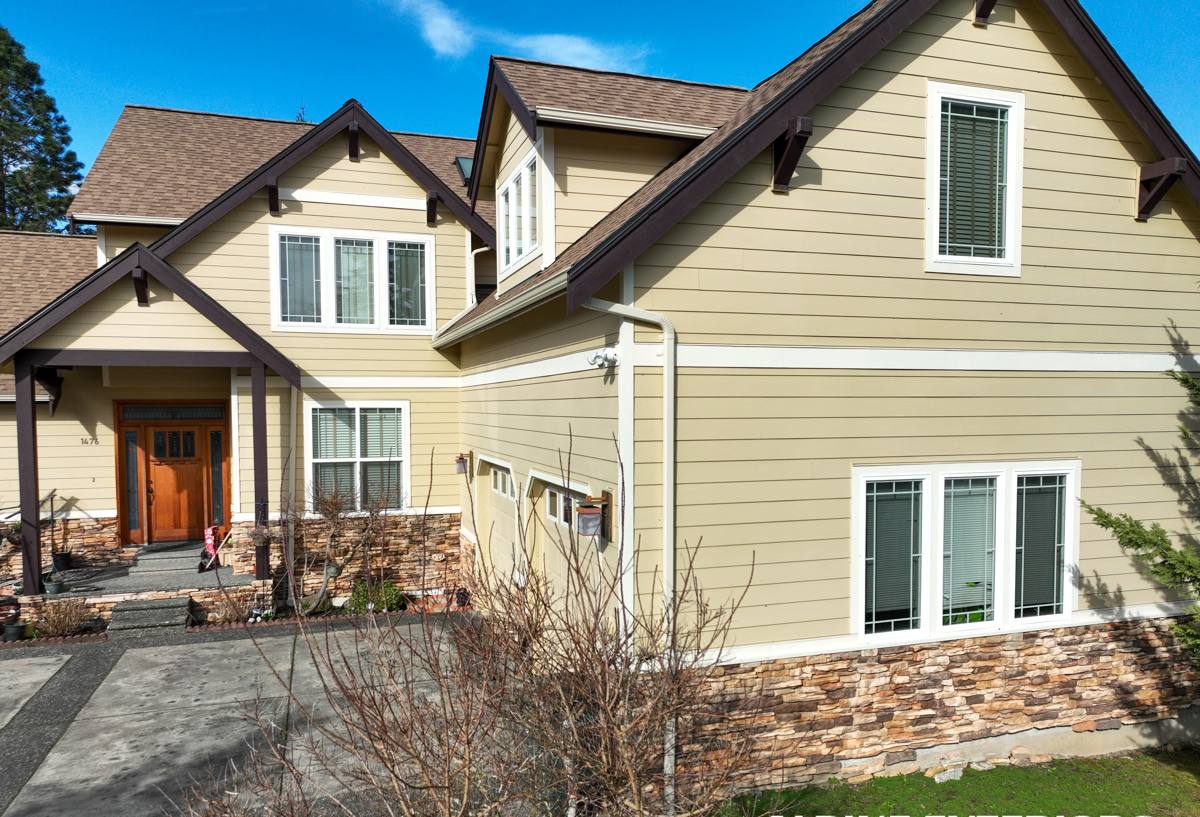
What Burlington's Climate Does to a Roof
Salt Air and Driving Rain
Homes closer to the water pick up airborne salt that accelerates corrosion on exposed metal — nails, flashing, vent caps, and gutter hardware. Combine that with driving rain that comes in sideways during winter storms, and water finds its way under shingles or shakes at points that would stay dry in a calmer climate. Wind-driven rain doesn't need a big hole to get in; it just needs a lifted shingle edge or a gap in flashing that's facing the wrong direction.
Moss and Trapped Moisture
Skagit County's mild, damp climate is close to ideal for moss growth, especially on north-facing slopes and roofs shaded by fir or cedar trees. Moss holds moisture against the roofing material long after the rain stops, which speeds up granule loss on asphalt shingles and can rot the wood underneath cedar shakes. Left alone, moss works itself under shingle tabs and lifts them just enough to let water in during the next storm.
Freeze-Thaw and Wind
Burlington doesn't see the hard freezes of the mountain passes, but it gets enough cold snaps combined with wet roofing material to cause freeze-thaw cycling at the surface, which is hard on aging shingles and cracked flashing sealant. Winter windstorms, meanwhile, are what tend to finish off a roof that was already weakened by moss or age — a gust catches a loose tab or ridge cap and the damage shows up as a leak within days.
Common Reasons We Get Called Out
- Ceiling stains or water spots that appear after a heavy rain event
- Visible moss buildup along roof valleys, north slopes, or eaves
- Missing, cracked, or curling shingles after a windstorm
- Rusted or separated flashing around chimneys, skylights, and vent pipes
- Sagging or soft spots in the roof deck, often found during gutter cleaning
- Ice damming at the eaves after a cold snap followed by rain
- Granule buildup in gutters, a sign a shingle roof is nearing the end of its service life
What a Correct Repair Involves
A repair that actually solves the problem starts with figuring out where water is really entering, which is often not directly above the ceiling stain — water can travel along rafters or sheathing before it shows up inside. Our process for a Burlington roof repair typically includes:
- Roof and attic inspection — checking the suspected trouble spot along with the whole roof plane, since one failure point often means others are close behind.
- Identifying the actual entry point — tracing water back to failed flashing, a shingle gap, a nail pop, or a moss-lifted tab rather than just patching the visible symptom.
- Removing damaged material — pulling out compromised shingles, rotted decking, or corroded flashing rather than layering new material over a bad base.
- Replacing and re-flashing correctly — matching shingle type and color where possible, and installing flashing and underlayment that's rated for the exposure the section sees.
- Moss and debris removal — clearing growth and buildup from the repair area and nearby valleys so the fix isn't undermined again in a season or two.
- Verification — checking the repair holds and that no secondary leak points were missed nearby.
Repair vs. Replacement: How We Help You Decide
Not every leak means a new roof, and not every roof with visible wear can be patched forever. We look at the age of the roofing material, how many prior repairs it's had, and how widespread the moss or granule loss is before recommending one path over the other.
| Factor | Points to Repair | Points to Replacement |
|---|---|---|
| Age of roofing material | Under 15-20 years for asphalt, well under lifespan for other materials | Nearing or past manufacturer's expected service life |
| Extent of damage | Isolated to one section, flashing point, or valley | Spread across multiple slopes or repeated in the same area |
| Decking condition | Solid, dry sheathing under the damaged section | Soft, rotted, or delaminated decking found during inspection |
| Moss and granule loss | Light to moderate, treatable with cleaning and localized repair | Heavy granule loss over large areas, moss embedded under shingles broadly |
| Repair history | First or second repair on the roof | Third or more repair, or recurring leaks in different spots |
We'll always tell you honestly which side of that table your roof falls on. A well-executed repair on a roof with useful life left is the right call more often than not — we're not in the business of selling a new roof to someone who just needs a section fixed.
Signs a Roof Is Past Reasonable Repair
- Rot or soft decking discovered in more than one location
- Shingles that are brittle, curling, or losing granules across large sections, not just at the leak
- Multiple past repairs that haven't resolved recurring leaks
- Flashing systems that are outdated or incompatible with the current roofing material
- Structural sagging visible from the ground or in the attic
Materials and Our Approach to Matching
Most Burlington homes we work on have asphalt composition shingles, with some cedar shake and a smaller number of metal roofs, especially on newer builds. When we repair a shingle roof, we try to match the existing shingle as closely as possible in color and profile, though older roofs with sun-faded or discontinued shingles sometimes show a visible patch — we'll tell you upfront if that's likely rather than let it be a surprise.
For flashing, we favor corrosion-resistant materials given the salt air exposure this area gets, particularly on homes closer to the bay or river. Sealant-only fixes on flashing are a short-term patch at best; our standard is to replace flashing that's corroded or improperly installed rather than just caulking over it, because caulk fails faster in this climate than a properly formed and fastened flashing piece.
Why a Local Crew Matters for Roof Repair
Roof repair is one of those jobs where local knowledge changes the outcome. A crew that works Skagit County roofs regularly knows which slopes on a Burlington-area home tend to hold moss longest, how local wind patterns off the water tend to lift shingles at ridge lines and eaves, and what flashing details actually hold up here versus what's fine in a drier climate. That's the difference between a repair that lasts and one you're calling about again next winter.
There's also a practical side: when a leak shows up during a storm, you want a crew that can get to your home quickly and isn't coming from hours away. Working Burlington and the surrounding Skagit County area regularly means we can respond faster and we already understand the permitting and access considerations that come with local homes.
What to Do If You Notice a Leak Now
- Note where the water stain or drip is located relative to interior walls, so we can trace it to the likely exterior source
- Place a container to catch dripping water and protect flooring or furniture if the leak is active
- Avoid walking on the roof yourself, especially in wet or mossy conditions — it's more slippery than it looks
- Take photos of interior damage if it's safe to do so, for your own records
- Call for an inspection sooner rather than later — small leaks get more expensive the longer they run through insulation and framing
Waiting on a roof leak almost never saves money. Water that reaches insulation or framing can lead to mold growth and structural repair costs far beyond what the original roof fix would have cost.
Maintenance That Extends Your Repair
Once a repair is done, a few simple habits go a long way in Skagit County's climate:
- Keep gutters clear so water isn't backing up under the roof edge during heavy rain
- Trim back tree limbs that shade roof sections and contribute to moss growth
- Have moss treated or removed before it spreads across a full slope
- Schedule a roof check after major windstorms, even if you don't see obvious damage from the ground
Get a Free, No-Pressure Estimate
If you're dealing with a leak, moss damage, or storm-related wear on your Burlington home's roof, we're happy to take a look and give you an honest read on what it needs — repair or otherwise. Fill out the form below for a free estimate with no pressure and no upselling.