 Skagit County
 Decking in Alger Has to Deal With Real Weather
Alger sits in a stretch of Skagit County where tree cover, damp lowland air, and proximity to Samish Bay and Puget Sound all combine to make outdoor living spaces work harder than they do in drier parts of the state. A deck here isn't just furniture for the yard — it's a structure that sits exposed to driving rain for months at a stretch, catches salt-tinged air off the water, and often lives in the shade of fir and cedar that never quite lets it dry out. That combination is exactly why so many wood decks in this area start showing gray, soft, or slippery boards years before a homeowner expected to think about replacement.
Composite decking was built to handle that kind of environment better than solid wood, but "composite" covers a wide range of products and installation approaches. Some hold up in Skagit County conditions for decades. Others trap moisture, discolor, or fail at the fasteners within a few seasons because they were installed the way a contractor would install them in a dry climate, not a wet one. The material matters. The install matters more.
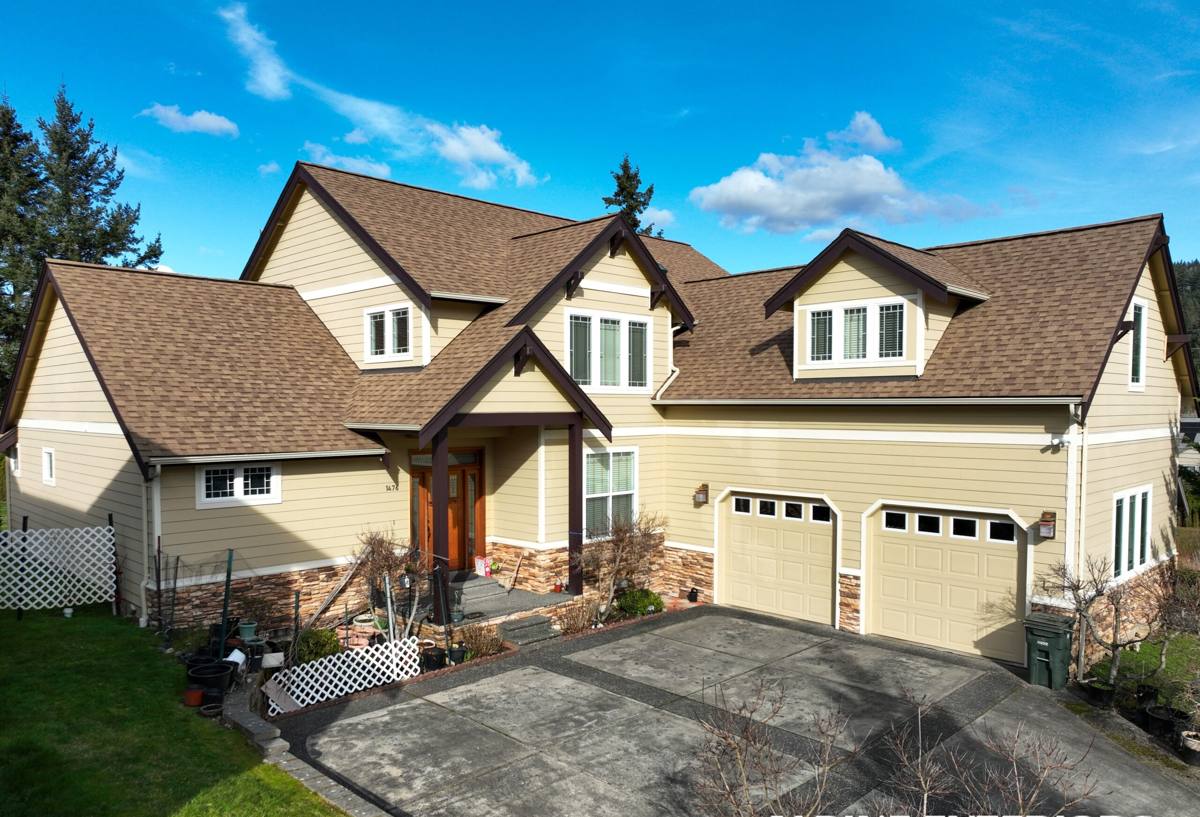
What Alger's Climate Actually Does to a Deck
Salt Air and Metal Fasteners
Homes closer to Samish Bay and the broader Puget Sound shoreline get a steady dose of salt-laden air, even at a distance from the water. Salt air accelerates corrosion on any exposed metal — screws, joist hangers, flashing, railing brackets. On an older wood deck, corroding fasteners often show up as rust streaks bleeding down the boards. On a composite deck, the risk is less visible but more serious: a fastening system that starts to fail underneath boards that still look fine on top.
Driving Rain and Standing Moisture
Skagit County gets its rain sideways as often as straight down, which means water gets driven under railings, into board gaps, and against the house where the deck ties in. A deck built without enough slope, without proper drainage gaps, or without flashing at the ledger board will hold water in exactly the spots where rot and mold take hold first — hidden framing, not the visible decking.
Shade, Moss, and a Long Growing Season
Alger's tree cover is part of what makes it a nice place to live, but shade plus year-round moisture is also a recipe for a moss season that runs far longer than it does in open, sunny yards. Moss holds moisture against a surface, and on wood decking that means accelerated softening and staining. Composite doesn't feed moss the way wood fibers do, but moss and algae can still grow on the surface film of any decking material if it never gets sun or airflow — the difference is how easily it cleans off and whether it damages the board underneath.
Why Composite Makes Sense for This Kind of Yard
Composite decking is made from a blend of wood fiber and plastic, which gives it two advantages that matter directly for Skagit County's climate: it doesn't absorb water the way solid lumber does, and it doesn't need refinishing to keep looking decent. Most boards sold today are "capped" — wrapped in a plastic shell around a composite core — which is the version we recommend almost every time for this area. The cap is what actually resists moisture, staining, and UV fading; the composite core underneath gives it strength and stability without warping.
Capped vs. Uncapped Composite
Older, uncapped composite boards were essentially exposed wood-plastic fiber on all sides, which meant they could still absorb moisture at cut ends and in high-wear spots, sometimes leading to swelling or mold growth over time. Capped composite closes off that vulnerability with a protective shell on the face, sides, and often the bottom. In a climate like Alger's — long wet season, shaded lots, salt-influenced air — the extra cost of capped composite is one of the clearest "spend the money here" decisions in the whole project.
Composite vs. Wood vs. PVC in This Climate
There's no single "best" decking material for every yard — it depends on budget, how much upkeep a homeowner wants to do, and how exposed the deck is to rain, shade, and salt air. Here's how the three most common options actually compare under Skagit County conditions:
| Material | Moisture Behavior | Upkeep | Typical Lifespan Here |
|---|---|---|---|
| Pressure-treated wood | Absorbs water, prone to cupping and splintering in a wet, shaded lot | Annual cleaning, periodic sealing or staining | 10-15 years before major repair |
| Capped composite | Sheds water at the surface, resists staining from moss and organic debris | Occasional washing, no sealing or staining | 25-30+ years, manufacturer-backed |
| PVC (all-plastic) | Fully waterproof, no wood fiber to hold moisture | Minimal, but can feel less "natural" underfoot | Comparable to or longer than composite, higher upfront cost |
We install all three depending on what a homeowner wants, but for most Alger properties dealing with heavy shade and driving rain, capped composite hits the best balance of moisture performance, appearance, and cost.
What a Correctly Built Composite Deck Involves
The Substructure Matters as Much as the Boards
Composite decking is only as good as what's underneath it. We build the frame with attention to the same moisture problems that damage wood decks — proper ledger flashing where the deck meets the house, joist tape or flashing on the framing itself, and hardware rated for wet, coastal-influenced air rather than standard interior-grade fasteners.
Spacing for Drainage and Airflow
Board spacing isn't just cosmetic. Gaps that are too tight trap moisture, leaves, and moss spores between boards, especially under tree cover where debris never fully stops falling. We space and align boards to let water and airflow through, which is one of the simplest things that separates a deck that stays clean for years from one that grows a green film every fall.
Fastening Systems
Most quality composite decking is installed with hidden fastener clips rather than face screws, which keeps the walking surface free of exposed metal that could corrode or streak in salt air. Where face screws are used — at borders, stairs, or picture-frame trim — we use fasteners rated for the exposure the deck will actually see, not the cheapest option in the box.
Mistakes We See and Avoid
Composite decking has a reputation for being "install it and forget it," and that reputation causes problems when crews treat it too casually. A few things we specifically check on every job:
- Ledger board flashing installed correctly where the deck attaches to the house — the single most common source of hidden rot
- Joist protection tape or equivalent moisture barrier on the framing, not just on the visible decking
- Board spacing consistent enough for drainage without becoming a tripping or heel-catching hazard
- Fasteners and hardware rated for coastal or high-moisture exposure, not standard interior-grade hardware
- Proper slope away from the house so water doesn't pool against the siding or foundation
- Manufacturer-specified expansion gaps at board ends, since composite still expands and contracts with temperature
Our Process for Alger Homeowners
We start with an on-site walk of the yard and existing structure, because a deck plan that ignores slope, tree cover, and sun exposure is a plan built for the wrong house. From there:
- On-site evaluation of the site, existing deck or foundation condition, drainage patterns, and shade exposure
- A written estimate that lays out material options, framing scope, and a realistic timeline
- Permitting through Skagit County where required, handled before any demolition or construction starts
- Framing and moisture protection work, inspected before decking goes down
- Composite board installation with attention to spacing, fastening, and trim details
- Final walkthrough and cleanup, including hauling away old decking or debris
Living With Composite Decking Through a Long Moss Season
Composite decking doesn't need staining or sealing, but it isn't entirely maintenance-free in a climate like this one. A yearly cleaning with a soft brush and a deck-safe cleaner keeps organic buildup — pollen, needles, moss spores — from settling into the surface texture, especially on shaded sections of the deck that stay damp longer. Keeping nearby vegetation trimmed back so more sun and airflow reach the deck surface also goes a long way toward shortening how long moss gets a foothold each year. None of this is heavy work — it's closer to washing siding than refinishing wood — but skipping it entirely does let organic growth build up faster under Skagit County's tree cover than it would in a drier, more open yard.
Why It Matters That We Already Work in Alger
A deck built to a generic spec sheet doesn't account for the specific mix of shade, rain exposure, and salt-influenced air that a given Alger lot actually has. Crews who work regularly in this part of Skagit County know which framing details matter most here, which fastener grades hold up, and how much slope and spacing actually keeps a deck clean rather than just meeting the minimum code requirement. That local pattern recognition is the difference between a deck that needs attention again in a few years and one that quietly does its job for decades.
If you're planning a new composite deck or replacing an aging wood one in Alger, we're happy to walk the site, talk through material options honestly — including where composite isn't the right call — and put together a straightforward estimate. There's no pressure and no obligation; use the form below to get started.