 Skagit County
 Building Decks That Hold Up in Concrete's Climate
Concrete sits in the Skagit River valley, tucked between forested hillsides and a river that runs high for a good part of the year. That location means more shade, more standing moisture, and a longer damp season than homeowners get in drier parts of Washington. A deck built here needs to handle wet wood-to-wood contact, moss and algae growth, and freeze-thaw cycles in winter — not just look good on a sunny July afternoon.
We build custom decks specifically with this valley's conditions in mind. That means picking the right structural lumber and fasteners, spacing boards to let water and debris move through instead of pooling, and detailing the ledger and flashing connections so the deck doesn't become a slow leak point into the house. A deck that's designed for a dry climate and just dropped into Concrete's wet, shaded conditions will show problems within a few seasons — soft spots, staining, fastener corrosion, and slick surfaces that are more than a cosmetic nuisance.
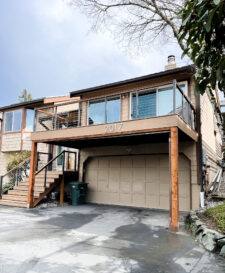
What Concrete's Weather Actually Does to a Deck
Moisture That Doesn't Leave
Because much of the Skagit River valley stays shaded and humid for long stretches of the year, decks here don't get the quick dry-out that decks in more open, sun-exposed areas do. Water sits in board gaps, under ledger boards, and around post bases longer than it would elsewhere. Over time that trapped moisture is what drives rot, fastener corrosion, and the slow failure of framing members that aren't visible until they're already compromised.
Moss, Algae, and Slip Risk
A long moss season isn't just an appearance issue — moss and algae growing on deck boards hold moisture against the wood surface and create a genuinely slippery walking surface, especially on stairs. Decking材料 and finishes that resist organic growth, along with board spacing that lets airflow underneath, make a real difference in how often a deck needs scrubbing and how safe it is to walk on in winter.
Driving Rain and Structural Connections
Wind-driven rain finds its way into any gap in a ledger board connection, post base, or stair stringer attachment. Skagit County's storm patterns push rain sideways as often as straight down, so the flashing and fastening details at every connection point matter more here than they would in a calmer, drier region.
What a Correctly Built Deck Includes
A deck that's actually built for this environment — not just built to pass a basic inspection — includes a specific set of details most homeowners never see once the project is finished:
- Ledger board flashing that sheds water away from the house rim joist, not into it
- Hardware rated for exterior and treated-lumber contact (avoiding corrosion from chemical reaction between treated wood and the wrong fasteners)
- Post bases set above grade with proper drainage beneath them, not sitting in a low spot that holds water
- Joist spacing and blocking sized for the actual span and load, not just the minimum code allowance
- Board gaps sized for expansion and drainage without becoming a hazard for narrow shoe heels or dropped items
- Stair stringers and railings solidly anchored, since stairs see the most foot traffic and the most moss buildup
Skip any one of these and the deck may look fine at handoff, but the failure shows up two, five, or ten years down the road — usually as soft framing, a stained ceiling below an attached deck, or a railing that's gone loose.
Decking Material Choices for This Valley
There's no single "best" decking material for every home — the right call depends on budget, how much upkeep the homeowner wants to do, and how much sun exposure the deck actually gets.
| Material | Maintenance in This Climate | Typical Lifespan Here | Notes |
|---|---|---|---|
| Pressure-treated wood | Annual cleaning, periodic sealing | 15-20 years with upkeep | Lowest upfront cost; needs the most attention to moss and moisture in a shaded yard |
| Cedar | Sealing every 1-2 years | 15-25 years | Natural rot resistance but still needs finish maintenance in constant damp |
| Composite decking | Occasional washing, no sealing | 25-30+ years | Higher upfront cost; resists moisture absorption and moss staining much better than wood |
| PVC decking | Lowest maintenance | 30+ years | Fully moisture-resistant; best fit for heavily shaded, damp yards but highest material cost |
For a shaded lot near the river with limited direct sun, we're often steering homeowners toward composite or PVC decking simply because the maintenance math changes — a wood deck in full shade needs more frequent cleaning and sealing than the same deck would on a sunnier lot outside the valley. That's not a knock on wood; it's a fair trade-off homeowners should walk in knowing.
Our Process, Start to Finish
1. On-Site Walkthrough and Design
We look at your yard's actual sun exposure, drainage patterns, and how the deck will attach to the house before recommending materials or layout. A deck design that ignores where water naturally flows on your lot is starting from a weak position.
2. Structural Plan and Permitting
Skagit County has permitting requirements for deck construction depending on size and attachment. We handle the structural plan and permit paperwork so the footings, framing, and railings all meet code — this isn't a step worth skipping even on a smaller deck.
3. Foundation and Framing
Post footings are set below frost depth and positioned to avoid low, wet spots in the yard. Framing is built to actual load requirements, not just the minimum span table, since a deck that will see furniture, a hot tub, or regular gatherings needs margin built in.
4. Decking, Railings, and Stairs
Board installation, railing systems, and stair construction happen last, with attention to fastener choice and spacing so the finished surface drains and dries as fast as this climate allows.
5. Final Walkthrough
We walk the finished deck with you, cover basic maintenance for whatever material you chose, and make sure every railing, stair, and gate meets both code and your expectations before we call the job done.
Maintenance Realities Homeowners Should Know Going In
Whatever material you choose, a deck in this valley needs more attention than the same deck would get in a drier part of the state. Being upfront about that now saves frustration later:
- Wood decks need moss and algae removal at least once a year, more often in heavy shade
- Sealing or staining wood decking should happen on a schedule, not "whenever it starts looking bad"
- Gutters and downspouts near an attached deck should be checked so runoff isn't dumping extra water onto the deck surface
- Fastener heads and railing connections should be checked periodically for corrosion or loosening
- Under-deck areas benefit from occasional clearing of leaves and debris that trap moisture against framing
Why Local Experience Matters for This Job
Deck framing and flashing details that work fine in a dry, sunny region can fail quietly in a shaded river valley. A crew that hasn't worked in conditions like Concrete's may not think twice about board spacing, post drainage, or fastener grade — because in their usual climate, it doesn't matter as much. Here, it does. We've built and repaired decks across Skagit County long enough to know which shortcuts show up as callbacks two winters later, and we build to avoid them the first time.
That local knowledge also shows up in smaller decisions — where to route a downspout away from a new deck, how to detail a ledger connection on an older home's rim joist, or which decking material actually makes sense for a specific yard's sun exposure. None of that comes from a spec sheet; it comes from having done the work in this specific area, in this specific weather.
Repairs and Rebuilds on Existing Decks
Not every project starts from bare ground. We also inspect and repair existing decks that are showing the signs common to this climate — soft or spongy boards, rust staining around fasteners, railings that have loosened, or persistent moss that won't come off with a simple wash. Sometimes a deck just needs new decking boards over a sound frame; other times the framing itself has taken on rot damage that means a partial or full rebuild is the honest recommendation. We'll tell you which situation you're actually in before any work starts, and won't recommend a full rebuild if a repair will genuinely hold up.
Get a Straightforward, Free Estimate
If you're planning a new deck, replacing an aging one, or just want an honest opinion on whether your current deck needs repair or replacement, we're glad to come take a look. There's no pressure and no obligation — just a straight assessment of what your home in Concrete actually needs, and what it would cost to do the job right the first time.