 Skagit County
 Why Decks in Edison Wear Out Faster Than the Manuals Say
Edison sits low, flat, and close to saltwater sloughs and Samish Bay, which means decks here take a different kind of beating than decks fifty miles inland. Salt-laden air corrodes fasteners and hardware faster than manufacturers' published lifespans assume. Rain doesn't just fall here, it drives sideways off the water on a regular basis, working its way into any seam, screw hole, or ledger gap that wasn't detailed correctly the first time. And because so many Edison properties sit under trees or in the shade of barns, outbuildings, and mature landscaping, decks here spend a good chunk of the year damp and shaded, which is exactly what moss and algae need to take hold.
None of that means a deck can't last. It means the materials, fasteners, and framing details have to be chosen for this specific environment, not for a national average climate. A deck built the same way you'd build one in eastern Washington or inland Skagit County will fail sooner out here, sometimes years sooner, even if it looked identical on installation day.
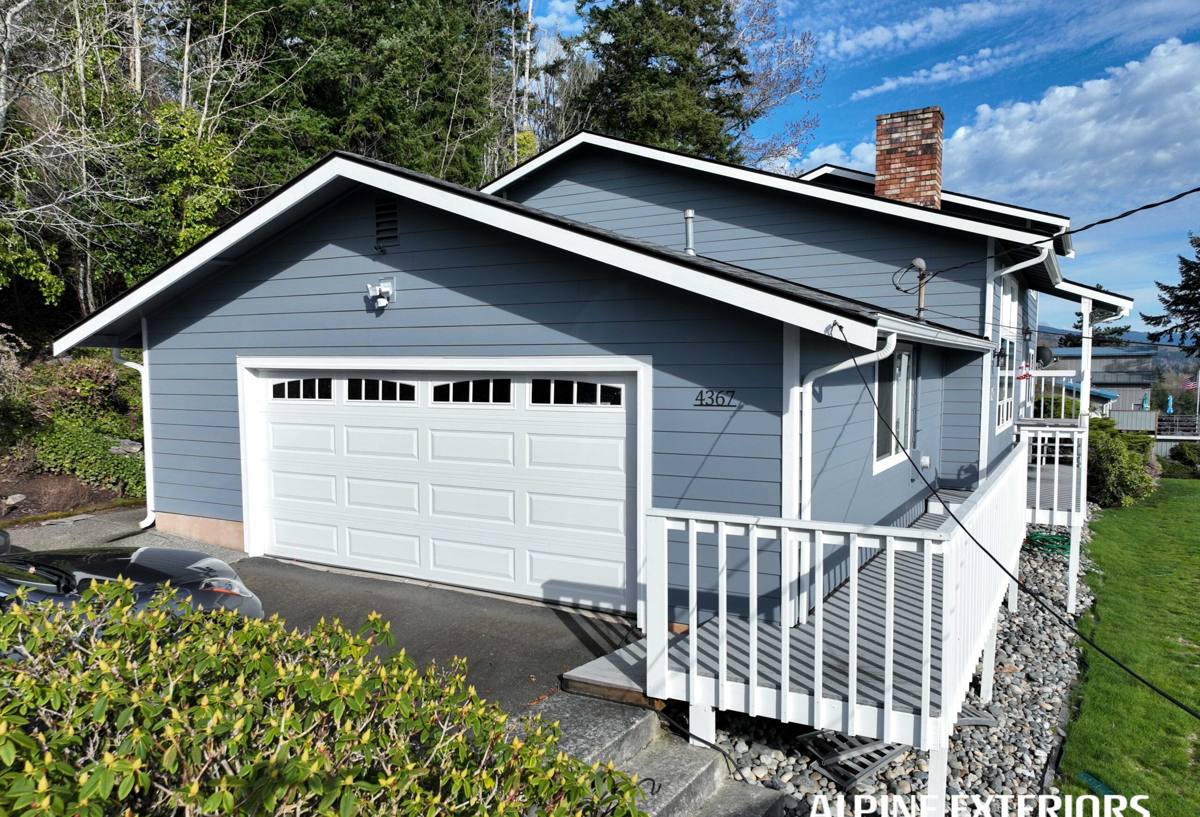
Signs an Edison Deck Needs Replacement, Not Just Repair
Repair makes sense when the problem is isolated. Replacement makes sense once the damage has reached the structure itself. Here's how we tell the difference on a walk-through:
- Soft or spongy decking boards — especially on the shaded or north-facing side of the deck, where moisture sits longest.
- Rust streaking or rot at the ledger board — the point where the deck attaches to the house, and the single most common source of hidden failure.
- Corroded or failing hardware — joist hangers, bolts, and screws that were never rated for coastal exposure will show rust well before the wood around them looks bad.
- Posts or footings that have shifted or settled — common where ground stays saturated for long stretches of the year.
- Persistent moss or algae film that returns within weeks of cleaning — a sign the deck isn't drying out between rain events, which points to a drainage or ventilation problem, not just a cleaning problem.
- Railings that flex or feel loose — often a symptom of post rot below the surface, not a loose bolt you can just retighten.
If the problems are limited to a few boards or a section of railing, repair is the honest answer and we'll say so. If the ledger, framing, or footings are compromised, patching individual boards is just delaying a full rebuild — and spending money that won't count toward the new deck.
Choosing Decking Material for a Marine Climate
There's no universally "best" decking material — there's the right material for your budget, your maintenance appetite, and the exposure your specific deck sees. In Edison, exposure to salt air and shade coverage matter more than they would inland.
| Material | How It Handles Salt Air & Rain | Maintenance | Typical Lifespan |
|---|---|---|---|
| Pressure-treated wood | Good if properly sealed and re-sealed; end grain and fastener points are the weak spots | Annual cleaning, resealing every 1-2 years | 10-15 years with upkeep |
| Cedar | Naturally rot-resistant but softer; still needs sealing near saltwater exposure | Cleaning plus periodic oil or sealant | 15-20 years with upkeep |
| Composite decking | Doesn't absorb moisture the way wood does; resists rot but can still grow surface algae in shade | Periodic washing, no sealing or staining | 25-30 years, manufacturer-dependent |
| PVC decking | Fully moisture-resistant; best option for heavily shaded or low-airflow decks | Occasional washing | 25-30+ years |
We're honest with clients about trade-offs rather than pushing whatever's easiest to install. Wood costs less up front and looks the way a lot of Edison homeowners want a farmhouse or older property to look, but it demands real maintenance discipline in a climate that doesn't give wood much of a break. Composite and PVC cost more initially but remove most of the moisture-related maintenance burden, which matters most on decks that sit in shade for large parts of the day.
Fasteners and Hardware Matter As Much As the Decking
A deck is only as good as what's holding it together, and this is where a lot of decks near salt air fail early even when the visible boards look fine. We use stainless steel or coated fasteners rated for coastal and marine exposure, not standard hardware that's fine sixty miles inland but corrodes within a few seasons this close to the water. The same goes for joist hangers, post bases, and any structural connector — it's a small cost difference on the front end and a major difference in how long the frame underneath lasts.
What a Correct Deck Replacement Actually Involves
A deck that's built right the first time isn't just about attractive decking boards on top. Most of what determines how long a deck lasts is invisible once the project is done.
Ledger Board and Flashing
The ledger board attaches the deck to your house, and it's the single most common point of hidden rot because it sits where two structures meet water. We flash it correctly so rain sheds away from the house wall instead of tracking behind the siding or pooling against the ledger.
Framing and Footings
Joist spacing, beam sizing, and footing depth all get engineered to the actual load and the actual ground conditions on your property, not just copied from the deck that's being torn out. Ground that stays saturated for long stretches of the year needs footings sized and set accordingly.
Drainage and Airflow Underneath
A deck that can't dry out between rain events is a deck that grows moss, algae, and eventually rot, regardless of what decking material sits on top. Correct spacing between boards and adequate clearance and airflow underneath the structure are what keep it drying out between storms rather than staying damp for weeks at a time.
Our Process for Edison Deck Replacements
- On-site inspection — we look at the existing structure, ledger connection, footings, and drainage before recommending repair versus full replacement.
- Material and design discussion — we walk through the material table above in the context of your budget, sun/shade exposure, and how much upkeep you want to take on.
- Permitting — we handle the Skagit County permit process where one is required (see below).
- Demolition and disposal — the old deck comes out cleanly, with attention to what's underneath before we build back.
- Framing and structural work — ledger flashing, joists, beams, and footings go in to code, sized for the actual site conditions.
- Decking, railing, and finish work — installed per the manufacturer's fastening and spacing specs, which matters for warranty coverage on composite and PVC products.
- Final walkthrough — we go over care and maintenance specific to the material you chose before we call the job done.
Permits and Practical Considerations in Skagit County
Whether a deck replacement needs a permit in Skagit County generally depends on the deck's height above grade, its footprint, and whether the footings and framing are being rebuilt versus reused. Because Edison sits near sloughs and low-lying agricultural land, some properties also fall within areas where floodplain or setback rules apply. We check what applies to your specific property and handle the permit paperwork rather than leaving you to sort it out with the county on your own.
Maintaining Your New Deck Through Moss Season
Even the right material and correct framing benefit from a little seasonal attention, especially given how long the wet, shaded stretch of the year runs here. A simple annual routine keeps a new deck looking and performing the way it should:
- Sweep leaves, needles, and organic debris off the deck surface regularly through fall — this is what feeds moss and algae growth.
- Keep gutters and downspouts clear so runoff isn't draining directly onto or under the deck.
- Wash the deck surface at least once a year, more often on shaded sections, to interrupt moss before it establishes.
- For wood decking, reseal or re-stain on the schedule the product calls for — don't wait until it visibly needs it, since damage starts before it's visible.
- Check railings, stair connections, and visible hardware once a year for looseness or early corrosion.
- Trim back nearby vegetation that's shading the deck and keeping it from drying out between storms.
Why Hire a Crew That Already Works in Edison
A contractor who only occasionally works this close to the water tends to default to standard hardware, standard framing details, and standard maintenance advice — the kind that's fine in a drier, less exposed part of Skagit County but falls short here. Working regularly in Edison and the surrounding low-lying, salt-air-exposed parts of the county means we default to coastal-grade fasteners, correct ledger flashing, and material choices that account for shade and moisture from the start, instead of learning those lessons on your deck. It also means we already understand the local permitting process and the site conditions common to this part of the county, so there are fewer surprises once the project is underway.
If your deck is showing rot, loose railings, hardware rust, or persistent moss that won't stay gone, we're happy to take a look and give you a straightforward, no-pressure assessment of whether it needs repair or full replacement. Use the form below to request a free estimate.