 Skagit County
 Windows are usually the first thing to give up heat and let cold, damp air in on a March Point home, and the reasons aren't just about age. The peninsula sits between Fidalgo Bay and Padilla Bay, which means houses here take wind and moisture off open water from more than one direction, and that exposure works on window seals, frames, and glazing harder than it does on a sheltered inland lot a few miles away. When a homeowner asks us why their heating bill feels high or why certain rooms never quite feel warm, the windows are one of the first places we look — and on this stretch of Skagit County, they're often the answer.
Why Windows Are the Weak Point in a March Point Home's Energy Picture
A wall assembly is mostly solid material with a continuous weather barrier behind it. A window is the opposite — it's a manufactured unit set into a hole in that wall, held in with fasteners, sealed with flashing and caulk, and built around moving parts and glass edges that all have to perform for decades in weather the wall around them barely notices. Every one of those seams and seals is a place where heat can escape and outside air can get in. On an older or poorly performing window, that shows up as a draft you can feel standing nearby, a cold surface radiating chill into the room even with the heat running, or condensation collecting where warm indoor air meets cold glass. None of that is unusual — it's just what happens to windows over time, and it happens faster in a climate that gives a house very little dry season to recover in.
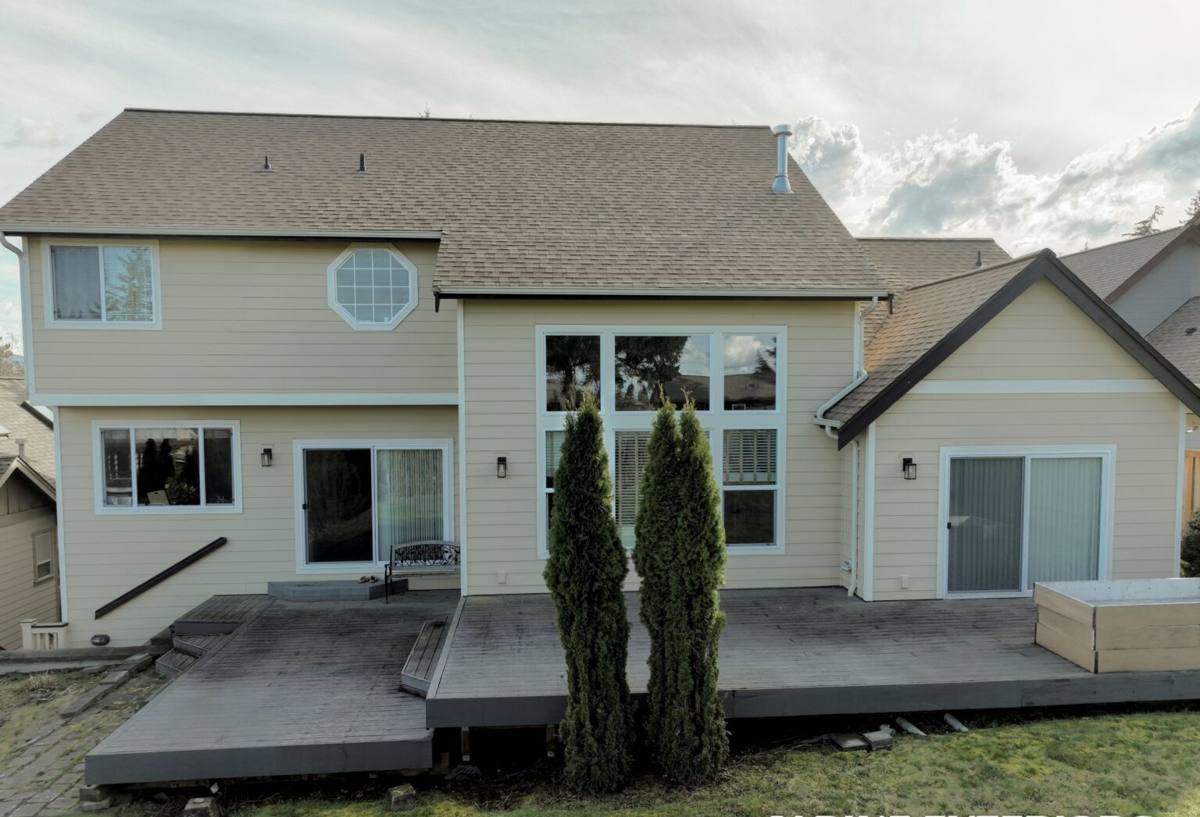
What March Point's Climate Adds to the Equation
Salt Air and Marine Humidity
Being surrounded by water on more than one side puts March Point homes in more consistent contact with salt-laden air than a typical inland Skagit County property. Salt air accelerates corrosion on window hardware, fasteners, and lower-grade frame components, and it also carries more ambient moisture into the air around the house. That extra humidity matters for energy performance specifically, because it raises the odds of condensation forming on glass and frames whenever there's a meaningful temperature difference between indoors and out — which, in a Pacific Northwest winter, is most of the time.
Driving Rain and Air Infiltration
Storms coming off open water on the peninsula tend to push rain sideways rather than let it fall straight down, and wind-driven rain finds gaps around a window that calmer weather never tests. Those same gaps that let water in also let conditioned air out and unconditioned air in, so a window with a compromised seal or poorly integrated flashing is usually losing energy and taking on moisture risk at the same time — the two problems tend to travel together.
A Long Moss Season and What It Signals
Skagit County's long moss season isn't only a roofing and siding issue. On a house with shaded walls or window trim tucked under an eave, sustained moisture and slow-drying conditions show up as moss or mildew on sills, casings, and trim well before they show up anywhere more visible. That growth is usually a sign that water is sitting somewhere it shouldn't, and a window losing energy through a failed seal is often the same window holding moisture against its own frame.
What Actually Makes a Window Energy-Efficient
"Energy-efficient" gets used as a marketing label more often than it gets explained, so it's worth breaking down what the term actually measures.
U-Factor
U-factor measures how much heat a window lets through — the lower the number, the better the window is at keeping heat inside during our cold, wet months. This is usually the single most relevant number for a March Point home, since the bigger energy concern here is heat loss, not heat gain.
Solar Heat Gain Coefficient (SHGC)
SHGC measures how much solar heat passes through the glass. In a hot, sunny climate that number matters a lot for keeping a house cool; in western Washington it's a smaller factor, though it still plays into comfort on south- and west-facing rooms that catch direct sun on clear days.
Low-E Coatings and Gas Fills
Low-E coatings are a microscopically thin layer applied to the glass that reflects heat back toward its source — keeping indoor heat in during winter — without meaningfully changing how much visible light comes through. Combined with an inert gas fill like argon between panes, a low-E coated, gas-filled unit performs noticeably better than plain double-pane glass, and it also runs warmer on the interior surface, which cuts down on the condensation that marine humidity tends to produce on cold glass.
Frame Material and Air Infiltration
The glazing package only tells part of the story — the frame and how tightly the whole unit is built matter just as much. Vinyl and fiberglass frames both insulate better than uncladded aluminum, which conducts heat and cold directly through the frame itself. Air infiltration ratings, tested and published by the manufacturer, tell you how much air actually leaks through the assembled unit under lab conditions — a genuinely useful number when comparing options, separate from how well the window gets installed.
Signs a March Point Home Is Losing Energy Through Its Windows
- Noticeable drafts near the window frame even when it's fully closed and locked
- A cold radiating feeling near the glass on a chilly evening, even without an open draft
- Condensation or fogging on the interior glass, especially on north- or water-facing rooms
- Moisture trapped between panes on a double-pane unit — a sign the seal has already failed
- Rooms with older or larger windows that never quite reach the same temperature as the rest of the house
- Visible daylight or a gap where the frame meets the surrounding siding or trim
- Heating running more than seems reasonable for the size of the house
Installation Is Where Energy Performance Is Actually Won or Lost
A high-performance window that's installed poorly will underperform its own ratings, sometimes badly. The lab numbers on a window's label describe the unit in isolation, under controlled conditions — they don't account for a gap around the frame that was never properly insulated, or flashing that leaves a path for wind-driven rain and outside air to get behind the window rather than around it.
Air Sealing and Flashing
We treat flashing and air sealing as standard on every window we install, not as an upgrade. That means sill pan flashing to direct any water that does get past the window back out rather than into the wall, head flashing integrated with the weather-resistive barrier above the opening, and continuous sealing between the window frame and the rough opening — not caulk alone, which breaks down and cracks over time and was never meant to be the only line of defense.
Shimming, Squaring, and Insulating the Gap
A window has to be shimmed level, square, and plumb before it's fastened, or the sash won't seal evenly against the frame — a common, avoidable source of drafts on otherwise good units. The gap between the window frame and the rough opening also needs to be filled with an appropriate low-expansion insulating material, not left as an air pocket or overpacked with foam that can bow the frame and affect operation.
Choosing a Window System for This Climate
| Factor | Lower-Performing Setup | What We Recommend for March Point |
|---|---|---|
| Frame material | Uncladded aluminum or low-grade vinyl | Vinyl or fiberglass engineered for coastal, wet climates |
| Glazing | Plain double-pane, no coating | Double- or triple-pane, low-E coated, argon-filled |
| Hardware | Standard-grade fasteners and hardware | Corrosion-resistant hardware rated for marine/coastal exposure |
| Installation flashing | Caulk-and-seal only, no sill pan | Full sill pan and head flashing tied into the water barrier |
| Gap treatment | Left open or overpacked with foam | Low-expansion insulating fill, properly shimmed and squared |
| Warranty | Manufacturer warranty only | Manufacturer warranty plus a separate installation warranty |
Our Process for an Energy-Efficient Window Project
- On-site assessment — we check frame condition, seal integrity, hardware function, and how the existing flashing ties into the siding around each opening
- Honest read on repair vs. replacement — a window with a failed seal but a sound frame is sometimes a reasonable repair candidate; one with rotted framing or years of hardware failure usually isn't
- Product selection — we walk through frame material, glazing package, and hardware grade trade-offs for your specific home rather than pushing one option
- Written scope — a clear breakdown of what's being done, with product and installation warranties spelled out separately
- Installation — proper flashing, air sealing, shimming, and gap insulation on every unit, as standard practice, not an add-on
- Final check — operation, seal, and trim integration confirmed before we call the job done
A Checklist Before Hiring for Window Work in March Point
- Ask specifically how they handle flashing and air sealing, not just what window brand they sell
- Confirm they can explain U-factor, SHGC, and air infiltration ratings in plain terms — not just marketing language
- Get a written scope that separates the manufacturer's product warranty from the contractor's installation warranty
- Ask whether they recommend repair or replacement for each window individually, and why
- Confirm current Washington contractor licensing and active liability insurance
- Ask about realistic lead times, since ordered units can take several weeks to arrive
Why a Crew That Already Works March Point Matters
March Point doesn't see the volume of contractor traffic that busier parts of Anacortes and the broader Skagit County market do, and that can mean homeowners here end up with a crew that treats the job like any other inland install — standard flashing, standard sealing, no real accounting for wind off two directions of open water. A crew that already works this part of the county knows which walls and openings take the worst exposure, has seen what a rushed install actually looks like a few years later on a house nearby, and adjusts flashing, hardware, and sealing details accordingly. That's not something a brochure or a warranty booklet can substitute for.
If your windows are drafty, fogged, slow to open, or just never seem to keep the room comfortable, it's worth having someone take an honest look rather than guessing at the cause. We offer free, no-pressure estimates for window work in March Point and the surrounding area — walk the property with us, and we'll tell you straight what we see and what your options are.