 Skagit County
 Why Mount Vernon Homes Need Siding That's Built for This Climate
Mount Vernon sits in a stretch of Skagit County where marine air off Puget Sound, river valley humidity, and a long stretch of gray, wet months all combine against the outside of a house. Homes here don't just get rain — they get long soaking periods, salt-tinged air moving in off the Sound, and enough shade and moisture in the fall and winter to grow moss on nearly any exterior surface that holds still long enough. Siding in this area isn't decorative. It's the thing standing between the framing and a slow, expensive moisture problem.
Wood-based siding products struggle here because they're organic material sitting in a climate that never fully dries out. Vinyl struggles because it flexes, gaps, and fades under repeated wet-dry-UV cycles. What Mount Vernon exteriors need is a siding material that doesn't feed mold and moss, doesn't rot from the inside when a seam opens up, and can be installed correctly by people who understand how water actually moves down a wall in this part of the state.
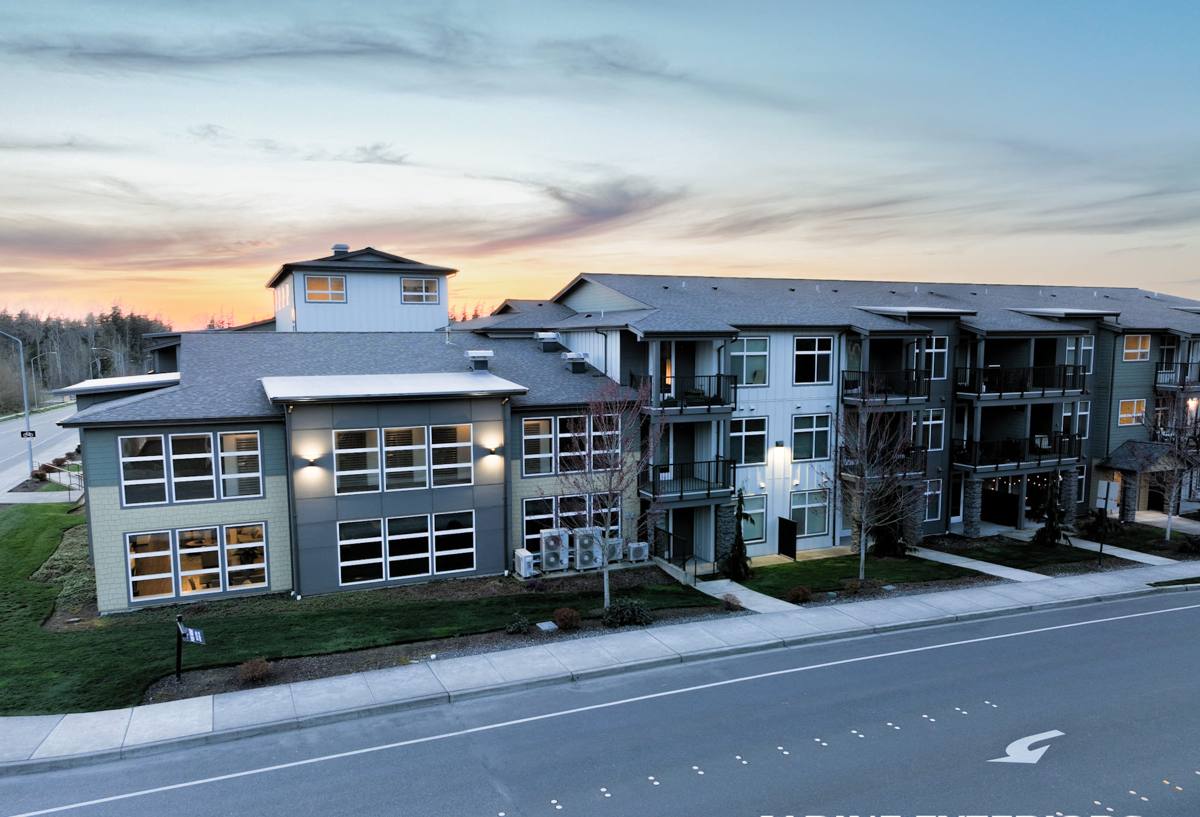
What Salt Air, Driving Rain, and Moss Season Actually Do to Siding
Salt Air
Homes closer to the Sound and the estuary areas around the Skagit River delta get periodic exposure to salt-laden air. Salt accelerates corrosion on fasteners and trim metal, and it's harder on paint film and caulk than dry inland air. Siding and finish systems that aren't rated for coastal-adjacent exposure tend to chalk, fade, or fail at seams years earlier than they would inland.
Driving Rain
Skagit County storms often come in sideways, not straight down. That means rain gets driven up under laps, into butt joints, and around window and door trim — not just onto flat wall surfaces. A siding system that only performs well in gentle, vertical rain is the wrong choice here. What matters is how the material and the installation details handle wind-driven water at horizontal seams and penetrations.
Moss and Mildew Season
From fall through spring, shaded north- and east-facing walls in Mount Vernon can stay damp for weeks at a stretch. Organic siding materials give moss and mildew something to feed on. A non-organic siding material won't stop moss from landing on a wall, but it won't feed it, and it won't soften or delaminate underneath a patch of growth the way wood-based products can.
Why We Install Only James Hardie Fiber Cement
We standardized on James Hardie fiber cement siding for every job we do, including here in Mount Vernon, and we don't install LP SmartSide, vinyl, Cemplank, Allura, primed spruce, or cedar. That's a deliberate call, not a sales position, and it's worth explaining honestly.
- Non-combustible: fiber cement doesn't feed a fire the way wood-based siding can, which matters given Skagit County's wildfire-season air quality and burn-ban years.
- Factory-applied ColorPlus finish: the color is baked on in a controlled environment, not brushed on a job site where humidity and temperature swings affect cure quality — a real advantage in a region with as much damp weather as this one.
- Climate-engineered HZ product lines: Hardie makes region-specific formulations for wet, freeze-prone climates like the Pacific Northwest, rather than a single one-size-fits-all board.
- It doesn't feed moss or rot from moisture absorption: fiber cement is not an organic wood product, so it doesn't behave like one when it stays damp for weeks.
- Strong transferable warranty: a real warranty backing the product matters when you're planning to own the home, or sell it, in a climate that tests siding hard.
We're not going to tell you cedar looks bad or that vinyl is junk — both have real uses. Cedar can look excellent and vinyl is inexpensive, but cedar demands ongoing maintenance most owners underestimate, and vinyl's seams and fasteners are the first thing to fail under years of driving rain and UV. We simply won't put either on a Mount Vernon home and call it a long-term solution, because we've seen what this climate does to them.
What a Correct Fiber Cement Installation Involves
Fiber cement performs exactly as well as its installation. A poorly installed Hardie job can still trap moisture and fail early — the material isn't magic, the details are what matter.
Weather Resistive Barrier and Drainage Plane
Behind the siding, we install a proper weather-resistive barrier with a drainage gap so any water that does get past the cladding has somewhere to go instead of sitting against the sheathing. This is the single most important layer for a wet climate like Skagit County's, and it's invisible once the job is done — which is exactly why it has to be done right the first time.
Flashing at Every Penetration
Windows, doors, hose bibs, light fixtures, vents — every penetration through the siding is a place water can find a way in if flashed poorly. Correct flashing sequencing (so each layer sheds water onto the layer below it, never behind it) is non-negotiable, especially with wind-driven rain coming off the Sound.
Fastening and Clearances
James Hardie specifies exact fastener types, spacing, and clearances from grade, roof lines, and decks. Skipping ground clearance invites moisture wicking and moss growth at the base of a wall; wrong fasteners invite corrosion, especially in salt-exposed areas.
Caulking and Joint Treatment
Butt joints and trim intersections get treated according to manufacturer spec, not caulked over and hoped for. In a climate with this much sustained moisture exposure, a shortcut here shows up as staining or soft trim within a few years.
Our Process for a Mount Vernon Siding Job
- On-site assessment: we look at your home's specific exposure — how much wind-driven rain it takes, shaded/moss-prone walls, existing moisture damage, and trim condition.
- Product and color selection: we walk you through the right Hardie plank profile and HZ formulation for your home and help you pick a ColorPlus finish that suits the house and neighborhood.
- Tear-off and sheathing check: old siding comes off and we inspect the sheathing underneath for rot or damage before anything new goes on — this step catches problems that would otherwise get sealed behind new siding.
- Weather barrier and drainage plane installation: done to spec, every time, since this is the layer that actually protects the house.
- Flashing, trim, and siding installation: installed to James Hardie's fastening and clearance specifications, with correct flashing at every penetration.
- Final walkthrough: we go over the finished job with you before we consider it done.
Why a Crew That Already Works Mount Vernon Matters
Skagit County isn't uniform. A wall facing the Sound-side wind gets different exposure than a shaded wall tucked behind mature trees a few miles inland, and a crew that already works this area knows to look for both. Local experience means knowing which details of a home's exposure actually change the installation approach — clearance heights near sprinkler systems, extra flashing attention on walls that catch wind-driven rain, and recognizing early moss and moisture patterns before they become sheathing damage. A crew unfamiliar with this specific climate is more likely to install by a generic checklist rather than by what the house actually needs.
There's also a practical service side to this: a local crew is easier to reach if a warranty question comes up years down the road, and understands regional permitting and inspection expectations without a learning curve on your project.
Fiber Cement vs. Other Siding Options for This Climate
| Factor | James Hardie Fiber Cement | Cedar | Vinyl |
|---|---|---|---|
| Feeds moss/mildew growth | No — non-organic material | Yes — organic surface | No, but seams trap debris |
| Performance in driving rain | Strong when flashed to spec | Moderate — seams need upkeep | Weak at seams over time |
| Maintenance burden | Low — factory finish | High — recoating/staining cycle | Low, but early fading/warping |
| Fire performance | Non-combustible | Combustible | Melts/deforms under heat |
| Typical warranty structure | Long-term, transferable | Varies by finish product | Varies, prone to exclusions |
Cost Factors for a Mount Vernon Fiber Cement Project
Every home is different, so we won't quote a number without seeing the house, but the main factors that move the price on a Mount Vernon project are worth knowing up front:
- How much of the existing siding and trim needs full tear-off versus what can stay
- Condition of the sheathing underneath — hidden moisture damage adds repair scope
- Home size, wall complexity, and number of penetrations (windows, doors, fixtures)
- Plank profile and ColorPlus finish selection
- Access and staging conditions for the specific lot
A Quick Checklist If You're Evaluating Your Current Siding
- Soft spots, staining, or bubbling paint near the bottom of walls or under windows
- Persistent moss or dark streaking on shaded walls that comes back after cleaning
- Visible gaps, warping, or separation at butt joints and trim corners
- Caulk that's cracked, missing, or pulling away from seams
- Siding that's noticeably colder or damp to the touch after a stretch of dry weather
If any of that sounds familiar, it's worth having someone look before it turns into sheathing repair. If you're planning ahead of a remodel, or just tired of maintaining what's on the house now, we're happy to take a look and give you a straight, no-pressure read on what your home actually needs. The estimate is free — fill out the form below and we'll get in touch.