 Skagit County
 Burlington's Climate Is Harder on Siding Than It Looks
Burlington sits in the flat, low-lying stretch of Skagit County between the Skagit River and Puget Sound, and that geography shapes what siding actually has to survive here. Moist marine air moves in off the Sound and mixes with valley humidity, driving rain comes in sideways during fall and winter storms, and shaded north- and west-facing walls can stay damp for weeks at a stretch. That combination is exactly what breaks down siding that wasn't built for it.
Three things do most of the damage over time: salt-laden air that accelerates corrosion on fasteners and trim, wind-driven rain that finds its way behind poorly flashed siding, and a moss and algae season that runs longer here than in drier parts of the state. None of these are dramatic events — they're slow, cumulative, and easy to ignore until paint is peeling, boards are swelling, or moss is holding moisture against the wall year-round. Siding for a Burlington home needs to be chosen and installed with all three in mind, not just picked off a shelf.
Why We Install James Hardie and Nothing Else
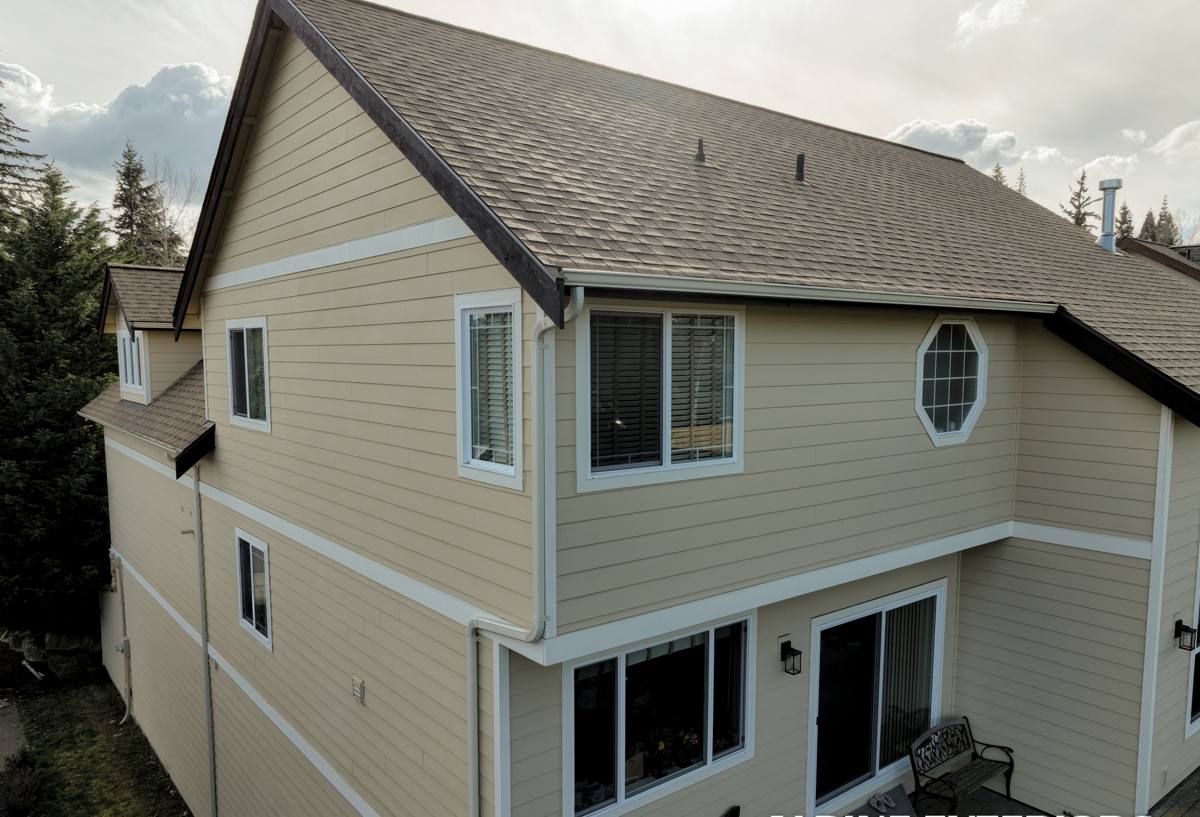
We standardized on James Hardie fiber cement for every siding job we do, including here in Burlington. We don't install vinyl, LP SmartSide, Cemplank, Allura, or unfinished wood siding like primed spruce or cedar. That's not a marketing position — it's a decision based on what holds up in this specific climate over decades, not just the first few years.
Fiber cement is non-combustible, which matters for insurance and peace of mind. It doesn't absorb and swell with moisture the way engineered wood products can, and it doesn't warp, sag, or become brittle in cold, wet conditions the way vinyl does over time. James Hardie's ColorPlus finish is baked on at the factory under controlled conditions, which gives it better fade and adhesion performance than field-applied paint — an important detail in a region where repainting siding is a real, recurring cost. James Hardie also builds region-specific product lines engineered for exactly the conditions Burlington deals with, which we'll get into below.
What We Give Up By Not Installing Other Products
To be fair to the alternatives: vinyl is cheaper up front and requires zero painting. LP SmartSide and other engineered wood products install fast and have their own manufacturer warranties. Cedar and primed spruce offer a natural look some homeowners genuinely prefer. We're not claiming those products don't work anywhere. We've simply concluded that for the moisture load, salt exposure, and moss pressure a Burlington home sees, the trade-offs — repainting cycles, moisture-related warranty exclusions, or long-term maintenance burden — aren't worth it compared to what Hardie delivers.
The James Hardie Product Lines That Fit Burlington
Hardie doesn't make one siding — it makes a system of products engineered for different climate zones and design goals. For Western Washington, we generally recommend Hardie's HZ5 climate-engineered formulation, which is built for wetter, more humid regions and resists moisture-related damage better than the standard formulation sold in drier climates.
| Product Line | Look | Best Fit For |
|---|---|---|
| HardiePlank lap siding | Traditional horizontal lap, smooth or woodgrain texture | Most Burlington homes; the standard choice for full re-sides |
| HardiePanel vertical siding | Board & batten, vertical panel look | Accent walls, gables, garages, modern or farmhouse styles |
| HardieShingle siding | Staggered or straight-edge shingle profile | Craftsman-style homes, accent gables, dormers |
| HardieTrim boards | Smooth or woodgrain trim stock | Corners, window/door trim, fascia — paired with any of the above |
Color selection matters too. ColorPlus finishes are factory-matched and warranted against fading, but darker colors on south- and west-facing elevations will still absorb more heat and show dirt differently than lighter tones — something worth discussing before you commit to a color, especially on walls that catch the brunt of Burlington's weather.
What a Correct Installation Actually Involves
James Hardie siding is only as good as the installation behind it. A huge share of the "siding failures" we get called out to look at aren't product failures at all — they're installation shortcuts that let water in behind a product that was otherwise doing its job. In a climate with as much driving rain as Burlington gets, these details aren't optional extras; they're the difference between siding that lasts 30-plus years and siding that causes problems in five.
The Details That Actually Matter
- Correct water-resistive barrier (house wrap) installed and lapped properly before any siding goes up
- Rigid flashing — not just caulk — over every window, door, and horizontal trim transition
- Proper drainage plane / rainscreen gap so moisture that does get behind the siding can escape instead of sitting against the sheathing
- Manufacturer-specified fastener type, spacing, and penetration depth — critical for holding through wind events and avoiding fastener corrosion in salt air
- Correct minimum clearance from grade, roof lines, and decks so splash-back and standing water don't sit against the bottom course
- Factory-cut and factory-primed edges maintained wherever possible; field cuts sealed per Hardie's specifications
- Caulking used only where specified — not as a substitute for proper flashing
Skip any one of these and you can end up with moisture trapped behind correctly chosen siding, which shows up later as staining, soft trim, or paint failure — problems that get blamed on the siding when the real cause was how it went on.
How Our Process Works
Every Burlington job starts with an on-site look at the existing siding, trim, and any problem areas — not a phone estimate. We're checking for hidden moisture damage, checking how the home is oriented relative to prevailing wind and rain, and identifying any spots (north walls, areas under trees, low clearance points) that need extra attention during installation.
Typical Project Sequence
- On-site assessment and measurement, including a look at trim, flashing, and any existing moisture damage
- Product and color selection — walking through HardiePlank, panel, and shingle options against your home's style and exposure
- Written estimate with a clear scope: what's being removed, what's being replaced, and what's included in flashing and trim work
- Removal of old siding and inspection of the sheathing underneath for rot or moisture damage before anything new goes up
- Installation of house wrap, flashing, and drainage details per manufacturer specification
- Hardie siding installation with correct fastening and clearances
- Final trim, caulking where appropriate, and a walkthrough before we call the job done
Signs Your Current Siding Is Already Losing the Fight
Because moss, salt air, and driving rain do their damage slowly, a lot of Burlington homeowners don't realize their siding is failing until it's well along. A few warning signs are worth checking for before they become bigger repairs:
- Paint that's peeling, bubbling, or chalking, especially on north or west-facing walls
- Moss or algae that keeps coming back within a season or two of cleaning
- Boards that feel soft, spongy, or visibly swollen, particularly near the bottom courses or trim
- Visible gaps, cracking, or warping at seams and corners
- Rusting or popped fasteners along siding panels
- Musty smells or staining on interior walls that share an exterior wall with problem siding
None of these mean you need a full re-side immediately, but they're worth a second look, especially if the home is coming up on 15-20 years since its last siding work.
Maintenance: What Hardie Actually Needs Here
One of the practical advantages of fiber cement in a climate like Skagit County's is how little ongoing maintenance it demands compared to wood-based products. It won't rot, and it isn't a food source for the fungus and algae that drive moss growth the way raw wood can be. That said, "low maintenance" doesn't mean "no maintenance," especially with a long moss season working against you.
| Task | Frequency | Why It Matters Here |
|---|---|---|
| Rinse siding with a garden hose (not pressure washer) to remove buildup | 1-2x per year | Salt residue and organic buildup accelerate moss and grime adhesion |
| Inspect caulking at trim and window transitions | Annually, before fall rains | Cracked caulk is a direct entry point for driving rain |
| Check for moss establishing on north-facing walls or under overhangs | Seasonally | Shaded, damp walls are where moss gets a foothold fastest in this climate |
| Confirm gutters and downspouts are clear and directing water away from siding | Twice yearly | Overflow and splash-back are a leading cause of localized siding damage |
Why Hiring a Crew That Already Works in Burlington Matters
Manufacturer specifications are the same everywhere, but judgment calls on a real house aren't. Knowing how far to hold siding off grade on a Burlington lot with poor drainage, which elevations need extra flashing attention because of how weather actually hits that block, and how aggressively moss will come back on a shaded wall — that's the kind of thing you learn by working in this specific area, not by reading an install manual once. A crew that's already worked Skagit County homes has already made those judgment calls dozens of times and knows what actually holds up here versus what merely meets minimum code.
Local experience also means faster, more accurate estimates. We're not guessing at what Burlington's rain and salt exposure will do to a given detail — we've already seen it play out on homes like yours.
Get a Free, No-Pressure Estimate
If your Burlington home's siding is showing its age, or you just want a straight answer about what James Hardie siding would involve and cost for your house, we're happy to take a look. There's no pressure and no obligation — just an honest assessment from a crew that installs Hardie exclusively and knows what this climate demands. Fill out the form below to get started.