 Skagit County
 Siding Repair in La Conner: Built for Waterfront Weather
La Conner sits right on the water, and that changes what "normal wear" looks like on a house here compared to a home a few miles inland. Sitting along the Swinomish Channel means homes in and around La Conner deal with salt-laden air on top of everything else Skagit County throws at exterior surfaces — driving rain off Puget Sound storms, long stretches of damp, shaded weather that feeds moss and algae, and the freeze-thaw cycling that shows up most winters. Siding here doesn't fail because it's old. It fails because moisture found a way in and nobody caught it early.
Siding repair done right isn't about slapping a patch over a stain or swapping one cracked board for a new one that doesn't match. It's about figuring out why that board failed in the first place, fixing the actual cause, and putting the house back together so the same problem doesn't reappear in two years. That's the standard we hold repair work to on every La Conner home we touch.
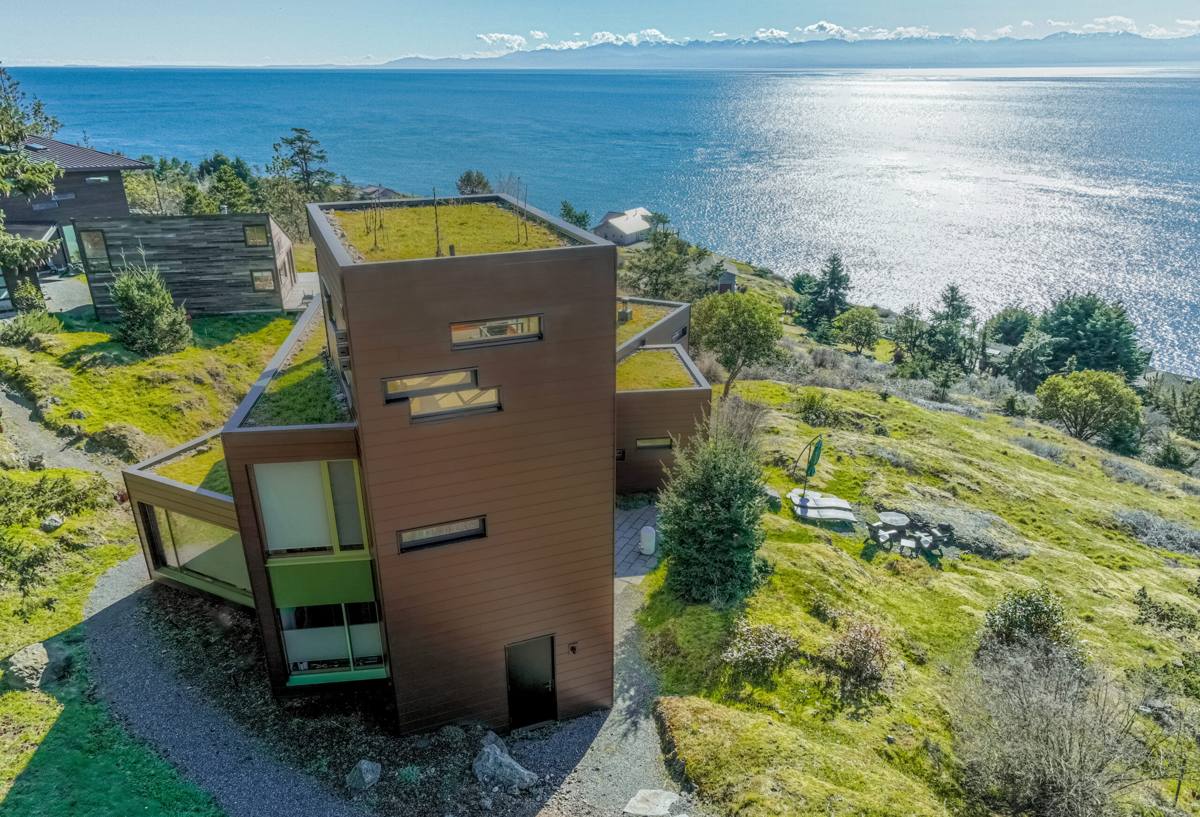
Signs Your La Conner Home Needs Siding Repair
Most siding problems give warning signs well before they become structural issues. In a marine climate like this one, the window between "cosmetic" and "expensive" can close faster than homeowners expect, especially on the sides of a house that face prevailing wind and rain.
- Soft, spongy, or crumbling spots when you press on the siding
- Dark streaking, green or black staining, or persistent moss growth that keeps coming back after cleaning
- Boards that have visibly cupped, bowed, or pulled away from the wall
- Cracks or splits, especially near corners, seams, and window and door trim
- Peeling or bubbling paint, or paint that's failing much faster than it should
- Visible gaps at butt joints, caulk lines that have shrunk or separated, or exposed nail heads
- Musty smells, warm-to-the-touch interior walls, or unexplained moisture near exterior walls indoors
Any one of these on its own might be minor. Several showing up on the same wall usually means water has been getting behind the siding for a while.
What's Actually Damaging Siding in La Conner
Salt Air
Proximity to tidal water means airborne salt settles on exterior surfaces more than it would further inland. Salt accelerates corrosion of fasteners and metal flashing, and it can degrade certain finishes and caulks faster than a dry-climate home would ever experience. Repairs near the water need materials and fasteners chosen with that in mind, not just whatever matches the color.
Driving Rain
Wind-driven rain doesn't just fall on siding — it gets pushed sideways and upward into laps, joints, and trim intersections. Siding systems are designed to shed water when installed correctly, but a single failed caulk joint, a missing piece of flashing, or a board installed too tight to the ground can let driving rain work its way behind the surface for months before it's visible from the outside.
Moss and Algae Season
Shaded, damp conditions for much of the year make moss and algae a near-constant maintenance issue in this part of Skagit County. Beyond looking bad, sustained moss growth holds moisture against the siding surface, which is exactly the condition that leads to rot in wood-based products and finish failure on painted surfaces.
Common Repair Scenarios We See
| What You're Seeing | Likely Cause | What the Repair Involves |
|---|---|---|
| Soft or crumbling board near the bottom of a wall | Water wicking up from grade, poor drainage, or missing kick-out flashing | Remove damaged material, correct the water path, replace with properly flashed board |
| Staining or rot around window and door trim | Failed caulk joint or missing head flashing letting water in | Re-flash the opening, replace affected trim and siding, reseal correctly |
| Cracked boards at corners | Impact damage, movement, or original installation without expansion gaps | Replace board with correct gap and fastening for the material |
| Persistent moss or dark streaking | Shade, moisture retention, low airflow along the wall | Clean surface, address any underlying moisture issue, evaluate finish condition |
| Paint peeling faster than the rest of the house | Trapped moisture behind the siding or an aging, failing coating | Investigate moisture source before repainting — repainting over wet siding fails again quickly |
Why Material Choice Matters When You're Repairing, Not Just Replacing
This is where a lot of siding repair goes wrong. It's tempting to patch a damaged section with whatever's closest to the existing material and call it done. But if the original siding is what failed — cedar that's rotting, LP or a similar composite that's swelling at the edges, vinyl that's cracked and brittle from age and sun — patching with more of the same material just resets the clock on the same failure.
We install James Hardie fiber cement siding exclusively, and that standard carries into repair work. When a section of siding needs to come off and be replaced, we use Hardie boards and trim, factory-finished with ColorPlus coating, engineered for the wet, marine-influenced conditions this part of Washington deals with. Fiber cement doesn't absorb water the way wood does, it doesn't swell and delaminate at cut edges the way some composite products can, and it holds paint and color far longer than field-applied finishes on other materials. On a home that's already had one round of water damage, that's not a cosmetic upgrade — it's the difference between a repair that lasts and one you'll be paying for again.
For homeowners with existing Hardie siding, repairs are usually the cleanest scenario: we replace the damaged boards with the matching profile and ColorPlus color, and the repair blends in without a mismatched patch. For homes with other siding materials, we'll always be straight with you about what a like-for-like patch will and won't fix, and where it makes more sense to address a wall or elevation with fiber cement instead of continuing to chase the same failure point.
Our Siding Repair Process
- Inspection: We look past the visible damage to check what's happening behind the siding — moisture, framing condition, flashing, house wrap.
- Root-cause diagnosis: We identify why the failure happened, not just where. Repairing a board without fixing the water path means doing the job twice.
- Scope decision: We tell you plainly whether this is a targeted repair, a larger section replacement, or something that's better addressed with a fuller re-side. No upselling — just an honest read of what's actually there.
- Correct water management: Flashing, house wrap integration, and caulking are corrected as part of the repair, not skipped to save time.
- Material replacement: Damaged boards and trim are replaced with James Hardie fiber cement, matched to existing color and profile where possible.
- Finish and cleanup: Joints are sealed, paint or ColorPlus finish is matched as closely as the situation allows, and the site is left clean.
Repair, or Time to Talk About Replacement?
Not every repair should be a repair. If the damage is isolated — one board, one corner, one section around a window — a proper repair is usually the right call and the more cost-effective one. But if we find rot or moisture damage spreading across a wall, siding that's original to a much older home and failing broadly, or the same problem recurring in multiple spots, we'll tell you when it makes more financial sense to address a full elevation or the whole exterior rather than keep patching. That's not a sales pitch — it's the same logic that applies to a roof with damage in three separate places instead of one.
Why a Crew That Already Works in La Conner Matters
Siding repair in a marine environment isn't the same job as siding repair in a dry inland town, even within the same county. A crew that regularly works this stretch of Skagit County knows how much salt exposure and driving rain actually affect fastener choice, flashing details, and finish selection here — not in theory, but from having pulled apart enough failed siding locally to see the patterns repeat. That local familiarity shows up in the small decisions during a repair: how tight to run a caulk joint, whether a board needs an extra piece of flashing it wasn't originally given, how much clearance to leave at grade. Those details are easy to miss for a crew that doesn't work this climate regularly, and they're usually exactly what caused the original failure.
Get a Straight Answer on Your Siding
If you're seeing soft spots, staining, cracked boards, or siding that just doesn't look right anymore, it's worth having someone take an honest look before the damage spreads further behind the wall. We'll tell you what we find, what caused it, and what it actually takes to fix it correctly — no pressure, no inflated scope. Reach out for a free estimate and we'll walk your La Conner home's siding with you.