 Skagit County
 New-Construction Windows Are a Different Job Than Replacements
Installing windows during a new build or major addition is not the same trade as swapping out an old window in an existing wall. On a replacement, you're working with a finished opening and patching around what's already there. On new construction, the window goes in raw framing, before the housewrap and siding are on, and it has to tie into the weather-resistive barrier (WRB) correctly the first time. There's no siding to pull back later and fix a bad flashing job without real cost and disruption. That makes the rough-opening and flashing stage the single most important part of the whole build, more important even than the window itself.
For a home going up in Avon, that first-pass accuracy matters more than it would in a drier climate. Skagit County gets a lot of wet weather over a long season, and a window that's flashed even slightly wrong won't necessarily leak on day one. It leaks two winters later, after siding, insulation, and drywall are already closed up around the problem.
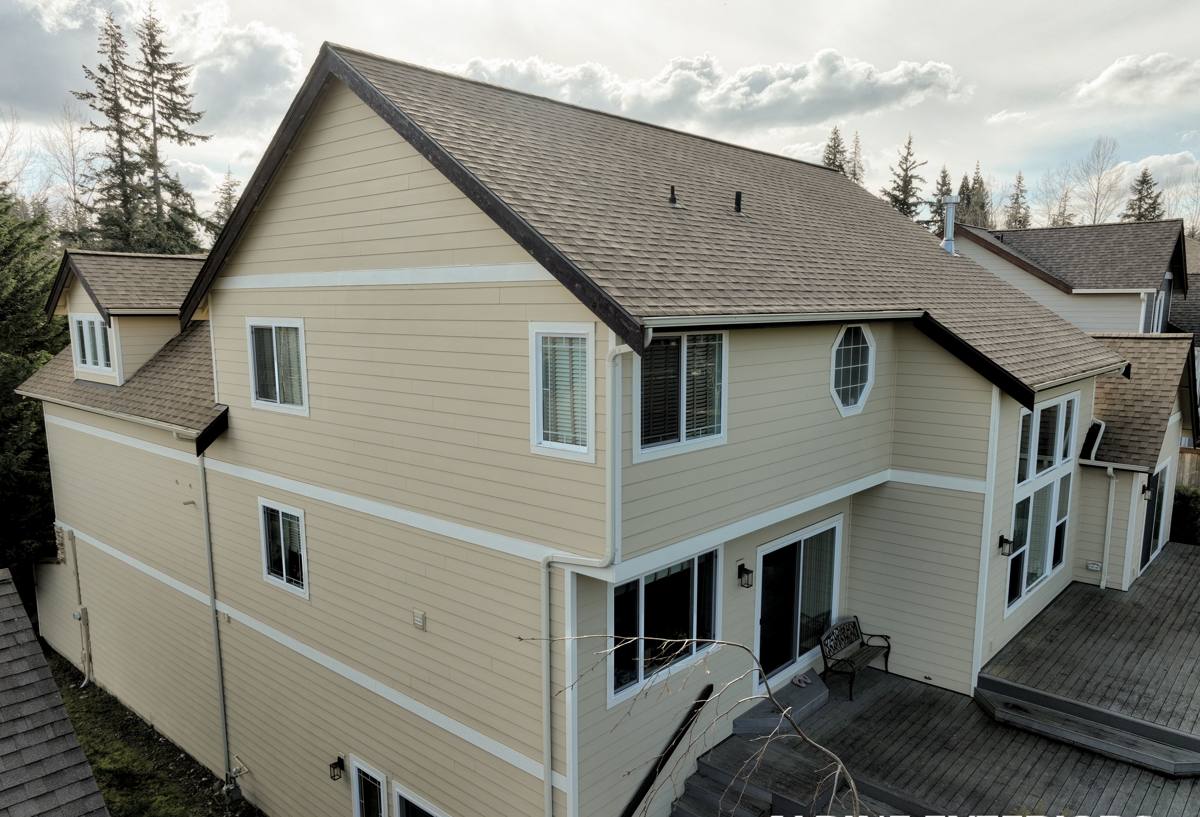
What Skagit County's Climate Asks of a New Window Install
Avon sits in the flat, low-lying part of the Skagit Valley, near the Skagit River and not far from Mount Vernon and Burlington. That geography, combined with the valley's open exposure to weather rolling in off the Salish Sea, shapes what a window installation actually has to withstand once the house is finished.
Driving Rain and Wind-Driven Water
Pacific storm systems don't just drop rain here, they push it sideways. Wind-driven rain finds any gap in a window's flashing and drives it up and in, rather than just running down the wall like rain on a calm day. A new-construction window has to be detailed to shed that kind of water outward, with a drainage path built in as a backup to the sealant, not a substitute for it.
Salt Air and Hardware
The Skagit Valley's proximity to Skagit Bay and the broader Salish Sea means salt-carrying marine air moves inland on a regular basis, even for homes that aren't right on the water. Over years, that air accelerates corrosion on exposed fasteners, hinges, and lesser-grade hardware. It's a slow process, but it's steady, and it's one more reason material and hardware choice matters more here than it would inland.
A Long Moss Season
Skagit County's wet season runs long, and anywhere shaded or slow to dry stays damp for months at a time. Moss and algae don't just grow on roofs, they take hold on window sills, trim boards, and anywhere water sits instead of draining. A window installed with a proper slope at the sill and a clear path for water to exit sheds that moisture instead of holding it against wood trim or masonry all winter.
What a Correct New-Construction Window Install Involves
None of this is exotic. It's a sequence, and every step in that sequence has to happen in the right order, correctly, on every single opening. Skipping or rushing one step is how a window that looks fine for years quietly causes rot behind the wall.
- Rough opening checked for square, level, and correct size before the window ever shows up on site
- Sill pan flashing installed with a back dam, so any water that gets past the window has somewhere to go besides straight into the framing
- Self-adhered flashing membrane run up the jambs and across the head, lapped in the correct shingle-style order
- Window set plumb, level, and square, then shimmed and fastened per the manufacturer's exact instructions, not a generalized "close enough" method
- Housewrap or WRB integrated over the flashing at the head and sides, maintaining a continuous drainage plane from roof to foundation
- Gap between the window frame and rough opening insulated with low-expansion foam, never packed tight enough to bow the frame
- Interior air sealing completed separately from exterior weatherproofing, since the two do different jobs
- Exterior sealant applied only where the manufacturer specifies it, and never used as a substitute for proper flashing
Every one of those steps is inspectable, and a crew that's confident in its work won't mind you asking to see it before the siding goes on and covers it up.
Choosing a Window Material for This Climate
There's no single "correct" window material for every project, but in a wet, salt-influenced climate like Skagit County's, some trade-offs matter more than others. We'll talk through your specific project, but here's the honest comparison we give most homeowners.
| Material | Moisture Tolerance | Maintenance | Typical Trade-Offs |
|---|---|---|---|
| Vinyl | Very good; won't rot or corrode | Low; occasional cleaning | Budget-friendly; limited color/finish options; expansion/contraction over large temperature swings |
| Fiberglass | Excellent; very stable in wet, variable climates | Low | Higher upfront cost; strong long-term value for coastal/marine exposure |
| Wood-Clad | Good on the exterior-clad side; interior wood needs protection from condensation | Higher; finish and seams need periodic attention | Best interior appearance; requires disciplined maintenance in a wet climate or moisture can find the wood core |
We're honest with clients about wood-clad windows in particular: they can look excellent, but they demand more upkeep in a climate with as much sustained moisture as Skagit County sees. If a homeowner wants that look and understands the maintenance commitment, we'll install them correctly. If low-maintenance performance is the priority, vinyl or fiberglass is usually the better fit for a new build here.
How We Handle New-Construction Installs in Avon
Coordinating with Your Builder or GC
New-construction window installation doesn't happen in isolation. It has to land at the right point in the framing schedule, after rough openings are set and before the WRB and siding crews are ready to move. We coordinate directly with your general contractor or framer so the sequence doesn't get out of order, which is one of the most common causes of flashing shortcuts on job sites.
Flashing and Weather-Barrier Integration
This is where the job is actually won or lost. We flash every opening the same disciplined way regardless of whether it's a small bathroom window or a large picture window, because water doesn't care how big the opening is. The drainage plane has to stay continuous from the roofline down to the foundation, with the window flashing lapped correctly into it.
Final Fit, Insulation, and Sign-Off
Once the window is set, shimmed, and fastened, we insulate the gap, confirm the unit operates smoothly, and walk the opening before it gets covered by siding or interior finish work. On a new build, that's your last real chance to catch a problem cheaply.
What Affects the Cost of a New-Construction Window Job
Every build is different, and we won't quote a number without seeing your plans, but these are the factors that actually move the price up or down.
| Factor | Why It Matters |
|---|---|
| Number and size of openings | More openings and larger units mean more material, flashing, and labor time |
| Window material and style | Fiberglass and wood-clad cost more than vinyl; casement and specialty shapes take longer to install than standard sliders |
| Access and building height | Second-story and hard-to-reach openings require scaffolding or lift access, which adds time |
| Flashing complexity | Openings near rooflines, decks, or wall transitions need more detailed flashing work than a straightforward wall opening |
| Energy code glass requirements | Washington's energy code sets minimum performance for U-factor and solar heat gain, which can affect glass package cost |
Why Hire a Crew That Already Works in Avon
A window crew that's only ever worked in a drier climate, or one that treats every region the same, will often flash to a generic standard instead of one built for what this valley actually throws at a house. We work new construction across Skagit County regularly, which means we're already familiar with local builders, typical framing practices in the area, and the inspection process homes here go through before they're closed in.
That local familiarity shows up in small but real ways: knowing which orientations on a lot tend to catch the worst of the wind-driven rain, understanding how long the wet season really runs here so drainage details get built with margin instead of just meeting a minimum, and being available to come back during the build if the schedule shifts, which it almost always does.
Caring for New Windows After Move-In
A correctly installed window in Avon should need very little from you, but a few habits extend its life in this climate:
- Keep weep holes at the base of the frame clear of dirt, debris, and moss so water can drain as designed
- Rinse hardware and frames periodically, especially after long dry spells followed by rain, to keep salt film from building up on metal components
- Check exterior sealant joints during your regular home maintenance and have any cracked or separated sealant addressed before the wet season sets in
- Watch shaded sills and trim for early moss growth and clean it off before it holds moisture against the surface
If you're planning new construction or a major addition in Avon and want windows installed by a crew that treats the flashing and weather-barrier details as seriously as the finished look, we're glad to walk your plans and give you a straightforward, no-pressure estimate.