 Skagit County
 Why Roofs Wear Out Faster in Sedro-Woolley
Every region asks something different of a roof, and Sedro-Woolley's combination of factors is a specific one. You've got tree-covered lots that hold shade and moisture long after a storm passes, a marine-influenced climate that carries salt-tinged air up the river valleys from Puget Sound, and a rainy season that runs long enough that "drying out" isn't really something a north-facing slope gets to do between October and May. None of that is dramatic on its own. Together, over ten or fifteen years, it adds up to roofs that age faster here than the same product would in a drier, sunnier part of the state.
Moss is the most visible symptom. It doesn't just look bad — it holds water against the roofing surface, works its way under shingle tabs and around fastener lines, and keeps that section of roof wet long after the rest has shed water. Salt-bearing air adds a slower, quieter problem: it accelerates corrosion on exposed metal — flashing, fasteners, gutter hardware — which is often the actual point of failure on a roof that "looks fine" from the ground.
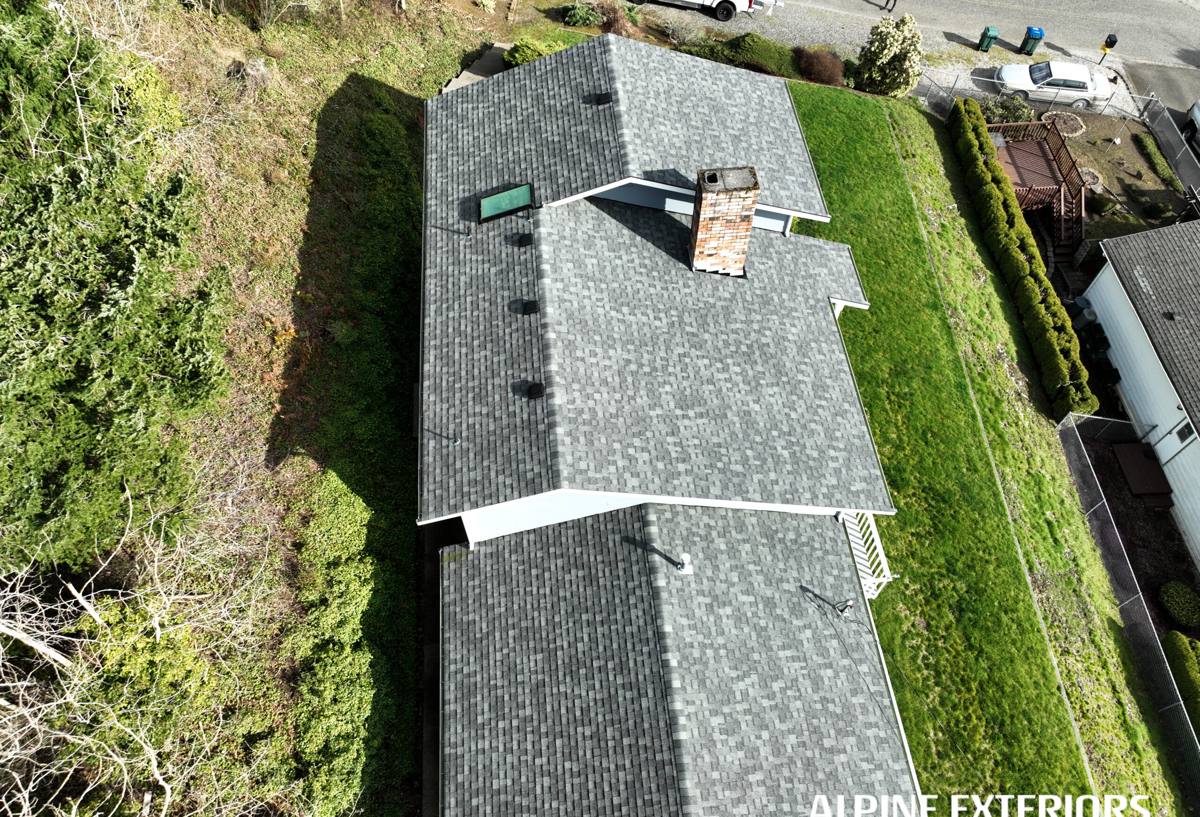
Signs a Sedro-Woolley Roof Needs Replacement, Not Another Patch
Age and Granule Loss
Most asphalt composition roofs in this climate are realistically good for 18-25 years, depending on the product and how much shade and moss exposure the roof has dealt with. If you're finding granules collecting in gutters and downspouts, or the shingle color looks patchy and uneven, the mat underneath is losing its protective coating — that's wear, not something a repair fixes.
Moss and Moisture Damage
A little moss on a shaded ridge is common and not an emergency. Moss that has spread across whole slopes, is visibly lifting shingle edges, or has left dark staining that doesn't wash off is a sign moisture has been working into the roofing system for a while. At that point we're usually looking at deck and underlayment condition, not just a surface cleaning.
Storm and Wind Damage
Skagit County gets its share of driving rain events with real wind behind them. Creased shingles, missing tabs, or flashing that's pulled loose around chimneys and vents are common after those storms. A few isolated spots can often be repaired. Damage spread across multiple slopes, or damage on a roof that was already near the end of its service life, usually tips the math toward replacement.
What a Correct Roof Replacement Actually Involves
A roof replacement done right isn't just stripping old shingles and nailing down new ones. In a climate like this, the parts you don't see matter as much as the parts you do.
- Full tear-off: we remove existing roofing down to the deck rather than layering over it, so we can actually see what's underneath.
- Deck inspection and repair: any plywood or sheathing that's gone soft or delaminated from long-term moisture gets replaced before anything new goes down — covering over a bad deck just hides the problem.
- Ice and water barrier at vulnerable points: eaves, valleys, and roof-to-wall transitions get self-adhering waterproof membrane, not just felt, because these are the spots driving rain finds a way in.
- Synthetic underlayment across the field: a secondary water barrier under the whole roof, not only the high-risk areas.
- New flashing at every penetration: chimneys, skylights, vents, and wall intersections get new metal flashing rather than reused or caulked-over old pieces.
- Balanced ventilation: intake and exhaust venting sized correctly, since poor attic ventilation is what turns a normal wet climate into a moisture and moss problem inside the attic, not just on the surface.
- Correct fastening and exposure: nailed to the manufacturer's pattern and exposure spec, which is what wind and warranty ratings actually depend on.
Skip any one of these and the new roof will look right for a few years and then show the exact same problems as the one it replaced — just on a faster timeline in this climate.
Choosing the Right Roofing Material for This Climate
There's no single "best" roofing material — there's a best fit for your roof's pitch, shading, and budget. Here's how the common options stack up for a moss-prone, wet-winter area like Sedro-Woolley.
| Material | Typical Lifespan Here | Moss/Moisture Behavior | Relative Cost | Best Fit |
|---|---|---|---|---|
| Standard 3-tab asphalt | 15-20 years | More prone to moss holding water in the flatter tab profile | Lowest | Budget-driven projects, shorter hold periods |
| Architectural (laminate) asphalt | 20-25+ years | Better shedding due to thicker, contoured profile; still needs moss control on shaded slopes | Moderate | Most homes — the balance point of cost and durability |
| Metal (standing seam or panel) | 40-50+ years | Sheds water and moss buildup very well; corrosion resistance matters near salt-influenced air | Higher | Long-term owners, steep or shaded roofs where moss is chronic |
| Synthetic/composite shake | 25-40 years | Good moisture resistance; varies by product quality and installation | Moderate-high | Homes wanting a shake look without wood's moisture upkeep |
We don't push one product on every roof. A heavily shaded, low-slope section of a Sedro-Woolley roof behaves differently than a steep, sun-exposed gable on the same house, and the material choice should reflect that.
A Note on Wood Shake and Why We Steer Clients Away From It Here
Wood shake still shows up on older homes in this area, and we understand the appeal — it's a traditional look for the region. Our professional standard, though, is to be honest that wood shake has a genuinely difficult maintenance relationship with a climate this wet and shaded. It needs regular treatment to resist moss and rot, and once moisture gets established in wood shingles it's harder to reverse than on composition or metal roofing. That's a maintenance-burden and moisture-behavior tradeoff, not a knock on the product itself — homeowners who want that look need to go in knowing the upkeep commitment it carries in this specific climate.
Our Roof Replacement Process
- On-site inspection: we walk the roof (weather permitting) and check the attic from inside, looking at ventilation, decking condition, and moisture staining — not just curb appeal.
- Written estimate: material options, scope of work, and a clear price, explained so you know what you're paying for and why.
- Scheduling around the weather: we plan tear-off days with a dry-weather window in mind and stage materials so no section of your roof sits exposed longer than necessary.
- Tear-off and deck check: old roofing comes off, the deck gets inspected, and any needed repairs are done before anything new is installed.
- Installation: underlayment, flashing, ventilation, and roofing material go in to manufacturer spec.
- Site cleanup: magnetic sweep for nails, haul-away of old material and debris.
- Final walkthrough: we go over the finished roof with you before calling the job done.
Cost Factors for a Sedro-Woolley Roof Replacement
We won't quote a number without seeing the roof, but the variables that actually move the price are consistent:
- Roof size and number of slopes/planes — more cuts and valleys mean more labor and material.
- Pitch and accessibility — steep or hard-to-access roofs take longer and need more safety setup.
- Deck condition — hidden rot or soft sheathing found during tear-off adds material and labor.
- Material choice — from standard asphalt up through metal, as shown above.
- Number of penetrations — chimneys, skylights, and vents each need individual flashing work.
- Existing layers — removing multiple old roofing layers takes more time than a single-layer tear-off.
Broadly, a straightforward asphalt shingle replacement on an average home runs in the mid four figures to low five figures, with metal and more complex rooflines running higher. Your written estimate will break this down by category, not just hand you a lump sum.
Why a Crew That Already Works Skagit County Matters
Roofing crews that work all over the region tend to treat every roof the same way, because they're not around long enough to see how it holds up. A crew that works Sedro-Woolley and the rest of Skagit County regularly sees the same patterns repeat — which slopes on which lot types collect moss first, where flashing tends to fail after a few wet seasons, how local permitting and inspection actually runs. That translates into fewer surprises during tear-off and a roof that's built for how this specific place behaves, not a generic install.
It also means we're a phone call away after the job is done. If something needs a look after the first hard winter, you're calling a crew that already knows your roof, not starting over with someone new.
After Your New Roof: Keeping It Working
A correctly installed roof still benefits from basic upkeep in this climate. A simple annual routine goes a long way:
- Clear gutters and downspouts before the fall rains start, so water actually leaves the roof instead of backing up under it.
- Have shaded slopes checked for early moss growth once a year — catching it early is a cleaning, not a repair.
- Trim back tree limbs that overhang the roof to cut down on shade, debris, and moss-spore contact.
- Check attic ventilation isn't blocked by insulation or stored items — airflow is what keeps moisture from settling in the first place.
- Have flashing and penetrations visually checked after any major windstorm.
None of this replaces a professional inspection every few years, but it's the difference between a roof that reaches its full expected lifespan and one that doesn't.
If your roof is showing its age or took a hit in the last storm, we're glad to come take a look. The estimate is free, there's no pressure attached to it, and you'll get a straight answer about whether you need a full replacement or just a targeted repair — just fill out the form below to get started.