 Skagit County
 Why Anacortes Siding Wears Differently Than Inland Homes
Anacortes sits on Fidalgo Island, surrounded by saltwater on nearly every side, which puts homes here in a different exposure category than siding fifteen miles inland in Sedro-Woolley or Mount Vernon. Salt-laden air carries fine airborne salt particles that settle on exterior surfaces and accelerate corrosion of fasteners, trim, and any siding product that isn't engineered to resist it. Add in driving rain that comes sideways off the water during winter storms, and siding here has to shed water horizontally, not just vertically, which is a harder job than most siding is asked to do.
Then there's moss. Skagit County's long wet season, heavy tree cover, and mild temperatures create ideal conditions for moss and algae to colonize any siding surface that stays damp for extended periods. On homes with poor drainage details or the wrong substrate, moss doesn't just look bad — it holds moisture against the wall, which is exactly what causes rot underneath.
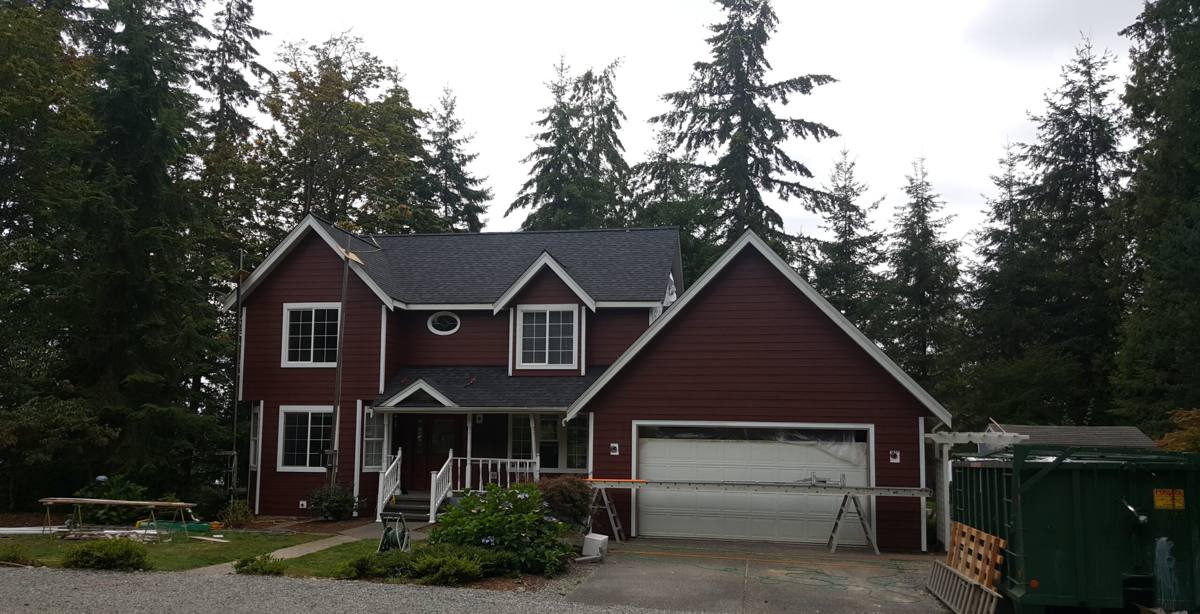
Signs Your Anacortes Home Is Due for Siding Replacement
Siding failure in this climate rarely announces itself with a dramatic crack. It's usually quieter than that — soft spots, discoloration, or a slow buildup of moss in the same spots every year. Homeowners in Anacortes should watch for:
- Soft or spongy siding when pressed, especially near the bottom courses and around window trim
- Persistent moss or dark streaking that returns within months of cleaning
- Paint that's bubbling, peeling, or failing faster than the repaint cycle should allow
- Visible gaps, warping, or buckling in panels, especially on the west and south-facing walls that take the brunt of storms
- Rusted or discolored fasteners bleeding through the surface — a common sign of salt-air corrosion on unprotected nail heads
- A musty smell in interior rooms along an exterior wall, which often means moisture has already gotten past the siding
Any one of these on its own might be a repair. Several together, especially on a home that's fifteen-plus years old with its original siding, usually means it's time to talk about full replacement rather than patching.
Why Patching Often Fails Here
On a home exposed to salt air and driving rain, patch repairs tend to fail faster than they would inland. A single replaced board doesn't address whatever let moisture in over years — often a flashing detail, house wrap seam, or drainage gap that was wrong from the original install. We'll always tell a homeowner honestly when a repair is enough. But when the underlying moisture management is compromised across multiple areas of the house, replacement is the only way to fix the actual problem instead of the symptom.
What a Correct Siding Replacement Involves
A siding replacement is only as good as what's underneath it. In a marine environment like Anacortes, the details that don't show up in a driveway photo are the ones that determine whether the job lasts twenty-plus years or fails in five.
Tear-Off and Sheathing Inspection
Removing the old siding is also the only chance to actually see the wall assembly. We inspect sheathing for soft spots or rot, check window and door flashing, and address anything compromised before a single new panel goes up. Covering over hidden damage is how good-looking siding jobs turn into expensive problems a few years later.
Weather-Resistive Barrier and Flashing
A continuous, properly lapped water-resistive barrier is non-negotiable on a home taking direct rain off the water. Flashing at windows, doors, and roof-to-wall transitions has to be integrated with the barrier correctly — this is where the vast majority of siding leaks actually originate, not through the siding material itself.
Fastening and Hardware
Salt air corrodes the wrong fasteners over time, which is why corrosion-resistant, manufacturer-approved fasteners matter more here than in drier inland areas. We follow James Hardie's fastening specifications exactly, including proper nail placement and spacing, because installation errors are the single biggest reason fiber cement siding underperforms its potential lifespan.
Finish and Caulking Details
ColorPlus factory-finished panels reduce field painting, but joints, cut edges, and trim still need correct sealant and touch-up. In a climate with this much moss and moisture exposure, sloppy caulking at seams is an open invitation for water intrusion.
Material Comparison for a Marine Climate
Homeowners researching siding replacement in Anacortes will run into several material options. Here's an honest look at how they hold up in this specific climate, which is exactly why we standardized on one product.
| Material | Moisture/Salt Air Behavior | Moss Resistance | Typical Lifespan Here |
|---|---|---|---|
| James Hardie fiber cement | Non-combustible, engineered for wet climates, holds paint/finish well | Good with proper install and periodic cleaning | 30+ years with correct installation |
| Vinyl | Can warp or become brittle with sun/temperature swings; seams are moisture entry points | Moderate — moss still colonizes seams and laps | 15-25 years, shorter in harsh exposure |
| LP SmartSide (engineered wood) | Wood-based core is moisture-sensitive if any breach occurs | Requires diligent maintenance to prevent moss buildup | Highly dependent on maintenance and coating upkeep |
| Cedar / primed spruce | Natural wood — absorbs moisture, prone to rot without constant upkeep | High susceptibility without frequent treatment | Shortest, heavy maintenance burden in this climate |
We don't install vinyl, LP SmartSide, Cemplank, Allura, primed spruce, or cedar. Each has legitimate uses elsewhere, but for Anacortes's combination of salt air, driving rain, and moss pressure, we've seen consistently that James Hardie's fiber cement — non-combustible, factory-finished, and backed by a strong transferable warranty — holds up to real-world conditions here better than the alternatives when installed correctly. That's a professional standard we hold across every job, not a sales pitch.
Our Siding Replacement Process
Every job follows the same sequence, whether it's a full-island view home or a modest bungalow near town:
- On-site assessment of current siding, moisture damage, and drainage details specific to your lot's wind and rain exposure
- Written estimate with material selection, HZ product line recommendation, and color options walked through in person
- Tear-off, sheathing inspection, and any necessary repair before new materials go up
- Installation of weather-resistive barrier, flashing, and James Hardie panels or planks to manufacturer spec
- Final detail work — trim, caulking, touch-up — and a walkthrough before we consider the job done
Cost Factors for an Anacortes Siding Job
Every home is different, but the variables that move a siding replacement estimate up or down are consistent across Skagit County jobs:
| Factor | Why It Matters |
|---|---|
| Home size and wall complexity | More corners, dormers, and cutouts increase labor and material waste |
| Extent of hidden sheathing damage | Rot discovered during tear-off requires repair before siding can go on |
| Siding profile and HZ line selection | Plank width, texture, and climate-engineered HZ5 vs HZ10 designation affect material cost |
| Access and site conditions | Steep lots, limited driveway access, or dense landscaping affect setup time |
| Trim and detail scope | Window/door trim replacement and fascia work add scope beyond field siding |
We give straightforward numbers during the estimate rather than a lowball figure that grows once work starts — that's a big part of why homeowners tell other homeowners about us in this area.
Why a Crew That Already Works in Anacortes Matters
Siding installation isn't identical everywhere in Skagit County. A crew that regularly works Anacortes and the surrounding island and shoreline properties already knows how to sequence a job around marine weather windows, how aggressively to detail flashing on homes with direct water exposure, and which drainage details actually hold up here versus which ones just look fine on the day they're installed. That local pattern recognition — built from doing the work here repeatedly, not from a general contracting background — is the difference between siding that's built for this specific climate and siding that was installed to a generic standard and hopes the weather cooperates.
Timing Your Project Around the Local Season
Skagit County's wet season and moss growth cycle make certain windows better than others for siding replacement. Drier stretches allow better substrate drying time and cleaner installation conditions, while starting a tear-off right before a heavy rain stretch adds risk to exposed sheathing. During an estimate, we'll talk through realistic scheduling for your specific project rather than pushing a start date that doesn't fit the forecast pattern for this area.
If your Anacortes home is showing moss buildup, soft siding, or paint failure that keeps coming back, we're happy to take a look and give you a straightforward, no-pressure estimate — fill out the form below and we'll get in touch.