 Skagit County
 Siding Replacement in Hamilton: Built for What This Valley Throws at a House
Hamilton sits along the Skagit River in one of the wetter, greener pockets of Skagit County, and that setting is exactly why siding here fails differently than siding in a drier climate. Homes get long stretches of damp, overcast weather, heavy tree cover that keeps walls shaded and slow to dry, and driving rain that comes sideways off the valley during winter storms. Add in the marine-influenced air that moves through the whole region and you get a steady, year-round dose of moisture that most siding materials were never built to shrug off indefinitely.
This page is about one thing: replacing siding on a Hamilton home the right way, with a product and a process that actually match this climate, not a generic install pulled from a warmer, drier market.
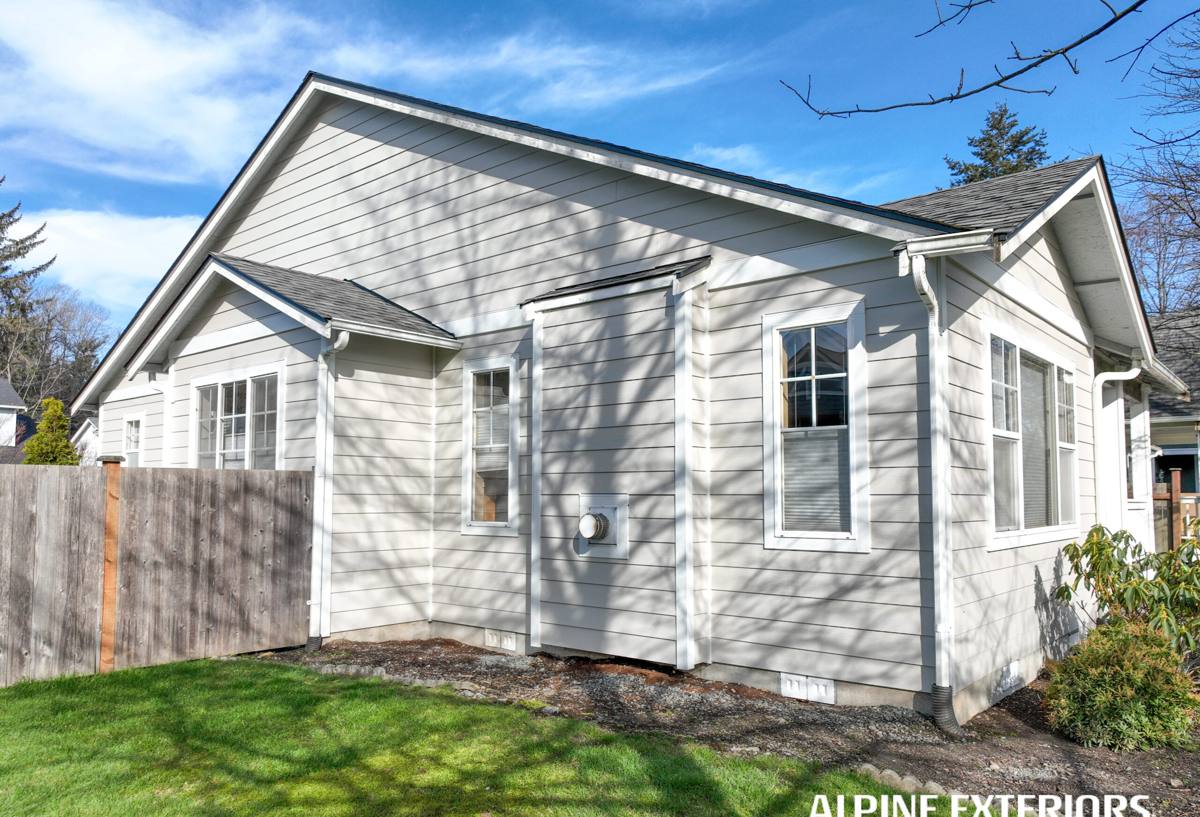
What Skagit County's Climate Does to Siding Over Time
Every siding material eventually shows wear, but the pattern of that wear in Hamilton tends to follow the same script.
Moss and Organic Growth
A long moss season isn't just cosmetic. Moss, algae, and mildew hold moisture directly against the siding surface for weeks at a time, especially on north-facing walls and anywhere tree canopy blocks sun and airflow. Wood-based products absorb that moisture and can soften or delaminate underneath the growth long before it's visible from the ground.
Driving Rain and Wind-Driven Moisture
Rain that comes in at an angle finds every gap in flashing, trim, and lap joints. Over years, that repeated wetting and drying cycle is what causes paint failure, swelling, and eventually rot at the most vulnerable points — bottom edges, corners, and anywhere two pieces of siding meet.
Salt-Influenced Air
The broader Skagit County region sits close enough to Puget Sound that salt-laden air moves through on prevailing weather systems, accelerating corrosion on fasteners, flashing, and any metal trim components. Combined with constant humidity, this shortens the life of materials that depend on paint film or sealant alone for protection.
Freeze-Thaw Cycling
Skagit County winters aren't extreme, but they're damp and variable enough that trapped moisture in siding or sheathing can freeze and expand repeatedly through the cold months, widening small cracks into real problems.
Signs a Hamilton Home Needs Replacement, Not Just Repair
Not every siding issue means a full tear-off. But there's a point where patching becomes false economy, because the underlying material and moisture management have already been compromised.
- Soft or spongy spots when you press on the siding, especially near the bottom courses
- Paint that keeps failing within a couple of years no matter how often it's repainted
- Visible warping, buckling, or gaps between boards
- Persistent moss or dark staining that returns quickly after cleaning
- Cracking concentrated around nail heads or seams
- Rising energy bills that point to a compromised weather barrier behind the siding
- Siding that's original to a home more than 20-25 years old, especially wood-based or older composite products
If a few of these show up together, it's usually a sign that moisture has been working behind the surface for longer than it's been visible on it.
What a Correct Siding Replacement Job Actually Involves
Siding replacement is often sold as a cosmetic upgrade, but the real value is in what happens underneath the new material. In a climate like Hamilton's, this part of the job matters more than the color chosen.
Full Tear-Off and Sheathing Inspection
Removing the old siding down to the sheathing lets us actually see what's happening structurally — soft sheathing, hidden rot, or past water intrusion that a re-side over existing material would simply seal in.
Repair Before Cover
Any damaged sheathing or framing gets repaired before anything new goes on. Covering a known problem with new siding just resets the clock on the same failure.
A Real Moisture Management System
Modern siding relies on a drainage plane, not a single sealed surface, to manage the amount of water this region sees. That means a properly lapped weather-resistant barrier, correctly integrated flashing at windows, doors, and penetrations, and a rain screen or drainage gap where the assembly calls for it.
Flashing and Trim Detailing
Most siding failures trace back to flashing details, not the siding panel itself. Proper head flashing, kick-out flashing at roof-wall intersections, and sealed penetrations are what actually keep driving rain out of the wall assembly.
Correct Fastening and Clearances
Manufacturer-specified fastener spacing, ground clearance, and gaps at trim are non-negotiable in a wet climate — shortcuts here are exactly what shows up as problems five to ten years later.
Why We Install Only James Hardie Fiber Cement
We made a deliberate decision to install one siding system, not because it's the only decent product on the market, but because it's the one that consistently performs in exactly the conditions Hamilton deals with year-round.
James Hardie fiber cement is non-combustible, dimensionally stable in high humidity, and doesn't feed the moss and mildew growth the way wood-based or engineered wood products can when they take on moisture. Its ColorPlus factory finish is baked on under controlled conditions, which holds up far better against driving rain and UV exposure than field-applied paint. Hardie's HZ product lines are engineered for different climate zones, and Skagit County's damp, marine-influenced conditions call for the moisture- and impact-resistant HZ5 formulation used throughout our region.
We don't install vinyl, LP SmartSide, Cemplank, Allura, or unfinished wood siding. Each of those has real strengths, but they also carry trade-offs — moisture sensitivity, maintenance burden, or installation tolerances — that don't line up with what we're willing to put our name behind on a Hamilton home. Standardizing on one system also means our crews install it constantly, rather than switching between products and picking up bad habits from unfamiliar materials.
Our Process for Hamilton Siding Replacement
| Step | What Happens |
|---|---|
| On-site assessment | We inspect existing siding, sheathing, and trim in person to identify moisture damage before quoting anything |
| Written estimate | A clear scope covering tear-off, repairs, moisture barrier, flashing, material, and labor — no vague allowances |
| Tear-off and inspection | Old siding removed, sheathing checked and repaired where needed |
| Weather barrier and flashing | New drainage plane and flashing installed to manufacturer and code specifications |
| Hardie installation | Fiber cement siding and trim installed to James Hardie's fastening, clearance, and caulking specifications |
| Final walkthrough | We review the finished work with you before considering the job complete |
Cost Factors in a Hamilton Siding Replacement
Every home is different, and we won't quote a number without seeing the house, but these are the variables that move the price up or down.
| Factor | Why It Matters | Relevance in Hamilton |
|---|---|---|
| Sheathing condition | Rotted or soft sheathing has to be replaced before new siding goes on | More likely on older homes with a history of moisture intrusion |
| Home size and wall complexity | More corners, dormers, and trim details mean more labor and material | Applies to any home regardless of location |
| Siding profile chosen | Lap width, shingle-style panels, and trim boards vary in material and labor cost | Homeowner preference, not climate-driven |
| Moisture barrier and flashing scope | A full, correctly detailed drainage system costs more than a minimal one | Not optional in a climate with this much sustained moisture |
| Site access | Tree cover, slopes, and tight lot lines affect equipment and labor time | Common on wooded Hamilton and surrounding valley lots |
What to Look for When Hiring a Contractor in Skagit County
Hamilton is a small community, and word travels fast about crews that cut corners on moisture detailing. A few things worth confirming before you sign anything:
- Ask whether they do a full tear-off with sheathing inspection, or just cover over the old siding
- Confirm they're installing a manufacturer-specified moisture barrier and drainage system, not just siding over building paper
- Ask which James Hardie HZ product line they're specifying and why it fits this climate zone
- Check that they carry current licensing and insurance, and are willing to put the scope of work in writing
- Ask how they handle flashing at roof-wall intersections and window/door penetrations — this is where most future leaks originate
- Find out if they regularly work in Skagit County, or if this is an occasional trip out from somewhere else
A crew that already knows this valley's rain patterns, moss pressure, and typical construction from past projects will make fewer assumptions and catch problems a first-time-in-the-area contractor might miss.
Why Local Experience in Hamilton Matters
Every part of Skagit County deals with moisture, but the specific mix of shade, humidity, and rain exposure varies from the open flats near the river delta to the more sheltered, tree-covered stretches further inland where Hamilton sits. A crew that's worked this specific area knows which walls take the worst weather, where moss tends to establish first, and how local soil and drainage conditions around a foundation can affect the bottom courses of siding. That's the kind of judgment that doesn't come from a spec sheet — it comes from having done the work here before.
If your Hamilton home is showing signs of siding failure, or you're simply planning ahead before small problems turn into structural ones, we're happy to take a look and walk you through exactly what we'd recommend and why. Reach out for a free, no-pressure estimate using the form below.