 Skagit County
 Skyline is one of the areas in Skagit County where the roof does more work than it does a few miles inland. Homes here sit exposed to weather coming off the water — wind-driven rain, salt-laden air, and long stretches of damp, shaded conditions that keep moss active for most of the year. When a Skyline homeowner starts looking at metal roofing, it's usually because they've already dealt with moss removal, asphalt shingles wearing out faster than expected, or a roof that just can't keep up with what this specific spot throws at it. This page walks through what a metal roof actually needs to do here, what a correct installation involves, and how we approach the job as a crew that already works this neighborhood.
Why Skyline's Climate Changes the Calculation
Salt air off the water accelerates corrosion on anything metal that isn't rated for it — fasteners, flashing, and lower-grade roofing panels included. Combine that with driving rain that comes in at an angle rather than straight down, and you get wind-driven moisture working its way under laps, around penetrations, and into any flashing detail that was cut short. Add Skagit County's long moss season — cool, wet, and shaded for much of the year — and you have three separate stresses hitting the same roof: corrosion, water intrusion, and biological growth. A roofing system that handles one of these well but not the others tends to disappoint a Skyline homeowner within a handful of years.
None of these conditions are unique to this one neighborhood, but the combination and the degree matter. A shaded, water-facing lot in Skyline sees more of all three stresses at once than a sunny, sheltered lot does, which is part of why we treat metal roofing here as a system decision — material, fastener, flashing, and ventilation all chosen to match what the site actually experiences, not a generic spec sheet.
What We Typically See on Older Roofs in This Area
- Moss colonies established on shaded slopes, holding moisture against the roofing material
- Rust streaking or pitting on exposed fasteners and flashing not rated for coastal exposure
- Granule loss and early wear on asphalt shingles from repeated wet-dry cycling
- Soft or stained roof decking near valleys and penetrations where flashing let water through
- Gutters and downspouts clogged with moss and debris, backing water up under the roof edge
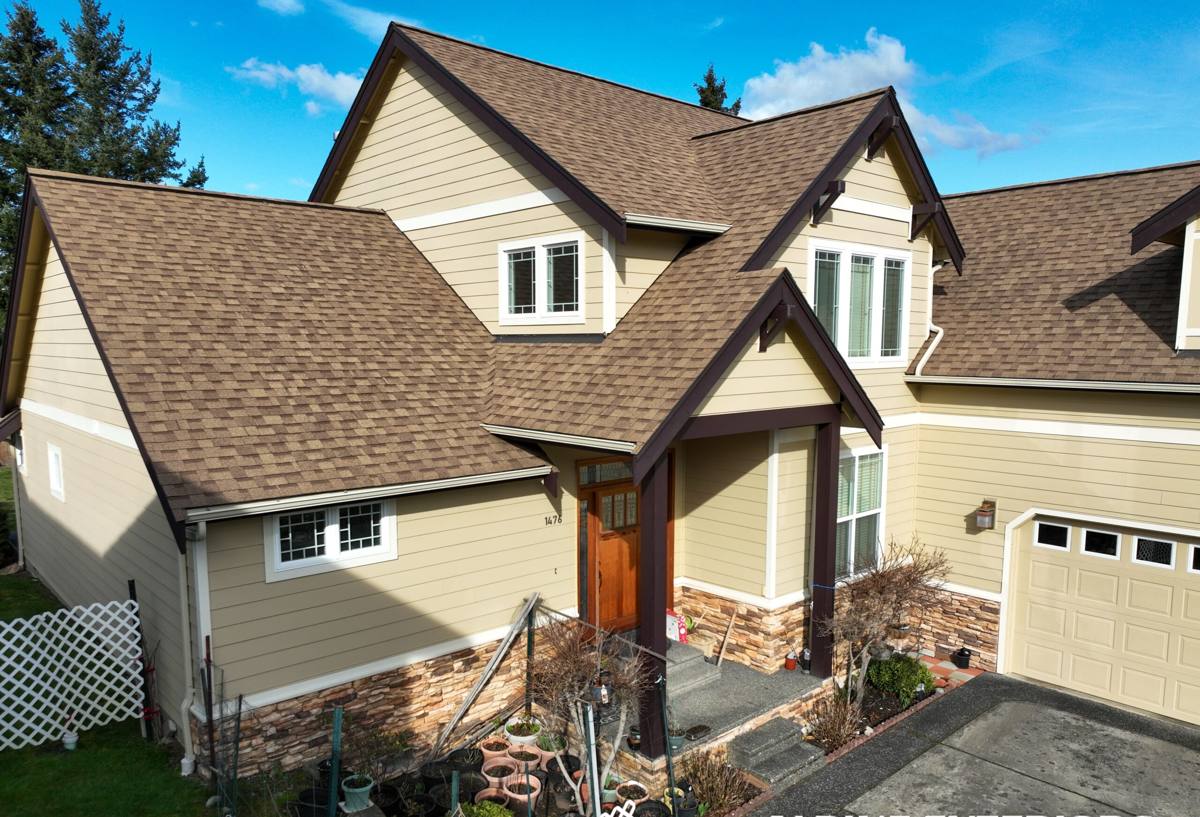
Why Metal Holds Up Better Here
Metal roofing gives Skyline homeowners a few specific advantages over asphalt shingles in this climate. It sheds water fast off a steep or shallow slope alike, it doesn't hold moisture against itself the way a shingle mat can, and a correctly finished panel resists moss far better than granulated asphalt, which gives algae and moss something to grip. It's also simply built for a longer service life — a well-installed metal roof in a coastal Pacific Northwest climate can outlast two or three shingle roofs over the same span, which matters when re-roofing means scaffolding, tear-off, and disruption every time.
That said, metal isn't a cure-all, and we're upfront about the trade-offs. It costs more upfront than asphalt. It can be noisier in heavy rain without proper underlayment and decking. And it demands more precision at every seam, fastener, and flashing point — a metal roof with sloppy details will leak just as fast as any other roof, and sometimes faster, because water finds the shortcuts more efficiently on a hard, slick surface than it does on a shingle mat.
Metal Roofing Options We Work With
| System | Best For | Notes for Skyline Lots |
|---|---|---|
| Standing seam panel | Most homes, especially exposed or steep-slope roofs | Concealed fasteners mean fewer penetration points for wind-driven rain to exploit |
| Exposed-fastener panel | Outbuildings, shops, budget-conscious re-roofs | Lower cost but fastener gaskets need periodic checking over the roof's life |
| Stone-coated steel | Homeowners wanting a shingle or shake look | Combines metal's durability with a more traditional profile |
| Aluminum panel | Direct water/salt exposure sites | Naturally corrosion-resistant, a strong fit for bluff or waterfront lots |
What a Correct Metal Roof Installation Actually Involves
A metal roof is only as good as what's underneath and around it. On every Skyline project we start with the roof deck — checking for soft spots, rot, or prior water damage that needs to be addressed before anything new goes down, since covering a compromised deck just hides the problem. From there, the details that separate a roof that lasts decades from one that leaks within a few years are almost all in the underlayment, flashing, and ventilation, not the panel itself.
Underlayment
We use a synthetic or self-adhering underlayment rated for metal roofing, with extra attention at eaves and valleys where wind-driven rain is most likely to push water backward under the panels. In a climate like ours, skipping a quality underlayment to save a step is one of the fastest ways to end up with a roof that looks fine from the ground but is quietly failing underneath.
Flashing
Valleys, chimneys, skylights, and wall intersections are where the vast majority of roof leaks start, metal or otherwise. We fabricate and install flashing sized and lapped correctly for the slope and exposure of the specific roof, rather than relying on generic trim pieces that don't account for how much water a Skyline roof actually has to move in a heavy storm.
Fasteners and Panel Attachment
On a coastal-exposure roof, fastener choice is not a place to cut corners. We use fasteners and clips rated for the specific metal and the exposure level of the site — mismatched metals or under-rated hardware is a common cause of premature corrosion and staining on metal roofs in this region.
Ventilation
A roof deck that can't breathe holds moisture longer, which shortens the life of the decking, the underlayment, and the roofing material above it. We check and correct intake and exhaust ventilation as part of every metal roofing project, since a beautiful new roof over a poorly ventilated attic is still working against itself.
Moss: Prevention, Not Just Removal
Moss is close to unavoidable on a shaded Skagit County roof, but a correctly installed metal roof gives you real tools to manage it that shingles don't. Metal's smooth, hard surface gives moss far less to grip than granulated asphalt, and we can install zinc or copper strips near the ridge that release trace amounts of metal ions with every rain, discouraging regrowth on the slopes below. For roofs that already have established moss, we remove it carefully — moss holds moisture and can damage the surface underneath if left in place, and improper removal methods (like aggressive pressure washing) can do more harm than the moss itself.
None of this makes a roof maintenance-free. Gutters still need clearing, overhanging branches still need trimming back for airflow and sun exposure, and an annual look at flashing and fasteners is still worth doing. What changes with metal is how much less that upkeep has to fight against.
Our Process on a Skyline Metal Roofing Project
- Inspection and assessment — we look at the existing roof, deck condition, ventilation, and the specific exposure of the lot (water-facing, shaded, tree cover) before recommending a system.
- System selection — based on slope, exposure, and budget, we walk through standing seam, exposed-fastener, stone-coated, or aluminum options and the honest trade-offs of each.
- Deck and structure prep — any soft decking, rot, or ventilation issues get addressed before new material goes down, not covered over.
- Underlayment and flashing — installed to match the actual wind and rain exposure of the site, with extra attention at valleys, eaves, and penetrations.
- Panel installation — fastened and lapped to manufacturer spec with hardware rated for coastal exposure.
- Final walkthrough — we go over the finished roof, ventilation, and any moss-prevention measures installed, so you know what to expect and what (if any) upkeep is worth doing.
Cost Factors for a Skyline Metal Roof
Every roof is different, and we won't quote a number without seeing the actual structure, but a few factors consistently move the price on projects in this area:
| Factor | Why It Matters Here |
|---|---|
| Roof complexity (valleys, dormers, penetrations) | More flashing work, more labor, more places water can find a way in if rushed |
| Deck condition | Rot or soft decking found during tear-off adds repair cost before new roofing goes on |
| Panel and fastener grade | Coastal-rated hardware and higher-grade panels cost more but hold up far longer against salt air |
| Access and pitch | Steep or hard-to-access roofs take longer and require more safety setup |
| Moss remediation | Existing moss removal and prevention measures (zinc/copper strips) add a modest line item but reduce long-term maintenance |
What to Ask Before Hiring a Metal Roofing Crew
Metal roofing has a lower margin for error than asphalt shingles, so who installs it matters as much as what's installed. A checklist worth going through with any contractor bidding a Skyline metal roof:
- Do they carry current Washington contractor licensing and insurance, and will they provide proof without being asked twice?
- Have they installed metal roofing specifically in coastal or high-moisture conditions, not just inland or dry-climate jobs?
- Do they explain their flashing and underlayment approach in detail, or do they wave it off as "standard"?
- What warranty covers the panel finish versus the labor and flashing work, and for how long?
- Do they offer a written, itemized estimate rather than a verbal ballpark?
Why Local Experience on This Specific Terrain Matters
A crew that mostly works dry, sheltered, inland roofs and occasionally takes a job in Skyline is starting from scratch on every detail that actually matters here — how much wind-driven rain a valley needs to handle, how aggressive the moss pressure really is on a shaded north slope, what fastener grade actually holds up against this air. We work Skagit County regularly, including this stretch of exposed, water-facing terrain, so those decisions aren't guesswork on a Skyline job — they're what we already account for before the first panel goes up.
If you're weighing a metal roof for a Skyline home, we're glad to take a look and talk through what your specific roof needs — no pressure, no hard sell, just a straight assessment and a written estimate you can think over. The form below is the easiest way to get that started.